



The Ultimate Guide to Formal Attire for Men: Styling Tips
From decoding dress codes to mastering the perfect fit, this guide equips men to command respect through strategic formal dressing, revealing how a well-chosen tuxedo or suit triggers "enclothed cognition" that sharpens focus and speech while signaling intelligence and authority. Readers learn to navigate the entire formality spectrum--white-tie tails to business-casual separates--select fabrics and cuts for every season, coordinate accessories like pocket squares and cufflinks without falling into matchy-matchy traps, and decide when to rent or invest. It demystifies collar shapes, lapel etiquette, Oxford versus monk-strap shoes, and the hidden purpose of cummerbunds, then tailors advice to body types, weddings, galas, and corporate events so the modern man feels confidently appropriate, never under- or overdressed. Ultimately, the article positions impeccable formal attire as a career and social accelerator whose dividends--deference, opportunity, self-assurance--far outweigh the effort of mastering a few timeless rules.
Introduction
Formal attire physically transforms your behavior, improving your posture, speech clarity, and focus while commanding measurable respect in professional settings.
The Significance of Formal Attire in a Modern Man's Wardrobe
Formal attire speaks volumes before you say a word. When you wear a well-fitted suit or tuxedo, you instantly command respect and authority--research confirms that formally dressed individuals are viewed as more intelligent and influential than their casually dressed counterparts [1]. This advantage extends beyond perception. The phenomenon known as "enclothed cognition" reveals that your formal attire actually transforms your behavior, improving your posture, clarifying your speech, and sharpening your focus [1].
In today's professional world, formal wear delivers measurable results. Studies demonstrate that professionally dressed men receive more deference and respect in workplace interactions [1]. Whether you're navigating a business meeting, attending a wedding, or celebrating at a gala, understanding the formal attire spectrum empowers you to make the right impression every time [3]. From business casual to black tie events, each occasion demands specific knowledge--and getting it right opens doors that casual attire simply cannot [2].
What This Guide Will Help You Accomplish
This guide delivers everything you need to master formal dressing with confidence. You'll discover how to decode every dress code--from business formal to white tie--and know exactly when to wear each [6]. We'll show you how to assemble the perfect ensemble for any occasion, whether it's a black-tie gala, formal wedding, or important business event [5].
You'll learn the specific outfit combinations that work for different settings, plus how to add personal touches while respecting tradition. From selecting the right accessories to understanding seasonal adaptations, we cover every detail that elevates your formal appearance [4].
We'll also help you make smart wardrobe decisions. Whether you're investing in essentials or determining when

Understanding Formal Dress Codes
Master the formal dress code hierarchy from business formal through white tie to dress appropriately for any prestigious occasion.
The Formal Attire Spectrum: From Business Formal to White Tie
The formal attire spectrum represents a hierarchical progression of dress codes, each indicating different levels of occasion significance. At the foundational level, business formal requires a dark suit, conservative tie, and polished dress shoes - appropriate for important meetings and professional environments [7]. The dark suit forms the foundation, with subtle accessories providing a touch of personality without distraction.
Moving upward, cocktail attire bridges professional and evening wear, permitting more creativity through well-fitted suits in darker colors, dress shirts, and coordinated accessories while maintaining sophistication [7]. Black tie optional gives guests flexibility to choose between a tuxedo or dark formal suit, though leaning toward formality is advisable [7]. This code maintains elegance while acknowledging that not everyone owns formal evening attire.
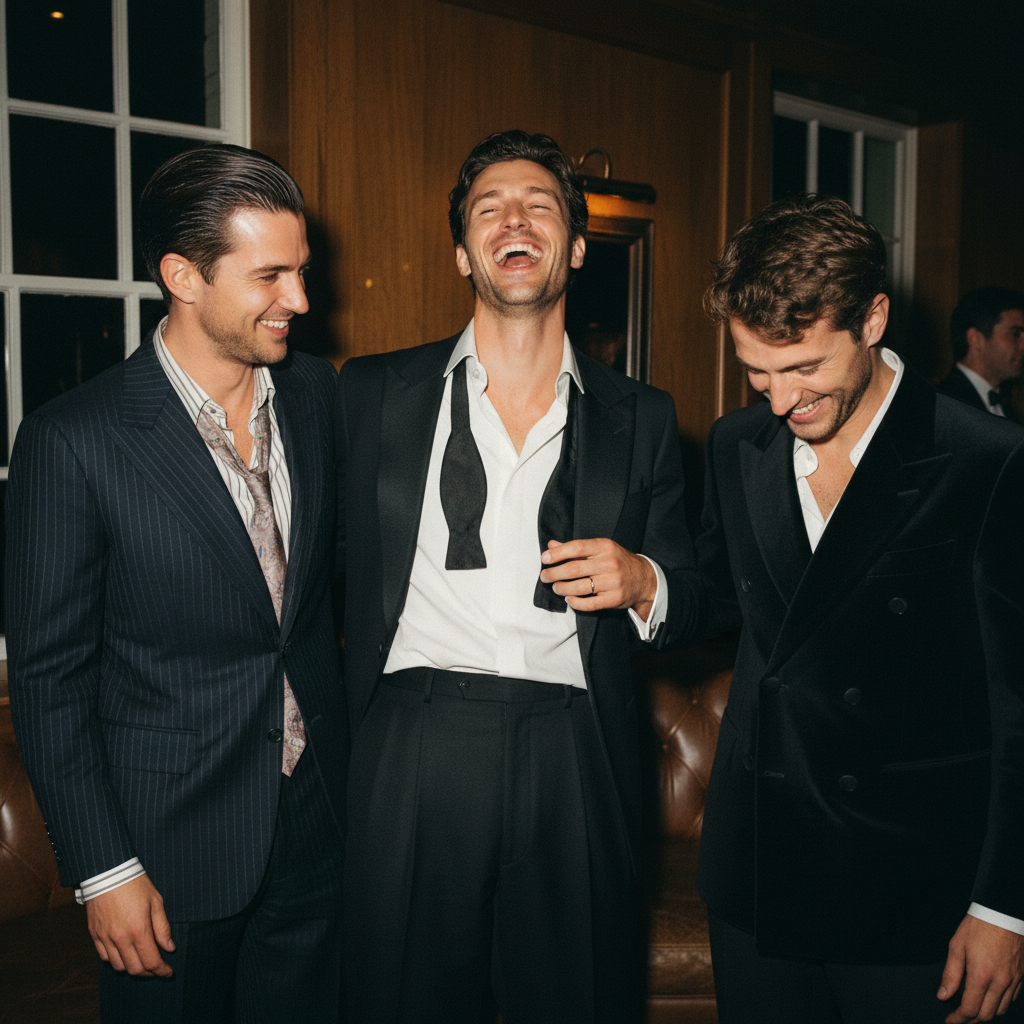
Creative black tie preserves formal foundations while allowing personal expression through tasteful variations--perhaps a velvet jacket, patterned accessories, or subtle color deviations beyond traditional black [7]. Standard black tie represents classic evening formality for galas, weddings, and ceremonies, consisting of a tuxedo (traditionally black though midnight blue is acceptable), formal shirt with studs, black bow tie, cummerbund or waistcoat, and patent leather shoes [7].
At the pinnacle stands white tie, reserved exclusively for the most prestigious occasions like state dinners and royal events [8]. This most formal code demands a black tailcoat with matching trousers, white waistcoat, white bow tie, wing-collar shirt, and formal accessories including white gloves in some settings [7][8]. The distinction between white tie and black tie is significant--white tie events typically host diplomats, royalty, or high-society members, while black tie events, though elegant, remain more accessible for gala dinners and charity balls [8]. Each dress code carries specific expectations that signal your understanding of social contexts while conveying appropriate respect for the event's significance [5].
Black Tie vs. Formal Attire: Critical Distinctions
Many men confuse formal attire with black tie, but these dress codes have distinct requirements and applications. Formal attire (sometimes called "black tie optional") allows more flexibility while maintaining sophistication. It requires a dark suit--typically black, navy, or charcoal--paired with a crisp white shirt, bow tie or necktie, and polished leather shoes [9]. This dress code permits personal expression through subtle pattern variations, conservative color choices, and tasteful accessories like pocket squares or tie clips [9].
Black tie, by contrast, follows stricter traditions centered on the tuxedo. The complete ensemble includes a black dinner jacket with matching trousers, formal white dress shirt with studs, black bow tie, black patent leather shoes, and either a cummerbund or waistcoat [9][10]. The color palette remains strictly black and white, with minimal deviation permitted [9]. Black tie appears exclusively at evening functions including weddings, galas, and formal dinner parties, signaling a higher level of ceremony than formal dress [10]. When an invitation indicates "black tie optional," guests may choose between a tuxedo or dark formal suit, though experienced attendees recognize that leaning toward formality shows respect for the occasion [9][5]. Understanding these distinctions helps you navigate sophisticated social settings with confidence, ensuring you're neither underdressed nor inappropriately formal for the event context.
Contemporary Interpretations of Traditional Formal Codes
Traditional formal dress codes are evolving beyond strict adherence toward personalized expression within established frameworks. Modern formal attire reimagines classic traditions with a contemporary twist--embracing sleeker silhouettes, expanded color palettes, and thoughtful personal touches while maintaining sophistication [12]. On high-fashion runways, designers offer fresh interpretations: Tom Ford presents tuxedos in surprising cream tones, Dolce & Gabbana and Givenchy showcase lean tailoring that brings contemporary energy to black tie, while maintaining its essential elements [11].
The formal spectrum now accommodates tailored innovations like Dior Men's cozy knitted suits and AMI's refined pinstriped ensembles that honor tradition while feeling distinctly modern [11]. Even smart casual codes have evolved significantly, with high-low combinations becoming increasingly acceptable--Prada pairs tailored track trousers with fine mohair sweaters, while Jonathan Anderson for LOEWE matches crisp poplin shirts with artistic joggers [11]. This evolution reflects changing workplace norms and greater emphasis on individual style without abandoning formality's core purpose [12].
Today's well-dressed man balances seasonal considerations, embracing lighter fabrics and colors in warmer months while choosing deeper tones and heavier materials in winter [12]. Double-breasted suits have returned in slimmer, less boxy cuts, offering sophisticated alternatives to single-breasted classics [12]. The contemporary approach focuses less on rigid rules and more on creating ensembles that feel timelessly elegant yet distinctly current--suitable for today's formal occasions while allowing personal expression [12].
Core Components of Formal Attire
Tuxedos feature distinctive satin lapels and stripes reserved exclusively for black-tie events, while suits offer versatile styling across business and semi-formal occasions.
Suits vs. Tuxedos: When to Wear Each and Key Differences
When choosing between a suit and tuxedo, understanding their key differences ensures you're appropriately dressed for any occasion. The most visible distinction lies in the satin detailing--tuxedos feature satin-faced lapels, satin buttons, and satin stripes down the trouser seams, while suits maintain consistent fabric throughout [13]. This satin trim instantly signals the tuxedo's elevated formality. Structurally, tuxedos follow a more minimalist design approach, typically featuring either shawl or peak lapels (rarely notch lapels), and are almost always single-breasted with one or two buttons [13]. Suits offer greater versatility with various lapel styles, button configurations, and pocket designs that adapt to different contexts.
The appropriate contexts for each garment are clearly defined. Tuxedos are exclusively for formal black-tie events including galas, formal weddings, award ceremonies, and high-end evening functions [14]. Wearing a suit to a black-tie event is considered underdressed, potentially communicating a lack of respect for the occasion. Suits, meanwhile, provide far greater versatility--appropriate for business settings, semi-formal weddings, interviews, and professional environments where you need to project competence without excessive formality [15]. A suit can also be separated, allowing you to wear the jacket or trousers independently to extend your wardrobe's flexibility. Whether you're looking to rent or purchase, a well-fitted tuxedo ensures you meet formal event requirements with confidence.
These garments evolved from different needs, which explains their distinct formality levels today. Tuxedos originated in 1880s England when the black shawl collar dinner jacket replaced the more formal tailcoat, gaining popularity through style icons like Edward, the Duke of Windsor [14]. Modern suits developed from early 20th century lounge suits designed as less formal daywear alternatives [14]. Color options further differentiate the two: tuxedos traditionally come in black or midnight blue wool with contrasting satin elements, while suits offer extensive fabric choices from wool, cotton, and linen in numerous colors and patterns [14][15]. This versatility allows suits to adapt to different seasons--lighter shades for summer and deeper tones for winter wear [15]. The accessories also differ substantially--tuxedos require formal black bow ties, sometimes a cummerbund or waistcoat, studs rather than buttons, and patent leather shoes [14]. Suits accommodate neckties or bow ties in various colors and patterns, allowing for personal expression while maintaining professionalism.
Formal Shirts: Materials, Styles, and Fit Guidelines
Formal shirts frame your appearance and significantly affect your comfort. Light to medium-weight cotton delivers the crisp look essential for formal settings while providing year-round versatility [16]. Choose linen for superior breathability in warmer climates or heavier cotton for cold environments. White shirts pair effortlessly with any suit while highlighting accessories and tie patterns. Blue shirts--from powder to navy--introduce subtle color without sacrificing formality, while off-white adds warmth to your palette [16]. Pattern complexity directly decreases formality--solid colors maintain maximum versatility, stripes offer visual interest for business settings, while checks represent the casual end of formal shirt options.
The collar frames your face and establishes the shirt's formality level. Classic point collars accommodate small to mid-size tie knots, creating timeless formality that works across business and social settings [16]. Spread collars function well with or without ties, offering versatility for contemporary environments. Wing collars--traditionally detachable and stiff--remain reserved primarily for white-tie events or formal black-tie functions [16]. Button-down collars, while business-appropriate in American settings, represent the casual end of the formal spectrum, pairing better with sport coats than suits.
Cuffs define your shirt's formality while affecting daily functionality. French (double) cuffs require cufflinks and signify traditional formality, folding back to create a smooth, seamless appearance [17]. Barrel (button) cuffs offer everyday practicality with designs ranging from rounded edges to square or angled corners [17]. Single-link cuffs--with dedicated cufflink holes but no fold--represent the most formal option, particularly appropriate for white-tie occasions [17]. Consider your daily activities when choosing--French cuffs may interfere with typing or writing, while barrel cuffs provide unobtrusive functionality for computer work.
Proper fit transforms even moderately-priced shirts into impressive garments. Precise sizing using neck circumference and arm length measurements (e.g., 16 & 32) provides the foundation for formal shirts [16]. Avoid shirts using only generic sizing (Small, Medium, Large), as these rarely account for individual proportions [16]. The collar should accommodate one finger of space when buttoned, while cuffs should end precisely at the wrist bone with arms at rest, showing approximately ¼ inch beneath jacket sleeves. For athletic builds with broad shoulders and narrower waists, darts eliminate excess fabric pooling at the midsection without constraining shoulder movement [16].
Placket styles affect both appearance and formality levels. Traditional American plackets feature visible stitching for conventional business attire, while French plackets create cleaner lines through hidden folds, making them ideal for evening shirts and formal occasions [16]. Covered plackets completely hide buttons behind an additional fabric layer, representing the highest formality appropriate for black-tie events. The cleaner and more minimal the front appearance, the higher the formality level of the shirt.
Quality details distinguish exceptional formal shirts from basic options. Mother-of-pearl buttons provide subtle luminescence superior to plastic alternatives, identifiable by their cooler touch and higher-pitched sound when tapped against hard surfaces [16]. Keep monograms discreet--traditionally used for laundry identification rather than display, they appeared on hidden areas like the back of the collar or shirt tail [16]. For shirts that develop fraying at collars or cuffs, consider replacing these sections rather than discarding otherwise sound garments--a traditional approach that extends wardrobe longevity while demonstrating sartorial knowledge.
Neckwear Options: Bow Ties, Neckties, and Proper Selection
Neckwear functions as the focal point of formal attire, directing attention to your face while expressing personal style. Neckties evolved from Croatian mercenaries' knotted neckerchiefs that captivated Parisians, eventually spreading throughout Europe as fashion statements for both men and women [18]. Their width has fluctuated through decades--wide ties dominated from the 1940s through 1970s, while skinny ties gained prominence in the early 1960s through British bands like the Beatles and have experienced a resurgence since the 2000s for their contemporary appeal [18]. The necktie creates a slimming effect through its long, narrow design, making it particularly complementary to slim-fit suits by visually elongating the wearer's silhouette [18]. Different knot styles serve specific purposes: the symmetrical Windsor knot projects power in business settings, the Half-Windsor offers a slightly smaller but still professional appearance, and the asymmetrical Four-in-Hand suits everyday wear [18].
Bow ties emerged as distinct styles by the mid-19th century, gaining popularity in upper-class society before becoming predominant in formal dress codes and academic settings [18]. While historically associated with evening wear for black-tie and white-tie events, bow ties later became signatures of academics and intellectuals, including professors, doctors, and politicians [18]. In contemporary fashion, they maintain their status as formalwear staples while evolving into creative statements embraced by artists, musicians, and designers [18]. Bow ties offer practical advantages over neckties--they require less adjustment throughout the day, stay neatly in place, show fewer wrinkles, and hold their shape well through multiple wearings [18].
Choosing between neckties and bow ties depends entirely on context. Neckties suit business meetings, interviews, casual-to-semiformal weddings, business casual environments, conferences, and networking events [18]. Their versatility and reserved nature make them appropriate for nearly any professional setting. Bow ties are mandatory for strict black-tie and white-tie events, commonly worn with tuxedos rather than standard suits [18]. Though traditionally formal, contemporary fashion has expanded bow tie usage to creative workplaces, artistic gatherings, upscale dinners, and themed events where they make distinctive style statements [18]. For tuxedos specifically, bow ties remain the preferred choice--wearing a necktie with a tuxedo, while sometimes acceptable, generally contradicts traditional black-tie dress codes [18]. When selecting neckwear, consider both the event requirements and your personal comfort--a confidently worn appropriate piece communicates respect for the occasion while expressing individual style.
Formal Footwear: Oxford Shoes, Patent Leather, and Alternatives
Oxford shoes represent the pinnacle of formal footwear due to their closed lacing system, where the facing (where the eyelets are located) is sewn under the vamp [19]. This creates a sleek silhouette that distinguishes them from other dress shoes [21]. The defining characteristic is this closed construction--quarters attach beneath the vamp, creating a clean "V" shape when laced rather than the open flaps seen on Derby shoes [20].
For black tie events, plain black patent leather Oxfords provide the most appropriate option [19]. Patent leather's high-gloss finish complements tuxedo satin lapels, with Fred Astaire serving as the classic example of this refined evening look [19]. The permanent finish was traditionally achieved with linseed oil lacquer but now commonly uses synthetic coating [19]. While primarily reserved for formal occasions, patent leather develops creases easily, so keeping these shoes for special events extends their lifespan [19].
Cap-toe Oxfords in black calfskin function as the universal formal shoe, appropriate for business settings, weddings, and evening events [20]. Wholecut Oxfords--crafted from a single piece of leather with minimal seams--offer an extremely clean appearance that enhances formal attire [19]. Their seamless construction requires exceptional craftsmanship and approximately twice as much leather as regular styles, making them both elegant and distinctive [20].
For alternatives that maintain appropriate formality, consider monk strap shoes with their buckled closures replacing lacing systems [19][21]. Single monk straps offer understated elegance (particularly in chocolate-brown suede), while double monk straps project a military-inspired confidence with their two straps and often a toe cap [19]. Their refined silhouette works well with suits when crafted in polished leather [21].
When selecting formal footwear, material quality significantly impacts both appearance and longevity. Full-grain leather represents the most durable option, obtained from just below the hair of the animal hide and developing a rich patina over time [19]. For formal settings, smooth leather that can achieve a high shine proves most appropriate, while textured finishes like pebble grain are better suited to less formal contexts [19]. Black remains the most versatile color for formal footwear, though dark brown offers an elegant alternative for all but the most conservative settings [20].
Essential Formal Accessories
Coordinate your pocket square with complementary colors and varied pattern scales rather than matching it exactly to create sophisticated harmony that elevates your formal appearance.
Pocket Square Coordination
Pocket squares elevate your formal look from standard to exceptional--but only when you coordinate rather than match. Here's the key difference: matching creates boring uniformity, while coordinating builds sophisticated harmony that actually enhances your appearance [22]. Effective coordination plays with both colors and patterns in your outfit. Take a red tie with blue stripes--you could echo those stripes with a blue/white striped pocket square, or play with color through solid blue, red with blue paisley, or blue with red dots [22].
For advanced coordination, think about complementary colors. That red/blue tie pairs beautifully with purple pocket squares because red and blue combine to create purple [22]. Pattern scale provides another coordination avenue; repeating circular elements throughout your outfit works when the circles appear in different sizes [22]. When managing complex patterns, avoid duplicating identical directional lines--if your jacket has windowpane checks, choose pocket squares without horizontal and vertical stripes [22].
For formal occasions, remember this fundamental rule: a white pocket square works universally with any formal outfit and should be worn exclusively with semi-formal and formal attire [22]. Pro tip: Follow the traditional "Rule of Two"--carry your decorative pocket square for show and a separate handkerchief in your back pocket for actual use [22].
Cufflinks, Watches, and Subtle Statement Pieces
Cufflinks transform French-cuff shirts into sophisticated style statements. These small but significant accessories draw the eye to your wrists while keeping your sleeves perfectly positioned. Gold cufflinks represent the pinnacle of luxury for formal events, while sterling silver offers versatility for both formal and business settings [23]. When selecting cufflinks, match metals with your other accessories--gold with gold watches, silver with stainless steel timepieces--to create visual harmony [23].
Various mechanisms offer different aesthetic and functional benefits: button styles provide easy attachment for daily wear, chains deliver vintage sophistication for formal occasions, and locking dual-action designs ensure security with contemporary styling [23]. For black-tie events, choose sophisticated materials like onyx or mother-of-pearl that complement traditional evening attire [23]. Proper attachment requires aligning the cuff holes and securing the backing according to the cufflink type, creating a clean, finished appearance [23]. Your watch choice matters at formal events--stick to thin cases with leather straps instead of chunky sport watches.
Position tie bars between your third and fourth shirt buttons for both function and polish. Keep rings minimal (wedding bands only for black tie) to maintain sophisticated simplicity. When renting formal attire from The Black Tux, consider adding these finishing touches to complete your look.
Vests, Cummerbunds, and Suspenders: Proper Application
Let's clear up a common misconception: waistcoats (vests) and cummerbunds aren't just for show. They serve an essential purpose by covering your trouser waistband and the plain part of your shirt, following the formal wear rule that all "working parts" should be concealed [24]. The waistcoat, being more traditional and formal, should just barely peek out from your jacket's V when buttoned and completely cover your trouser waistband [25]. Traditionally, waistcoats pair with peak lapel jackets while cummerbunds complement shawl collars [25].
Cummerbunds originated in 1850s India when British military officers adapted the local kamarband (waist sash) as a cooler alternative to waistcoats in hot weather [26]. Here's a crucial detail: wear cummerbund pleats facing upward, not downward. This upward orientation originally caught crumbs during meals and later held opera tickets--practical history that still matters today [26]. Position your cummerbund at your natural waist (around navel level) with half covering your shirt and half covering the trousers [26].
Many men mistakenly believe suspenders (braces) and cummerbunds are mutually exclusive, perhaps equating cummerbunds with belts [24]. This confusion misses their complementary functions: suspenders practically hold trousers in place while cummerbunds aesthetically cover the waist [24]. As one expert notes, "Asking if it's acceptable to wear the two articles together is like asking if shoelaces and socks can be worn together. Not only is it acceptable, it is essential" [24]. For proper formal wear, suspenders should be buttoned rather than clipped to trousers, preferably using white braces that blend with your shirt rather than creating contrast [24]. The suspenders remain hidden beneath your jacket, providing the crucial function of keeping trousers properly positioned while the cummerbund creates a polished appearance by concealing the waistband area [24].
Outerwear & Overcoats
Your overcoat does double duty--protecting your formal attire while adding a sophisticated final layer. The classic knee-length style provides ideal coverage without compromising your silhouette [27]. For maximum formality, the double-breasted paletot with its upward-pointing peak lapels creates a commanding silhouette, traditionally featuring a 6x2 button arrangement without belt or cuffs [27]. The ulster coat provides a more versatile alternative with its distinctive horizontal lapels that can be fastened against the neck in cold weather, often accompanied by a belt and turn-back cuffs [27].
Material selection significantly impacts both appearance and performance. Pure wool in weights between 20-30 ounces delivers superior insulation and drapes elegantly, while lighter fabrics compromise warmth for reduced bulk [28]. Color choice affects versatility - navy, charcoal, and deep brown complement formal wear while showing fewer marks than black [28]. For black-tie events, minimalist designs in darker shades present the most elegant option [29].
Construction details reveal an overcoat's formality level. Flapped pockets maintain cleaner lines than patch pockets, while postbox pockets (combining flap and patch elements) belong firmly in the casual category [27]. A clean back without a belt presents a more formal appearance than the Martingale half-belt or full belted designs [27]. When wearing over formal attire, ensure your overcoat shoulders accommodate your suit jacket without distortion, and sleeve length extends to the beginning of your thumb, completely covering suit sleeves [28].
Skip raglan sleeves (which run to the collar without defined shoulders) for formal occasions--they're too casual despite their comfort. Instead, choose overcoats with set-in sleeves, minimal details, and clean lines that complement rather than compete with your formal attire [27][29].


Styling Formal Attire for Specific Occasions
Master formal dressing across occasions by considering venue, company culture, and event purpose to navigate any invitation with confidence.
Wedding Formality: From Daytime Ceremonies to Black-Tie Receptions
When navigating wedding dress codes, your primary guide is the invitation--but understanding the nuances helps you make confident choices.
For evening weddings specifying black tie, you'll need a
Corporate Events and Business Formal Settings
Corporate events require strategic dressing that balances professionalism with event-specific expectations. For standard business functions, your foundation remains consistent: a well-fitted suit in navy, charcoal, or black, paired with classic white or light blue shirts [6]. This combination communicates competence while allowing you to navigate various corporate settings with confidence.
Pay attention to timing and context. Morning conferences and daytime networking events offer more flexibility--lighter greys and subtle patterns work well when the sun is up [33]. Evening corporate galas shift the formality upward, often requiring darker suits or even black tie attire for milestone celebrations [33].
When facing ambiguous invitations, consider three factors: the venue (hotels and private clubs lean formal), the company culture (tech startups differ from law firms), and the event purpose (award ceremonies demand more formality than team outings) [6].
For business casual retreats and team-building events, swap your matched suit for separates. A navy blazer with grey trousers strikes the right balance--professional enough to show respect, relaxed enough to encourage interaction [6]. Pro tip: Layer strategically. Start with a complete suit and tie, then adjust by removing the tie or jacket based on what others are wearing when you arrive [6]. This flexibility ensures you're never the most casual or formal person in the room--a strategic position that serves your career well [33].
Gala Events, Charity Functions, and Evening Celebrations
Seasonal Considerations: Summer Formal vs. Winter Formal AdaptationsMastering seasonal formal attire means balancing comfort with uncompromising style. Your fabric choices make the difference between confident composure and uncomfortable fidgeting, regardless of the weather outside.
Summer Formal Strategies When temperatures rise, lightweight fabrics become your allies. Choose tropical weight wools, cotton-linen blends, or pure linens for maximum breathability [35]. Your suit should maintain structure while allowing air circulation--look for half-canvas construction that provides shape without the weight of full canvas [36].
Embrace summer's lighter palette: soft greys, light blues, and even tasteful tans work beautifully for daytime events. For evening occasions, stick with navy or charcoal in lighter weights rather than switching to pale colors [36]. Keep accessories minimal--a crisp pocket square and simple tie bar prevent the overdressed look that amplifies heat discomfort [35].
Winter Formal Solutions Cold weather demands richer fabrics and deeper colors without sacrificing sophistication. Heavy wools, flannel, and tweed provide natural insulation while maintaining formal standards [36]. Your winter formal wardrobe should feature precise tailoring that accommodates base layers without appearing bulky [36].
The winter palette offers sophisticated options: deep charcoal, midnight navy, rich burgundy, and forest green create visual warmth while maintaining formality [36]. Layer strategically with merino wool undershirts and consider a formal vest for black tie events--it adds warmth while enhancing your silhouette. Complete your cold-weather ensemble with leather gloves and a cashmere scarf for the journey, removing them upon arrival [35].
Perfecting Your Formal Look
Master the three essential fit checks--collar, shoulders, and chest--to transform your formal attire from adequate to truly exceptional.
The Art of Proper Fit: Tailoring Essentials for Every Body Type
Understanding how to achieve the perfect fit transforms formal attire from adequate to exceptional. Your journey to impeccable fit begins with the collar--it should rest snugly against your neck without gaps or rolls. Look for these telltale signs: collar roll (excess fabric bunching behind the neck) or collar gap (space between collar and neck) both indicate poor fit [37].
The shoulders represent your jacket's foundation and the most challenging area to alter after purchase. They should create a clean, smooth line from shoulder to sleeve--for broader builds, insufficient shoulder width creates visible divots, while narrower frames need precisely fitted shoulders to avoid excess fabric [37]. Your chest and lapels offer immediate visual feedback about tailoring quality; properly fitted lapels lie flat against your chest without gaping, even when you move naturally.
When checking jacket fit, you should comfortably fit three fingers inside when buttoned--tighter fits cause unsightly pulling, while looser cuts create an unflattering boxy silhouette [37]. For sleeve length, aim to show a quarter to half-inch of shirt cuff, while your jacket should cover to the base of your thumb when arms rest naturally [37].
Trouser fit relies on three interconnected elements: waist, seat, and rise. The seat should fit close without causing pockets to flare open, while the rise (distance from waistband to crotch) must allow comfortable movement without excess fabric bunching [37].
How to Dress for Your Body Type:
*Triangle Shape* (larger waist/hips than shoulders): Create visual balance by emphasizing your upper body with structured shoulders and well-fitted jackets. Choose straight-leg trousers that don't cling to your midsection [38].
*Inverted Triangle* (broad chest/shoulders, narrow waist): Your athletic build benefits from closely tailored pieces that showcase your proportions. Add visual weight below with pleated trousers or cuffed hems [38].
*Rectangular Build* (similar shoulder and waist width): Create the illusion of a tapered silhouette through subtle jacket suppression at the waist. Avoid boxy cuts that emphasize your straight lines [38].
*Oval Shape*: Opt for garments with clean, vertical lines in solid colors or subtle patterns. Well-structured jackets with soft shoulders create a flattering silhouette without adding bulk [38].
*Trapezoid Build* (naturally tapered from shoulders to waist): You're fortunate--most formal wear suits your proportions with minimal alteration. Focus on avoiding excess fabric that obscures your natural shape [38].
Remember, exceptional formal attire works with your body's unique proportions rather than against them. The goal isn't to force an unnatural silhouette but to enhance what makes you distinctly you.
Renting vs. Maintaining a Versatile Formal Wardrobe
The decision between renting and building your formal wardrobe depends on how often you'll need formal attire and your personal preferences. Let's break down when each option makes the most sense for you.
When Renting Makes Perfect Sense:
- You're attending a one-time formal event
- You're part of a wedding party requiring matching attire
- You want to experiment with a bold style you won't wear regularly
- You're still experiencing body changes or prefer variety without commitment
Modern rental services have evolved far beyond the rental shops of the past. With


Conclusion
The Enduring Importance of Mastering Formal Attire
Mastering formal attire remains essential for modern success, transcending mere fashion to become a strategic tool for professional and personal advancement. As we've explored throughout this guide, the power of dressing well extends far beyond aesthetics--it shapes how others perceive you and, equally important, how you perceive yourself. In professional settings, a well-tailored suit or perfectly fitted tuxedo communicates competence, attention to detail, and respect for the occasion before you speak a single word [42].
The psychological benefits we discussed in the introduction--enhanced confidence, improved posture, and clearer communication--compound over time. Each formal event becomes an opportunity to reinforce your personal brand and professional standing. Whether you're attending a black-tie gala, navigating a crucial business meeting, or celebrating at a wedding, your formal attire serves as both armor and ambassador, projecting the image you've carefully cultivated [43].
Today's approach to formal wear embraces both tradition and innovation. While the fundamentals remain constant--proper fit, quality materials, appropriate accessories--modern interpretations allow for personal expression within established frameworks. This evolution makes formal attire more accessible and relevant than ever, whether you're building a versatile wardrobe or preparing for a single special occasion.
The investment in understanding formal dress codes pays dividends throughout life's milestones. From career-defining meetings to once-in-a-lifetime celebrations, knowing how to dress appropriately positions you for success. For those building their formal wardrobe, The Black Tux's suit and tuxedo collection offers both rental and purchase options, ensuring you're prepared for any formal invitation without unnecessary expense.
Key Takeaways for Navigating Any Formal Occasion
Successfully navigating formal occasions comes down to mastering these essential principles:
Start with the fundamentals: As covered throughout this guide, formality follows clear patterns--darker colors, smoother fabrics, and structured silhouettes signal higher formality levels [45]. When in doubt, err on the side of being slightly overdressed. You can always remove a tie or pocket square, but you can't add formality that isn't there.
Prioritize impeccable fit: The difference between good and great formal attire lies in the details. Focus on achieving proper fit in the shoulders, chest, and trouser length--areas that immediately reveal whether you understand formal dressing. Even a modest suit, when properly tailored, creates a more powerful impression than an expensive one that fits poorly.
Build strategically: Begin with versatile foundations that work across multiple occasions. A navy or charcoal suit serves as your cornerstone, complemented by crisp white and light blue shirts. These pieces provide maximum flexibility while maintaining appropriate formality for most events [45].
Master coordination, not matching: As we explored in the accessories section, sophisticated formal dressing means creating harmonious relationships between colors and patterns rather than exact matches. Let your pocket square complement your tie without duplicating it. Choose metals that work together without being identical.
Respect the occasion: Your formal attire serves as a visual acknowledgment of an event's significance. Whether attending a wedding, gala, or important business function, appropriate dress demonstrates cultural literacy and social awareness--qualities that open doors both professionally and personally [46].
Above all, approach formal dressing with confidence. When you understand these principles and apply them thoughtfully, formal attire becomes less about following rigid rules and more about expressing your best self in any sophisticated setting.
- Formal attire creates measurable advantages: increased respect, authority, and cognitive performance.
- Match dress codes hierarchically: business formal → cocktail → black tie optional → black tie → white tie.
- Tuxedos require satin lapels, bow ties, and patent shoes; suits allow neckties and fabric variety.
- Prioritize fit: shoulders smooth, collar gaps absent, ¼-inch shirt cuff visible under jacket sleeves.
- Coordinate accessories: pocket squares complement but never match ties; metals should harmonize.
- Seasonal fabrics matter: lightweight wools/linens for summer, heavy wools/flannels for winter.
- Rent for one-time or matching-party events; buy versatile navy/charcoal suits for frequent use.
- https://www.tomjames.com/blog/the-power-of-dressing-for-success/
- https://westwoodhart.com/blogs/westwood-hart/menswear-mastery-projecting-importance-style-conduct?srsltid=AfmBOor4x-aIM_yo7g5HG30rGDwE9oPk9wWfnyHB5V1HZdQRtMmWe0xV
- https://www.tiptop.ca/blogs/blog/business-attire-for-men-the-ultimate-guide-to-professional-dressing?srsltid=AfmBOoq5mx-Vx3mcHWkABbD6UWlwmIrpGbjb02efbvQL1oEEut00DywC
- https://www.etonshirts.com/us/en/journal/styleguide/dress-code-formal-wear?srsltid=AfmBOoqCBDwhfSqw5B7JOQSUhjtKGMZ1dmfGi-KAGAgHMXNUnam1o4St
- https://emilypost.com/advice/attire-guide-dress-codes-from-casual-to-white-tie
- https://www.realmenrealstyle.com/guide-dress-codes-men/
- https://www.emanueletuxedo.com/blog/white-tie-vs-black-tie-dress-code-whats-the-difference/
- https://www.otaa.com/pages/the-difference-between-formal-vs-black-tie
- https://www.paulsimonco.com/blog/understanding-mens-dress-codes-for-events
- https://articlesofstyle.com/blogs/news/suit-vs-tuxedo-differences-formalwear-guide?srsltid=AfmBOopJpeVPnEJSNHZRt4zZOmj1QyBGHYVkclL_IGs7_vTBL-B3PpB2
- https://www.thetiebar.com/blogs/news/tuxedos-vs-suits-is-there-a-difference?srsltid=AfmBOorO84ROGHKWVSN0JIEFUDkiawzyVptPO1cmgEdCE-w-rIoideA2
- https://rushwilson.com/difference-suits-tuxedos/
- https://www.gentlemansgazette.com/the-shirt-style-guide/
- https://www.permanentstyle.com/2020/09/the-guide-to-shirt-cuffs.html
- https://www.mrporter.com/en-us/journal/fashion/everything-you-always-wanted-to-know-about-dress-shoes-but-were--800626
- https://www.gentlemansgazette.com/oxford-shoes-guide/
- https://www.paulsmith.com/discover/comprehensive-guide-to-smart-formal-mens-shoes
- https://henrydavidsen.com/coordinating-ties-pocket-squares/
- https://lordoflondon.com/mens-fashion/cufflinks-for-men-everything-you-need-to-know/
- https://www.gentlemansgazette.com/braces-cummerbunds/
- https://www.reddit.com/r/malefashionadvice/comments/hsbxh/black_tie_a_comprehensive_guide/
- https://mytuxedocatalog.com/blog/the-cummerbund-5-facts-every-gent-should-know/
- https://www.permanentstyle.com/2020/11/the-styles-of-overcoat-and-how-to-design-one.html
- https://www.gentlemansgazette.com/overcoat-dos-donts/
- https://www.andrew-brookes.com/blog/how-to-wear-a-coat-over-a-suit/
- https://www.theknot.com/content/wedding-dress-code-for-guys
- https://propercloth.com/wedding-guide?srsltid=AfmBOop6Nng6pelbv2ekPakWaTnLZ672S-hfNu0LqHwtFryWlipbFIOA
- https://atltailor.com/dress-code-guide-for-men/
- https://collaborate.asce.org/blogs/lucas-murray/2019/05/21/clothing-etiquette-for-corporate-events
- https://dcfashionweek.org/mens-fashion-heres-how-you-can-dress-for-a-fundraising-event/
- https://damianistores.com/blogs/blog/seasonal-wedding-attire-for-men-dressing-for-every-climate
- https://yimengapparel.com/spring-summer-vs-autumn-winter-mens-clothing-design-trends/
- https://www.hmcole.com/how-a-suit-should-fit-a-complete-guide-for-every-body-type
- https://www.realmenrealstyle.com/dress-for-body-type/
- https://themoderngroom.com/blogs/news/true-cost-of-owning-vs-renting-a-suit
- https://damianistores.com/blogs/blog/renting-vs-buying-tuxedo
- https://onoreclothing.com/style-guide/renting-vs-buying-your-suit-or-tuxedo
- https://www.bbc.com/worklife/article/20220429-does-dressing-for-success-still-matter
- https://www.psychologytoday.com/us/blog/why-bad-looks-good/201709/power-role-play-dressing-for-success-makes-you-successful
- https://www.forbes.com/sites/josephdeacetis/2021/12/28/the-importance-of-men-dressing-for-success-in-2022/
- https://www.gentlemansgazette.com/the-formality-scale-how/
- https://westwoodhart.com/blogs/westwood-hart/business-formal-dress-guide-professional-mens-attire?srsltid=AfmBOor-X4C4ii8BRAtzLXHu5X-Oc58gHKBDhFK8WDScJccwglLnoNEo


