



What Does Cocktail Attire Mean? Breaking Down the Dress Code for Men
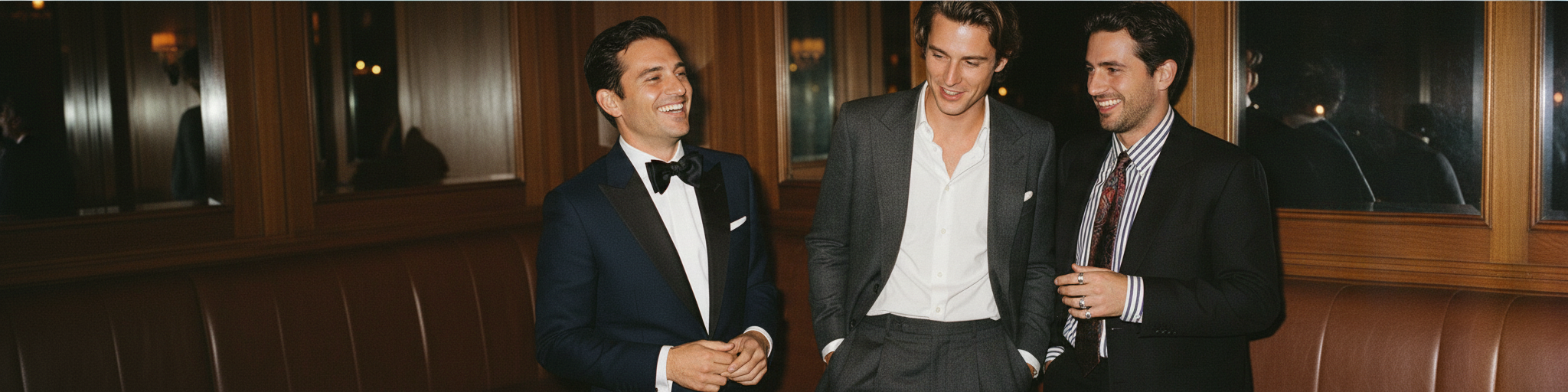
Cocktail attire--often the most confusing dress code on an invitation--means mastering the sweet spot between business wear and black tie, and this guide demystifies it by tracing the look from 1920s speakeasies to today's global, season-smart interpretations. Readers learn to assemble a fail-proof outfit: start with a well-tailored dark suit (navy or charcoal), add a crisp white or light-blue shirt, finish with polished Oxford or Derby shoes, then calibrate formality with accessories--ties pocket squares, watches--while keeping all leather tones matched. The article shows how to read context cues (venue, season, region, industry) to bend the rules confidently--trading a tie for a premium tee at creative events, swapping linen for flannel in winter, or adapting European minimalism versus North-American color flair--so you never look underdressed or overdressed. It also delivers practical hacks: prioritize fit over price, rent statement pieces, invest in quality shoes, and maintain garments properly to slash cost-per-wear. Ultimately, mastering cocktail attire isn't just about obeying fashion rules--it's a psychological power move: when you know your outfit is flawlessly appropriate, you project confidence, command respect, and free mental bandwidth to enjoy weddings, corporate mixers, or rooftop parties instead of second-guessing your reflection.
Introduction
Cocktail attire occupies a sophisticated middle ground between formal and casual, allowing you to express personal style while maintaining polished refinement for weddings, corporate events, and upscale gatherings.
The Confusion Surrounding 'Cocktail Attire' on Invitations
When you see "cocktail attire" on an invitation, you're facing one of the most common yet confusing dress codes in modern formal wear. The term itself creates uncertainty--some associate cocktails with upscale venues requiring formal attire, while others picture relaxed gatherings among friends [1].
This confusion is understandable, as cocktail attire occupies a unique middle ground that we'll explore throughout this guide [2]. Making matters more complex, similar terms like "Cocktail Casual," "Semi-Formal" and "Formal Attire" often blur the lines further [1].
What cocktail attire truly represents is sophisticated flexibility--"the refinement and cohesion of more formal ensembles mingled with the creativity and opportunities for self-expression of the more casual" [1]. As we'll detail in the following sections, the key lies in reading the context--location, time, and season all provide essential clues [2].
Why Mastering This Versatile Dress Code Is Important
Understanding cocktail attire isn't just about avoiding fashion faux pas--it's about confidently navigating social and professional settings where first impressions matter. This versatile dress code appears on invitations for weddings, corporate events, fundraisers, and upscale social gatherings, making it one of the most frequently encountered formal requirements in a man's life.
Mastering cocktail attire gives you the flexibility to adapt to various occasions while always looking appropriately polished and put-together. More importantly, when you understand the nuances of this dress code, you can express your personal style within its framework rather than feeling constrained by rigid rules.
This knowledge becomes particularly valuable as cocktail attire allows more room for individuality than black-tie events while still demanding respect for the occasion and your hosts.
What This Guide Will Help You Accomplish
This comprehensive guide will transform the often intimidating territory of cocktail attire into your style comfort zone [5]. You'll master the art of navigating cocktail dress codes with confidence, maintaining the polish and sophistication this standard demands while making it uniquely yours [4].
We'll go beyond basic suit-and-tie formulas to show you how to thoughtfully adapt your look for any setting--whether you're attending a beachside wedding, an evening corporate gala, or a sophisticated cocktail party [5]. Through detailed sections on everything from suit selection to seasonal adaptations, you'll learn to express your personality through smart fabric choices, refined color palettes, and carefully chosen accessories [5].
By the end of this guide, you'll have the knowledge to build a versatile cocktail wardrobe that not only shows respect for your hosts but also showcases your evolved sense of style [4]. And when you're ready to put this knowledge into practice, whether renting for a special event or investing in your formal wardrobe,

Defining Cocktail Attire: What Does It Actually Mean?
Cocktail attire originated in 1920s speakeasies as a sophisticated dress code bridging daywear and formal evening wear, evolving through decades while maintaining its refined foundation today.
The Historical Origins of Cocktail Dress Codes
Cocktail attire emerged in 1920s Prohibition-era America when wealthy socialites gathered for pre-dinner drinks in speakeasies and private clubs [6][7]. Rather than acknowledging growing alcohol dependencies, these elites rebranded their ritual with a catchy name: cocktail hour [6]. A distinctive dress code soon followed to bridge the gap between daywear and evening formal dress [7].
The original men's cocktail attire consisted of specific elements that still influence today's interpretations. A single-breasted, two-button suit in charcoal grey or midnight blue worsted wool formed the foundation [7]. This was paired with a starched white poplin shirt featuring a pointed collar and French cuffs [7]. A silk tie with bold stripes or small geometric patterns added visual interest, while cap-toe Oxford shoes in high-shine black calf leather completed the look [7]. Accessories included mother-of-pearl cufflinks, a silver collar bar, and a crisp white linen pocket square [7].
The cocktail dress code evolved significantly through subsequent decades. The 1950s and 1960s, influenced by style icons like Frank Sinatra, represented cocktail attire at its most formal [7]. Men adopted slim-cut suits with narrow lapels in deep charcoal or ink-blue sharkskin wool, slimmer shirts with smaller collars, and skinny ties no wider than 2.5 inches [7]. The 1970s and 1980s saw experimentation with color and texture--burgundy velvet dinner jackets paired with black wool trousers became acceptable, while shirts expanded beyond white to include pale pink or azure blue [7]. The new millennium brought renewed interest in classic styling with modern twists, including three-piece suits in navy super 120s wool and accessories like tie bars and lapel pins [7].
Today's cocktail attire reflects our diverse global society while maintaining its sophisticated foundation [7]. Whether you're attending a wedding or corporate celebration, the modern interpretation preserves refinement while embracing personal expression [6]. Though regional variations exist (as we'll explore below), the essence remains consistent: cocktail attire delivers elegance and semi-formality with room for individual style [6].
The Modern Definition of Men's Cocktail Attire
Today's cocktail attire strikes the perfect balance--polish without pretense, structure without stiffness [8]. This semi-formal dress code gives you the freedom to look sophisticated while expressing your personal style [8].
At its foundation, cocktail attire typically means a well-tailored dark suit paired with refined accessories [8]. The classic approach features a
Where Cocktail Attire Sits on the Formality Spectrum
Understanding where cocktail attire sits on the formality spectrum helps you nail the dress code every time. Think of it as the sweet spot between everyday business wear and formal evening attire [9]. It ranks above business casual and smart casual but stays more relaxed than black tie optional, black tie, and white tie categories [9].
To put this in perspective: if casual attire represents the relaxed end of the spectrum and white tie sits at the pinnacle of formality, cocktail dress lands firmly in the upper-middle territory [9]. You'll look sophisticated enough for elegant evening events without dealing with the rigid protocols of formal dress codes--that's the beauty of this versatile category.
This positioning explains why you'll see cocktail attire requested for upscale social gatherings, evening weddings, and sophisticated parties [9]. The dress code gives you creative freedom while ensuring you maintain a refined appearance. Here's a key distinction to remember: while business attire prioritizes professional, conservative presentation, cocktail dress emphasizes style and sophistication specifically for social settings [10].
Unlike black tie events, which require a tuxedo (though dark suits work for black tie optional), cocktail attire centers on a well-tailored dark suit enhanced with thoughtfully selected accessories [10]. This flexibility makes it ideal for navigating various social occasions with confidence.
Regional and Cultural Variations Worth Noting
Cocktail attire takes on different personalities around the world, so understanding regional variations helps you dress appropriately wherever you're celebrating. In Mediterranean Europe, expect a more relaxed interpretation--that Sicily beach wedding might welcome an unstructured linen suit paired with suede shoes rather than traditional wool [11]. Meanwhile, Alpine settings like Saint Moritz call for heavier wool suits, often styled with rollnecks and leather dress shoes to match the sophisticated mountain atmosphere [11].
Cultural influences shape these variations in fascinating ways. European interpretations, particularly French styling exemplified by Vincent Cassel, lean toward minimalist polish with precise tailoring and subtle accessories [11]. East Asian cocktail attire often pushes boundaries--Korean star Jimin demonstrates this by pairing traditional suits with statement boots and turtlenecks instead of conventional shirts [11].
Here in North America, you'll find the most flexibility. Fashion experts note that our cocktail dress code encourages more "individuality" and "expressing yourself with more dramatic shapes and colours" compared to traditional European settings [11]. This gives you room to experiment while maintaining sophistication.
Weather plays a crucial role too. Summer cocktail events worldwide welcome lighter colors, minimal layering, and breathable fabrics--you might even get away with premium t-shirts under jackets or loafers without socks at casual warm-weather gatherings [11]. Winter events demand the opposite: rich textures, darker colors, and thoughtful layering that wouldn't work in July. Understanding these nuances ensures you'll always strike the right note, whether you're attending a rooftop party in Miami or a gallery opening in Montreal.
The Essential Elements of Men's Cocktail Attire
A well-tailored suit in navy, charcoal, or black serves as your cocktail attire foundation, with impeccable fit trumping all other considerations.
Suits and Blazers: Selecting the Right Colors, Fabrics, and Cuts
Your cocktail attire foundation begins with a well-tailored suit or blazer--the cornerstone piece that sets the tone for your entire look. Navy, charcoal, and black suits deliver timeless sophistication for traditional cocktail events without veering into overly formal territory [3]. When selecting your suit, let the season and venue guide your fabric choices. Wool works beautifully year-round, while darker-toned linen or seersucker suits offer breathability for outdoor summer celebrations [3].
For contemporary cocktail settings, you have room to experiment. A perfectly tailored dark suit paired with a crisp white or black tee creates modern sophistication--just ensure the fit is impeccable [3]. If you prefer the versatility of separates, pair charcoal trousers with a sports coat in subtle patterns like herringbone or basketweave for added visual interest [3].
Whatever direction you choose, remember that fit trumps everything. An ill-fitting suit instantly undermines the polished impression cocktail attire demands [3]. When exploring options like
Shirts: Appropriate Styles and How to Wear Them
Your shirt choice serves as the crucial bridge between formal and casual in cocktail attire. For traditional events, you can't go wrong with a crisp white shirt featuring a pointed or spread collar--this classic pairing with dark suits remains the gold standard [3][5]. When formality is paramount, stick with this time-tested approach.
Contemporary cocktail settings open the door to thoughtful variations. While white remains king, you can explore light blues or subtle patterns that add personality without overwhelming your look. Cutaway collars create an elegant frame for ties, while spread collars offer versatility for both tied and open-collar styling [5].
Modern cocktail attire embraces alternatives to traditional button-downs. A fine-gauge turtleneck brings sophisticated edge to winter events when paired with a tailored jacket [5]. For fashion-forward venues, even a pristine white or black t-shirt can work beneath a perfectly fitted suit--the key is ensuring it's premium quality and immaculately styled [3][5].
If you're inclined toward pattern or texture, subtle polka dots or micro-prints can add interest without sacrificing sophistication. Retro-inspired collars offer another avenue for personality at less formal gatherings [5]. The golden rule remains constant: your shirt should elevate the ensemble, never detract from it. Avoid anything that reads as office wear or weekend casual--cocktail attire demands intentional, refined choices that complement your suit's sophistication.
Trousers: Options Beyond Traditional Suit Pants
When moving beyond traditional suit pants, cocktail attire offers sophisticated trouser options that maintain formality while adding personality. Tailored wool trousers in charcoal, navy, or black create versatile foundations when paired with contrasting blazers. These darker tones ensure you maintain the refined aesthetic cocktail attire demands while allowing creative expression through texture and subtle pattern.
For contemporary cocktail events, explore trousers with understated details--a subtle herringbone weave, fine flannel texture, or micro-patterns that add depth without shouting. Modern tailoring favors a slimmer cut that creates clean lines without being restrictive. When mixing separates, ensure your trousers complement rather than compete with your jacket choice. Dark trousers with textural interest pair beautifully with solid blazers, while smooth-finish trousers balance patterned sport coats.
Seasonal considerations matter for trouser selection. Summer events call for lightweight tropical wools or refined cotton blends that maintain structure in heat. Winter gatherings welcome heavier wool weights and flannel finishes that provide both warmth and visual richness.
Fit remains paramount for cocktail-appropriate trousers. They should sit comfortably at your natural waist--not your hips--creating a clean silhouette. The hem should break slightly on your shoe, achieving that perfect balance between too short and pooling at your ankles. Proper tailoring here makes the difference between looking sharp and looking sloppy, regardless of price point.
Footwear: Finding the Perfect Balance Between Formal and Stylish
Your footwear choice anchors your entire cocktail ensemble, demanding both sophistication and comfort. For traditional cocktail events, cap-toe oxfords in polished dark leather remain the gold standard. Their closed lacing system creates sleek lines that complement tailored suits perfectly, while their minimal detailing maintains appropriate formality [12].
Derbies present a smart alternative when you need slightly more comfort without sacrificing elegance. Their open lacing system accommodates extended standing at receptions while maintaining the polished appearance cocktail attire requires [13]. For those seeking distinctive style, monk straps with their signature buckle closures offer personality within the bounds of cocktail-appropriate footwear [13].
Material and color selection significantly impact your overall look. Black leather proves most versatile, pairing flawlessly with black, charcoal, and navy suits. Deep brown or oxblood leather adds character when worn with navy, blue, or grey ensembles [13]. Remember this essential rule: coordinate all leather accessories--your belt and watch strap should match your shoe color, and shoes should never appear lighter than your suit [13].
Today's dress shoes cleverly incorporate comfort technology without compromising their formal appearance. Seek out options featuring cushioned insoles and flexible construction that support you through lengthy events [12]. This innovation means you no longer need to choose between style and comfort.
Proper fit prevents both discomfort and style mishaps. Your toes need adequate room without excessive space that causes slipping, while your heel should sit securely against the back [12]. Always break in new dress shoes before important events--last-minute polish can fix scuffs, but nothing remedies painful blisters during a cocktail reception [13].
Accessories: Elevating Your Cocktail Look
Pocket squares and lapel pins transform your suit into something memorable when you follow the three-rule system for combining accessories with intention.
Ties and Bow Ties: When They're Required vs. Optional
Here's the essential question: to tie or not to tie? While ties aren't mandatory for cocktail attire, they're a powerful tool for calibrating your look's formality [14]. Think of them as your outfit's volume control--dial up for traditional events, dial down for contemporary gatherings.
For evening cocktail events, opt for ties with luxurious textures in darker shades. Satin delivers timeless elegance, while wool or linen creates an approachable sophistication perfect for less formal settings [14]. Daytime occasions welcome lighter colors and subtle patterns that complement without competing for attention [14].
Wedding cocktail attire typically calls for a tie--a classic black necktie or bow tie paired with a white dress shirt remains your most reliable choice, especially with darker suits [14]. For modern venues or creative industries, you can confidently go tie-less if your shirt is impeccably fitted and the rest of your ensemble maintains appropriate polish [14].
Pro tip: When you see "black-tie optional," you have flexibility--either embrace the tuxedo or choose a dark suit with an elegant tie [10]. The key is reading the room and dressing with intention.
Pocket Squares and Lapel Pins: Adding Personality Without Overdoing It
Pocket squares and lapel pins are your secret weapons for transforming a standard suit into something memorable. The best part? These small investments deliver major style returns when deployed correctly.
Pocket Square Fundamentals Start with fabric selection--silk adds instant formality, while linen or cotton creates relaxed sophistication. Skip the exact-match approach; instead, choose squares that complement your tie through shared colors or contrasting textures. The classic white pocket square remains your failsafe option, universally appropriate and eternally stylish.
The Three-Rule System for Multiple Accessories When combining pocket squares with lapel pins, follow these guidelines for guaranteed success [15]:
- Keep at least one element solid (no patterns)
- Limit statement pieces to two items maximum
- Maintain two complementary colors across all accessories
Strategic Placement and Selection Position your lapel pin on the upper left lapel, running parallel to its closed end [15]. Match pin styles to your event--sleek metallic pins for business gatherings, floral boutonnieres for celebrations. The golden rule? Create harmony, not competition. If your pocket square makes a bold statement, choose a subtle lapel pin, and vice versa [15].
Watches, Cufflinks, and Other Jewelry: The Finishing Touches
Your finishing touches should whisper, not shout. Watches, cufflinks, and subtle jewelry complete your cocktail look with understated elegance--think of them as punctuation marks that perfect your style sentence.
Watch Selection Choose timepieces that match your outfit's formality. Leather bands remain the gold standard for cocktail events, especially when coordinated with your shoes and belt [1]. This attention to detail--matching all leather elements--instantly elevates your entire presentation.
Cufflinks and Classic Accessories French cuffs paired with cufflinks add instant sophistication to cocktail attire [1]. While traditional styles featured mother-of-pearl, today's options include understated silver-toned metals with subtle stone accents. For those embracing classic menswear, collar bars offer another layer of refinement--just ensure they're proportionate to your collar spread and complement other metals in your outfit [1].
The Two-Piece Rule Quality trumps quantity every time. Limit yourself to two jewelry pieces maximum--perhaps
Seasonal Accessories: Adapting Your Look Throughout the Year
Smart seasonal adaptation keeps your cocktail attire fresh and appropriate year-round. Rather than overhauling your entire wardrobe, strategic accessory swaps create seasonally perfect looks.
Spring/Summer Strategy Embrace lighter textures and brighter accents. Think silk knit ties in coral or sky blue, linen pocket squares in cream or pale pastels [7]. For outdoor summer events, you can subtly relax formality--premium no-show socks or going sockless works when paired with loafers [1].
Fall/Winter Refinement Cooler months call for richer textures and deeper tones. Wool pocket squares in burgundy or forest green, silk ties with subtle patterns, and structured accessories create seasonal sophistication [7]. For festive occasions, a velvet smoking jacket in navy or deep green adds contemporary luxury without crossing into costume territory [16].
Year-Round Essential Whatever the season, maintain consistency across all leather elements--belts, shoes, and watch straps should share complementary tones for a polished, intentional appearance [1]. This simple rule instantly elevates any seasonal adaptation.
Cocktail Attire for Different Occasions
Balance sophistication with comfort by pairing a tailored dark suit with a classic tie and choosing fabrics suited to your venue and season.
Wedding Cocktail Attire: Decoding Expectations and Appropriate Options
Wedding cocktail attire balances polish with approachability, allowing guests to look elegant without formal black tie constraints [17]. This dress code shows respect for the couple's vision while contributing to the event's aesthetic. For men, wedding cocktail attire typically means a well-tailored dark suit--navy and charcoal work especially well for evening ceremonies.
While ties aren't strictly mandatory for all cocktail events, weddings generally warrant their inclusion, with classic black neckties or bow ties paired with white dress shirts offering reliable choices [17]. The venue and season should influence your outfit decisions. Beach or garden weddings permit lighter colors and fabrics, while urban or evening celebrations call for darker, more structured ensembles [17].
Winter weddings might incorporate richer textures like velvet accents, while summer events allow breathable fabrics. Avoid common mistakes when interpreting wedding cocktail attire: never underdress (no casual pants or sneakers), don't overshadow the wedding party with overly formal attire like tuxedos unless specified, and ensure your entire look appears intentional rather than hastily assembled [17]. Wedding cocktail attire strikes the perfect balance--sophisticated enough to honor the occasion's significance while comfortable enough to enjoy the celebration.
Corporate Events and Professional Gatherings: Striking the Right Balance
Corporate cocktail events demand a nuanced balance between professional polish and social sophistication. At business functions, cocktail attire signals a slightly elevated formality compared to everyday office wear while remaining distinct from formal black tie [18]. Your outfit should project competence while acknowledging the celebratory nature of the gathering.
Select tailored suits in darker shades (navy, charcoal, or black) paired with solid-colored shirts that communicate professionalism without appearing purely corporate [19]. While standard business attire prioritizes conservative presentation, cocktail business events permit measured personality expression through carefully selected accessories--cufflinks, pocket squares, and watches add refinement without distracting from professional presence [18]. For indoor evening corporate functions, a well-fitted blazer becomes essential, instantly elevating your appearance to match the more formal atmosphere typical of client receptions or award ceremonies [18].
When navigating corporate cocktail events in different industries, context matters significantly; creative fields may welcome bolder accessories or subtle pattern mixing, while traditional sectors like finance or law typically expect more restrained styling with emphasis on impeccable tailoring rather than fashion-forward details [19]. The fundamental principle remains consistent: corporate cocktail attire should appear intentionally curated rather than hastily assembled, with each element contributing to a cohesive look that demonstrates respect for both the occasion and your professional relationships [19].
Evening Social Events: When You Can Push the Boundaries
Evening social events offer the most flexibility to experiment within cocktail attire's structured framework. At creative industry gatherings, you can push boundaries with distinctive prints, on-trend footwear, and unexpected textures while maintaining an overall polished appearance [8]. Modern cocktail dress now welcomes thoughtful substitutions--Richard Anderson notes that a crisp white or black tee can replace traditional button-downs under a perfectly tailored dark suit for contemporary settings [3].
Cultural fusion creates another opportunity for boundary-pushing; Indo-Western combinations featuring bandhgala jackets or sherwanis paired with tailored trousers introduce rich fabrics like silk and velvet while maintaining cocktail-appropriate sophistication [8]. The venue itself guides how far you can stretch conventions--rooftop events welcome lighter fabrics and suede loafers, while winter gatherings permit velvet blazers and darker color palettes [8]. Remember that successful boundary-pushing maintains the essential cocktail balance: look intentional, dress respectfully, and express personality through thoughtful details rather than overwhelming statements [3].
This approach lets you demonstrate style fluency while honoring the occasion's significance. Even when experimenting, certain foundational elements remain non-negotiable--a well-fitted jacket creates structure, quality footwear signals attention to detail, and overall coordination demonstrates purpose rather than coincidence [3].
Daytime vs. Evening Cocktail Events: Adjusting Your Approach
Error processing section content.
Navigating Common Challenges and Questions
Cocktail attire sits between business casual and black tie, demanding a tailored suit or sophisticated blazer while allowing creative expression through accessories and styling.
Cocktail Attire vs. Other Dress Codes (Business Casual, Black Tie, Smart Casual)Understanding the nuances between cocktail attire and other dress codes helps you navigate invitations with confidence. Business casual sits well below cocktail attire on the formality spectrum--where business casual might allow khakis and a polo, cocktail attire demands a tailored suit or sophisticated blazer combination. Smart casual falls between these two, permitting dark denim with a blazer but lacking cocktail attire's refined polish.
The most common confusion occurs between cocktail attire and black tie optional. While both allow dark suits, black tie optional specifically invites (but doesn't require) tuxedo wear, whereas cocktail attire centers on suits with creative expression through accessories and styling. Black tie itself requires a tuxedo--no exceptions--making it distinctly more formal than cocktail dress.
When an invitation specifies cocktail attire, you're entering semi-formal territory that demands thoughtful presentation. Unlike the rigid requirements of formal dress codes, cocktail attire offers flexibility within structure--maintain sophistication while expressing personal style through fabric choices, accessories, and modern interpretations of classic pieces.
Common Styling Mistakes and How to Avoid Them
Understanding the nuances between cocktail attire and other dress codes helps you navigate invitations with confidence. Business casual sits well below cocktail attire on the formality spectrum--where business casual might allow khakis and a polo, cocktail attire demands a tailored suit or sophisticated blazer combination. Smart casual falls between these two, permitting dark denim with a blazer but lacking cocktail attire's refined polish.
The most common confusion occurs between cocktail attire and black tie optional. While both allow dark suits, black tie optional specifically invites (but doesn't require) tuxedo wear, whereas cocktail attire centers on suits with creative expression through accessories and styling. Black tie itself requires a tuxedo--no exceptions--making it distinctly more formal than cocktail dress.
When an invitation specifies cocktail attire, you're entering semi-formal territory that demands thoughtful presentation. Unlike the rigid requirements of formal dress codes, cocktail attire offers flexibility within structure--maintain sophistication while expressing personal style through fabric choices, accessories, and modern interpretations of classic pieces.
Building a Versatile Cocktail Attire Wardrobe
starts with investing in foundational pieces that work across multiple settings.
Begin with a well-tailored dark suit in navy, charcoal, or medium gray--these classic colors provide maximum versatility while avoiding the overly formal impression of black [20].
For those exploring different styles before committing to purchases, consider trying various options through
When to Invest vs. When to Save on Key Pieces
Building a cocktail-ready wardrobe requires strategic decisions about where to allocate your budget. Invest in a well-tailored dark suit or blazer as your foundation piece--nothing trumps proper fit, and a well-fitted garment always looks better than an ill-fitting expensive one [23]. The beauty of modern formal wear is the flexibility to rent for specific occasions while investing in versatile basics you'll wear repeatedly.
Shoes deserve significant investment since they're the first thing people notice about your style; look for options with comfort innovations like memory foam footbeds that maintain formal appearance while providing all-day comfort [23]. Your cost-per-wear will be dramatically lower on high-quality natural materials like wool, cashmere, and premium leather, which look better longer and actually save money over time by requiring fewer replacements [24].
Shirts occupy middle ground--invest in a few high-quality white and light blue options that anchor any look, but feel free to economize on trendier patterns or colors [25]. When it comes to accessories, pocket squares and colorful socks offer high style impact at lower price points, allowing you to refresh your look economically [25].
For seasonal items you'll wear less frequently, like linen blazers for summer cocktail events, moderate your spending unless you attend numerous warm-weather gatherings annually [24]. Consider renting statement pieces for one-off occasions rather than purchasing items that will hang unused in your closet. Maintenance habits ultimately determine whether your investments pay off--proper shoe care, appropriate cleaning methods, and careful storage dramatically extend garment life and maximize your wardrobe's return on investment [25].
Conclusion
Key Takeaways for Mastering Men's Cocktail Attire
Mastering cocktail attire means finding your sweet spot between formal rigidity and casual comfort.
Start with the foundation: a well-tailored dark suit in
Adapting to Evolving Standards While Maintaining Timeless Style
Modern cocktail attire has evolved beyond rigid rules, embracing contemporary styling while respecting traditional foundations. Today's interpretations welcome relaxed tailoring, tonal dressing, and experimental textures--all while maintaining essential refinement [16]. As discussed in earlier sections, contemporary men can substitute crisp white or black tees under perfectly tailored suits for creative settings [1], or explore seasonal materials that suit the occasion and climate [16].
Regional nuances shape expectations differently: European approaches often favor minimalist precision, while North American interpretations allow for more dramatic expressions through shape and color [1]. Success lies in reading your specific context--venue formality, event purpose, and cultural setting all inform your choices [1].
The best modern cocktail looks respect tradition while avoiding dated appearances. Strike this balance by incorporating classic elements (proper fit, quality fabrics) with contemporary touches (updated silhouettes, thoughtful accessories) [1]. This approach lets you project confidence without appearing stuffy or inappropriately casual [1]. Remember: contemporary cocktail attire isn't about abandoning tradition--it's about reinterpreting classic elegance through a modern lens [16].
Confidence: The Most Important Element of Any Outfit
Your outfit can be impeccable, but without confidence to animate it, even the finest cocktail attire falls flat. Research confirms this through what psychologists call "enclothed cognition" - the measurable psychological impact clothing has on your mindset and behavior [28]. Studies demonstrate that properly dressed individuals display enhanced abstract thinking and increased feelings of empowerment, with one Harvard Business School study showing that sales teams in suits significantly outperformed casually dressed colleagues simply because they felt more confident asking for higher prices [28].
This psychological advantage extends beyond self-perception--others perceive well-dressed individuals as more competent and trustworthy, creating a positive feedback loop that further boosts confidence [29]. The effect is so pronounced that participants wearing formal clothing in controlled studies performed better in creative and organizational tasks compared to those in casual wear, while also showing greater dominance in negotiations [30]. When wearing cocktail attire, this confidence boost comes from knowing you've mastered the dress code's nuances--from proper fit (the most critical element) to thoughtful accessorizing that expresses personality without overwhelming your look [28].
The right outfit doesn't just make you look appropriate; it transforms how you think, behave, and interact, making confidence the invisible yet most powerful component of any cocktail ensemble.
- Cocktail attire is a semi-formal dress code: dark suit, smart accessories, no tuxedo required.
- Fit matters most--tailored navy/charcoal wool suits trump expensive ill-fitting options every time.
- Ties are optional; use them to dial formality up or down based on venue, time, and event type.
- Match all leather (shoes, belt, watch strap) and keep accessories to two statement pieces max.
- Regional rules vary: Europe favors minimalist, North America allows bolder colors and shapes.
- Seasonal swaps--linen/silk knits for summer, wool/velvet textures for winter--keep the code fresh.
- Confidence is the invisible accessory; well-fitted cocktail attire boosts performance and perception.
- https://www.gentlemansgazette.com/cocktail-attire-for-men/
- https://www.theknot.com/content/cocktail-wedding-attire
- https://www.gq.com/story/cocktail-attire-for-men
- https://www.menshealth.com/style/a41778535/cocktail-attire-for-men/
- https://www.apetogentleman.com/cocktail-attire-for-men/
- https://manofmany.com/style/guide-mens-cocktail-attire-dress-code
- https://thevou.com/blog/cocktail-attire-styling-guide-men/
- https://theguycornernyc.com/2025/08/01/what-is-cocktail-attire-for-men-in-2025-a-style-guide-for-the-modern-man/
- https://damianistores.com/blogs/blog/navigating-dress-codes-from-casual-to-white-tie
- https://emilypost.com/advice/attire-guide-dress-codes-from-casual-to-white-tie
- https://www.gqmiddleeast.com/article/you-dont-have-to-be-into-cocktails-to-know-the-cocktail-attire-dress-code
- https://www.menshealth.com/style/g44955279/most-comfortable-dress-shoes/
- https://www.cobbler-union.com/blogs/journal/wedding-dress-shoes-for-men?srsltid=AfmBOoqVEMW5aPu7F9k4nKxfXzTOfjN6ayCJ3qGCuZLE3jnITZzRtsK2
- https://www.otaa.com/blogs/gentlemans-guide/are-ties-required-for-cocktail-attire
- https://www.otaa.com/blogs/gentlemans-guide/can-you-wear-a-lapel-pin-with-a-pocket-square
- https://www.oliverbrownlondon.com/en-us/blogs/news/cocktail-attire-for-men-a-complete-style-guide-by-oliver-brown
- https://blog.jimsformalwear.com/2025/04/what-is-cocktail-attire-for-a-wedding/
- https://www.greenvelope.com/blog/cocktail-dress-code
- https://www.paulsimonco.com/blog/understanding-mens-dress-codes-for-events
- https://thedarkknot.com/blogs/suitupdressup/mastering-men-s-cocktail-attire-a-complete-guide-to-cocktail-attire-for-men?srsltid=AfmBOopJtYXtgKurTXpd-GWEOc-wUgouAeDPUg3TJ_0I5fVAoNHadIfN
- https://www.jackarcher.com/blogs/outfits/cocktail-attire-for-men?srsltid=AfmBOooUvp5JNyU0-6psHzhwJ-CZoJQ2U6yUBCgImQpgpGZ4pbgcGzG0
- https://www.vogue.com/article/cocktail-attire-for-men-fashion-guide
- https://www.davidsbridal.com/content/style-guides/8-stylish-cocktail-attire-ideas-for-men-formal-to-smart-casual?srsltid=AfmBOopRh2GfyX_ZXNSr6oyx69OWPYhiyrAha1iAzugKsoYllL9-S8zm
- https://www.mercerwexley.com/style-grooming/essential-wardrobe/investment-pieces-every-man-should-own/
- https://thedarkknot.com/blogs/suitupdressup/wardrobe-essentials-for-men-the-ultimate-style-guide?srsltid=AfmBOopHROFRK6XbZEeMibb61R5PVM9Wkfbq2dbAyBBrQrr6Zbks3XxL
- https://www.jackarcher.com/blogs/outfits/cocktail-attire-for-men?srsltid=AfmBOorC8KWqFTNeL4rDIjLJ2Q621Dad5QJKj_R6pgCfUOfv0pDj6umV
- https://blacklapel.com/blogs/the-compass/cocktail-attire-for-men?srsltid=AfmBOors3nlyeyyhjh4Z3rZm5cI7Sj3zyn0Oey1ZEDdsmqLpIDvxJSiD
- https://www.capitolhillclothiers.com/style-guides/the-psychology-of-suits-how-dressing-sharp-affects-confidence
- https://damianistores.com/blogs/blog/wearing-confidence-the-psychology-of-dressing-for-your-mindset
- https://haas.berkeley.edu/undergrad/community/blog/posts/the-psychology-of-the-suit/


