



Choosing Groomsmen Suits to Match Your Wedding Black Tuxedo
This comprehensive guide demystifies the art of coordinating groomsmen attire with a groom's black tuxedo, offering practical strategies for every wedding formality level. Readers will discover how to navigate the nuanced differences between tuxedos and suits, understand when tuxedos become mandatory versus optional, and master coordination techniques that ensure the groom stands out while maintaining visual harmony. The article provides specific color recommendations--from classic black and navy to versatile charcoal and gray suits--while explaining how fabric choices, lapel styles, and accessories can create either a perfectly matched or intentionally differentiated wedding party look. With detailed insights on 2024 fashion trends, budget-friendly rental versus purchase decisions, and a practical 6-month timeline for fittings, the guide empowers couples to make informed decisions about everything from footwear and neckwear to the crucial choice between cummerbunds and waistcoats. Whether planning a strict black-tie affair or a more relaxed semi-formal celebration, readers will learn how to balance formality, personal expression, and practical considerations to create a cohesive, sophisticated aesthetic that photographs beautifully while respecting each groomsman's budget and body type.
Understanding Tuxedo vs. Suit Distinctions
A tuxedo's satin lapels, stripe-seamed trousers, and mandatory bow tie instantly signal black-tie formality, whereas a suit's self-fabric lapels and plain pants keep you business-appropriate and far less formal.
Defining Elements of a Classic Black Tuxedo
A classic black tuxedo is defined by several distinct elements that set it apart from standard suits. The jacket features satin or grosgrain-faced lapels that contrast with the black worsted wool fabric, with peak or shawl styles being traditional options [1]. The single-button closure is covered in matching satin, and the pockets are jetted without flaps to maintain clean lines [1].
The trousers include a satin stripe down the outer seam and are designed to be worn with suspenders, never featuring belt loops or cuffs [2]. Essential components include a white formal shirt with either a pleated or pique bib front and French cuffs, along with a black bow tie made from the same material as the lapel facing [1]. The waist must be covered by either a black cummerbund or formal waistcoat in matching fabric [2].
Proper black tie footwear consists of either patent leather opera pumps or highly-polished black oxford dress shoes [2].
How Suits Differ from Tuxedos in Style and Formality
Standard suits differ from tuxedos in several key aspects that affect their formality and appropriate use. While suit jackets feature lapels made from the same fabric as the rest of the garment, tuxedo lapels are crafted from contrasting satin or silk [3].
The trousers also distinguish these garments - tuxedo pants include a satin stripe down the outer seam that matches the lapel fabric, while suit pants have no such embellishment [4]. Suits offer more versatility in fabric choices and colors, making them suitable for business settings and semi-formal events, while tuxedos are typically limited to black or dark blue for formal occasions [4].
The shirt pairing also differs significantly - suits work well with standard dress shirts in various patterns and colors, while tuxedos require specialized formal shirts with pleats or studded buttons to maintain their elevated formality [4].
Formality Spectrum: From Black Tie to Semi-Formal
Wedding formality exists on a clear spectrum from the most formal white-tie affairs to relaxed semi-formal events. At the pinnacle, white-tie attire requires men to wear long tuxedo tailcoats with tails reaching the knee, white piqué shirts, white vests, and bow ties, while women must wear full-length evening gowns with optional elbow-length gloves [5].
Black-tie follows as the next most formal code, traditionally reserved for evening events after 6:00 PM, requiring tuxedos with black bow ties for men and floor-length formal gowns for women [5]. Black-tie optional provides slightly more flexibility - men can choose between tuxedos or dark suits, while women can opt for floor-length gowns or sophisticated cocktail dresses [6].
The formal or black-tie optional category allows dark suits for men but maintains an elevated dress standard, with women wearing floor-length gowns, cocktail dresses, or dressy pantsuits [7]. Semi-formal attire offers the most versatility while still maintaining polish - men wear suits with or without ties, while women can choose midi dresses, elegant jumpsuits, or sophisticated separates appropriate for the event's timing and venue [5].
Setting the Right Tone with Your Wedding Party Attire
Your wedding party's attire sets the overall tone and formality level of your celebration. For black-tie events where the groom wears a tuxedo, groomsmen have two main options. They can match the groom's formality with tuxedos, creating an elevated, sophisticated look appropriate for evening celebrations [8].
Alternatively, dark formal suits offer more flexibility while maintaining polish - charcoal and navy are classic choices that complement a black tuxedo without competing with it [9]. The key is establishing clear expectations around formality level early. If opting for suits rather than tuxedos, focus on luxury fabrics like rich worsted wools or noble fiber blends, while avoiding casual materials and loud patterns [8].
Accessories play a crucial role in achieving the right formality balance - for black tie, groomsmen should wear proper bow ties and formal shirts, while suit-wearing groomsmen can incorporate long ties in coordinating colors [9].

Coordination Strategies for Your Wedding Party
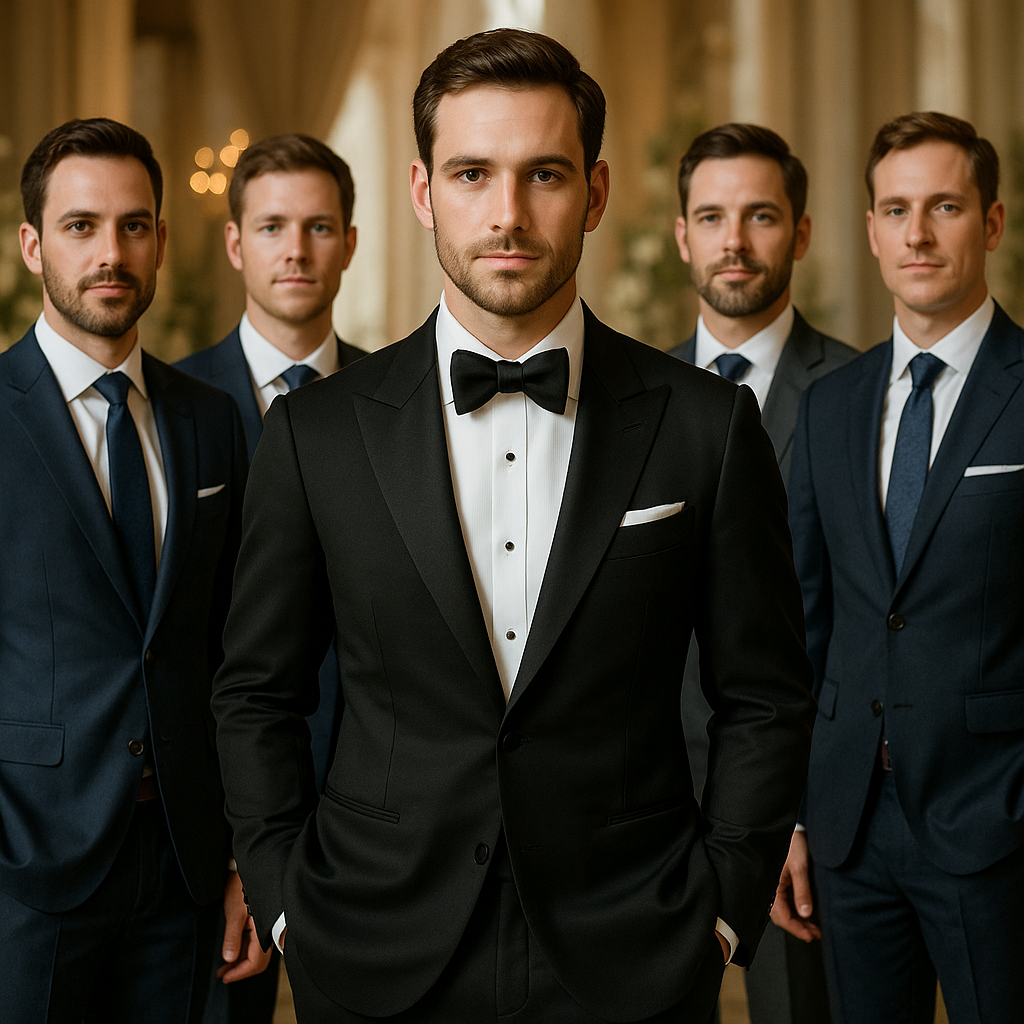
Coordinate your wedding party by either dressing every man in a matching tuxedo--bow tie, cummerbund, patent shoes and all--or give groomsmen classic navy or charcoal suits that share lapel or lining details with your tux so you stand out while everyone still looks cohesively formal.
Full Black Tie: When Groomsmen Also Wear Tuxedos
For true black tie weddings, having groomsmen wear tuxedos alongside the groom creates a timeless, sophisticated aesthetic. A complete tuxedo ensemble requires specific elements that distinguish it from standard suiting - each groomsman will need a formal shirt, bow tie, cummerbund or waistcoat to cover the waistband, and patent leather dress shoes [10].
While matching tuxedos create uniformity, the groom can still stand out through subtle variations like a white dinner jacket while keeping groomsmen in classic black [10]. However, it's crucial to note that if you specify a black tie dress code, tuxedos become mandatory for the entire wedding party - suits are not an acceptable alternative [11].
When coordinating multiple tuxedos, focus on consistency in key formal details like lapel styles, bow tie materials, and proper formal accessories to maintain the elevated formality level expected at black tie celebrations [10].
Mixed Formality: Tuxedo for Groom, Suits for Groomsmen
Mixing formality levels between the groom's tuxedo and groomsmen's suits offers an elegant compromise that maintains sophistication while providing practical benefits. This approach allows groomsmen to invest in suits they can wear again while ensuring the groom stands out appropriately [12].
When choosing suits to complement a tuxedo, focus on classic colors like navy, charcoal, or light gray that coordinate with the wedding's formality level while keeping the spotlight on the groom [12]. The suits should share common elements with the tuxedo, such as matching lapel styles or coordinated linings, while allowing enough variation to distinguish the groom's more formal attire [13].
For optimal coordination, groomsmen's suits should incorporate formal accessories like dress shirts and ties that complement the wedding's color scheme without attempting to match the tuxedo's level of formality [13]. This mixed approach works particularly well for weddings that fall between strictly black tie and cocktail attire, providing flexibility while maintaining an elevated aesthetic [12].
Creating Visual Distinction for the Groom
When the groom wears a tuxedo while groomsmen wear suits, several techniques can establish visual distinction. The key is starting with the groom's chosen style as the foundation, then selecting complementary fabrics and textures for the groomsmen that maintain formality while creating clear differentiation [14].
Beyond the inherent contrast between tuxedo and suit formality, the groom can stand out through thoughtfully varied style elements - like unique lapel treatments or exclusive accessories - while maintaining consistent base elements across the wedding party [14]. A coordinated color palette helps tie everything together visually while still allowing the groom's formal black tuxedo to command attention [14].
Balancing Cohesion with Individual Style
Modern weddings increasingly embrace personalized attire that balances group cohesion with individual expression. When coordinating groomsmen suits with a groom's tuxedo, establish clear parameters around colors, fabrics, and styles while allowing flexibility in fit and details [15].
Focus on unifying elements like coordinated accessories - ties, pocket squares, or cufflinks can seamlessly connect varied suit styles while maintaining visual harmony [15]. Consider each groomsman's body type and style preferences when selecting suits, as proper fit ensures everyone looks polished in photos [15].
The key is creating clear guidelines around a core theme - whether that's a specific color palette like earth tones or blues, or consistent fabric textures that complement the groom's tuxedo [15]. This approach lets groomsmen express themselves while maintaining a sophisticated aesthetic that photographs well [15].
Style Options that Complement a Black Tuxedo
Pair your groomsmen in sharply tailored navy or charcoal suits--never satin-faced black--to frame the groom's tuxedo with refined contrast and let him stand out in photos while giving the wedding party suits they'll wear again.
Classic Black Suit Alternatives for a Seamless Look
When coordinating suits with a groom's tuxedo, classic black suits offer a sophisticated alternative that maintains formality while creating visual distinction. A well-tailored black suit features clean lines and premium fabrics that complement the tuxedo's refinement without competing with its formal elements [10].
The key difference lies in the details - while tuxedos have satin-faced lapels and trouser stripes, black suits maintain a consistent fabric throughout, creating a subtle but noticeable contrast that allows the groom's tuxedo to stand out [16]. For optimal coordination, focus on selecting suits with similar lapel styles and ensuring proper fit through professional tailoring, as this creates a cohesive look while preserving the hierarchical formality between the groom and groomsmen [16].
Modern interpretations may incorporate textured fabrics or subtle patterns in black suits to add visual interest while maintaining the sophisticated aesthetic demanded by formal weddings [16].
Navy and Charcoal Options for Sophisticated Contrast
Navy and charcoal suits offer sophisticated alternatives that complement a groom's black tuxedo while maintaining visual distinction. Navy suits bring a perfect blend of sophistication and versatility, working equally well for daytime garden ceremonies and elegant evening receptions [17].
When paired with the groom's tuxedo, navy creates an elevated look that photographs beautifully while allowing groomsmen to wear their suits for future occasions. For a more formal approach, charcoal suits provide depth and gravitas close to black but with added softness that prevents competing with the groom's attire [18].
The key to successful coordination lies in selecting complementary fabrics and textures that maintain formality while creating clear differentiation between the groom and groomsmen [14]. Both navy and charcoal options allow for versatile shirt and accessory pairings - from classic white shirts with dark ties for more formal celebrations to softer pastel combinations for less structured events [17].
Gray and Lighter Suits for Seasonal Variation
Gray suits offer versatile seasonal options that complement a groom's black tuxedo while adapting to different wedding settings. Light gray creates an airy, fresh aesthetic perfect for spring and summer celebrations, working equally well for boho-inspired lakeside ceremonies or beach weddings [19].
The neutral tone allows for extensive accessory coordination - pair with jewel tones for bold contrast or pastel accents for a softer spring look [19]. For added visual interest, light gray plaid variations provide a fashion-forward option that maintains sophistication while introducing subtle pattern [19].
Charcoal gray strikes an ideal balance between formality and versatility, being dark enough for semi-formal events while remaining distinct from the groom's black tuxedo [19]. When selecting gray suits for groomsmen, consider the wedding's overall theme and timing - light gray suits create an effortlessly polished look for warm-weather celebrations, while deeper charcoal tones transition seamlessly across seasons [20].
2024 Trends in Cut, Lapels, and Silhouettes
Wedding fashion in 2024 emphasizes bold lapel choices, with oversized peaked and shawl styles making a dramatic comeback. Large lapels add grandeur and sophistication to formal attire, creating a striking focal point that photographs beautifully [21]. Textured fabrics are redefining traditional silhouettes, with luxurious materials like velvet, jacquard, and intricate weaves adding tactile depth to suits and tuxedos [21].
Modern cuts favor a tailored approach that accentuates the physique while ensuring comfort - slim fits create a streamlined silhouette, while modern fits offer a balanced cut through the waist and hips [22]. For a distinctive look, grooms are incorporating bold patterns and prints, from subtle herringbone to more daring geometric designs that maintain sophistication [21]. The trend toward personalization extends to custom details like bespoke linings and monogrammed elements, allowing each garment to tell a unique story [21].
Black velvet dinner jackets have emerged as a luxurious alternative to traditional wool, offering a sophisticated way for grooms to distinguish themselves while maintaining formal elegance [21].

Practical Planning and Logistics
Weigh the $100-250 rental bundle against a $450-1,100+ purchase by counting how many formal invites are on your calendar--then lock in a cohesive look across brands with matching lapels, buttons, and swatch-tested shades.
Rental vs. Purchase: Making the Right Decision for Your Wedding The decision between renting and purchasing wedding attire depends on several practical factors. Rental packages typically cost $100-250 and include the jacket, pants, shirt, vest or cummerbund, bow tie, and often formal shoes with basic alterations [23]. In contrast, purchasing a quality tuxedo requires $300-800 for basic styles, with designer options exceeding $1,000, plus an additional $150-300 for accessories [23].
Renting offers key advantages: lower upfront costs, access to current designer styles, and freedom from maintenance responsibilities. However, rentals come with limited customization options and potential fit issues from standardized sizing [24]. Purchasing provides benefits like perfect tailoring to exact measurements, the ability to make modifications, and long-term value for those who regularly attend formal events [24].
The choice ultimately depends on factors like event frequency, budget constraints, and style preferences. Those attending occasional formal events may find renting more practical, while frequent formal event attendees could justify the investment in purchasing [24]. Consider your upcoming formal event calendar and realistic budget when deciding - multiple planned formal occasions can make purchasing more economical over time [23].
Managing Different Suit Brands for a Cohesive Appearance
When working with different suit brands, focus on establishing consistent visual elements across manufacturers to create a cohesive look. Start by selecting suits with similar lapel styles, button configurations, and pocket designs to maintain uniformity despite brand variations [13]. Coordinate fabric weights and textures across different makers - while exact matches aren't necessary, materials should share comparable qualities in sheen and weight to photograph well together [25].
Pay special attention to color matching between brands, as subtle variations in shade can become obvious in photos. Request fabric swatches when possible to compare colors in natural light [25]. For mixed-brand ensembles, use accessories strategically to create visual connections - matching ties, pocket squares, and boutonnieres can effectively bridge slight differences between suit manufacturers [14].
Consider designating one groomsman to be the point person for coordinating measurements and alterations across different tailors, ensuring consistent fit standards are maintained regardless of brand origin [13].
Timeline for Fittings, Alterations, and Delivery
A well-planned timeline ensures perfect fit and minimal stress for wedding party attire. Start exploring suit options 6 months before the wedding to allow time for style selection, fabric choices, and initial measurements [26]. Schedule the first fitting 4 months prior, using this opportunity to assess fit and note needed adjustments [26].
Follow up with a second fitting at 3 months to check alterations and ensure comfort during movement [26]. The final fitting should occur 6-8 weeks before the wedding date, allowing time for any last-minute tweaks [26]. For groomsmen specifically, coordinate group fittings 4-6 months before the wedding to streamline the process and maintain consistent timing across the wedding party [27].
Pick up suits 2-4 weeks before the ceremony to avoid storage wrinkles while leaving time for emergency adjustments [26]. Conduct a final inspection one week before to check for any issues with fit, wrinkles, or damage [26]. For rental suits, arrange pickup within one week to a month before the wedding, ensuring time to address any fitting concerns while adhering to vendor timelines [27].
Budget-Friendly Approaches Without Compromising Style
Creating a polished wedding look doesn't require breaking the bank. Rental packages typically cost $100-250 and include the complete ensemble - jacket, pants, shirt, vest or cummerbund, bow tie, and formal shoes with basic alterations [28]. For groomsmen seeking long-term value, purchasing suits ranges from $300-800 for basic styles, with designer options exceeding $1,000 plus $150-300 for accessories [28].
Online rental services streamline the process while keeping costs manageable - platforms offer free swatches for color matching and two-week trial periods to ensure proper fit before the event [13]. To maximize savings without compromising style, focus on coordinating through strategic accessories rather than exact suit matches. Ties, pocket squares, and boutonnieres can effectively bridge slight differences between suit manufacturers while maintaining a cohesive look [28].
For mixed-formality weddings where the groom wears a tuxedo, groomsmen can opt for classic dark suits that complement without competing, allowing them to invest in versatile pieces they'll wear again [13].


Accessories and Finishing Touches
Elevate your black-tie ensemble by pairing patent-leather wholecut Oxfords with black silk over-the-calf socks and, if you're the groom, distinguish yourself from matching groomsmen with a classic bow tie while they wear complementary long ties drawn from the wedding's color palette.
Formal Footwear Selection Guide
Proper formal footwear selection is crucial for maintaining black tie elegance. Patent leather Oxford shoes represent the pinnacle of formal footwear, featuring closed lacing where the flaps are sewn under the vamp for a sleek, single-piece appearance [29]. For maximum sophistication, wholecut Oxfords offer an elevated option actually constructed from one leather piece [30].
While patent leather delivers the highest formality with its permanent glossy finish, well-polished black calfskin Oxfords provide a versatile alternative that works across multiple formal occasions [29]. Venetian loafers offer another acceptable option for slightly less formal settings, though tassel variations should be avoided [29]. Opera pumps with grosgrain ribbon bows provide a classic formal choice, particularly suited for black tie events, while Belgian shoes with their distinctive small bow present a unique alternative for creative black tie or cocktail dress codes [30].
Regardless of style choice, formal footwear should be paired with black silk over-the-calf socks and feature either satin or waxed cotton round laces in black [30].
Neckwear: Ties, Bow Ties, and Color Coordination
Neckwear choices play a crucial role in coordinating wedding party attire. For black tie events where the groom wears a tuxedo, groomsmen have two main options: matching black bow ties for full formal coordination, or long ties in complementary colors that maintain formality while creating visual distinction [31].
When using ties to connect the wedding party's look, they can either match bridesmaid dress colors exactly for a uniform appearance, or incorporate shades from the broader color palette - for example, if bridesmaids wear lavender, groomsmen could wear plum ties to create subtle variation [32]. For mixed-formality weddings, the groom's bow tie can stand apart while groomsmen wear coordinated long ties that complement without competing [14].
To ensure perfect color matching, request fabric swatches before making final neckwear selections, as slight variations between manufacturers can become obvious in photos [32].
Vests, Cummerbunds, and Waistcoats Options
The choice between vests (waistcoats) and cummerbunds plays a crucial role in completing formal black tie attire. A cummerbund or waistcoat serves as the ceremonial divide between a standard suit and tuxedo, making it an essential component rather than just a decorative accessory [33].
Cummerbunds, which emerged around 1850 from British military adaptations of Indian kamarbands, offer practical benefits for warmer events while creating a lengthening effect that makes men appear taller with a trimmer waist [33]. For proper wear, cummerbunds should sit at the natural waist, covering both trouser tops and shirt bottom, with pleats facing upward - a tradition dating back to their historical use as ticket holders at formal events [33].
Waistcoats provide an equally refined alternative, featuring distinctive elements like low-cut fronts to showcase the formal shirt and small shawl lapels, with buttons covered in the same silk as the tuxedo jacket [33]. Both options must match the bow tie in either black or midnight blue, with cummerbunds specifically requiring silk that matches the jacket's lapel facing [33].
Detail Consistency: Pocket Squares, Cufflinks, and Boutonnieres
Coordinating small details creates visual harmony across the wedding party's attire. Pocket squares should match the groomsmen's ties while complementing the overall wedding color scheme - this creates a cohesive look without appearing overly matched [34]. For black tie events, cufflinks add sophisticated personalization while maintaining formality.
Simple, sleek cufflinks work best with tuxedos, though custom options can incorporate wedding colors or meaningful designs [34]. Boutonnieres require precise placement on the left lapel, with the stem aligned to the lapel's angle. The flower should sit directly over the lapel buttonhole, with the base positioned where the ribbon-covered stem begins [35].
For tuxedos without buttonholes, place the boutonniere approximately 1.5 inches above where the satin lapel fabric starts, using the second shirt button as a positioning guide [35]. Secure boutonnieres by pinning through the thickest part of the stem near the top, using a single pin unless the arrangement is particularly large [35].
- Black-tie weddings require tuxedos for the entire party; suits are not acceptable.
- Groomsmen can wear navy or charcoal suits to complement the groom's black tuxedo without matching.
- Start suit selection 6 months out; final fitting 6-8 weeks before the wedding.
- Rentals cost $100-250, purchases $300-800 plus accessories; decide based on future use.
- Cummerbunds or waistcoats must match the bow tie and cover the trouser waistband for true black tie.
- Peak or shawl satin lapels, single-button closure, and satin trouser stripe define a tuxedo.
- Patent leather Oxfords or polished black calfskin are required; pair with over-the-calf silk socks.
- https://hespokestyle.com/tuxedo-parts-names/?srsltid=AfmBOooNi17YEmFrORImAAw-HO5rbzmq6_buQCGpmSmSgBOKbRr0DJ8i
- https://www.artofmanliness.com/style/clothing/black-tie-how-to-wear-tuxedo/
- https://blog.jimsformalwear.com/2025/02/wedding-suits-vs-tuxedos-the-grooms-ultimate-style-guide/
- https://rushwilson.com/difference-suits-tuxedos/
- https://www.theknot.com/content/wedding-guest-attire-cheat-sheet
- https://www.brides.com/story/wedding-dress-code-explained
- https://www.paperlesspost.com/blog/dress-code-guest-attire-guide/?srsltid=AfmBOopnlu0c5JYBCrEJOaqBYQ-WixUOJfyjrYyrlK6di9QzEWAwfemg
- https://suitsupply.com/en-us/journal/formal-wedding-attire-for-men.html
- https://generationtux.com/blog/style-guides/formal-vs-black-tie
- https://www.weddingwire.com/wedding-ideas/black-tie-and-formal-attire-for-grooms
- https://www.theknot.com/content/fashion-rules-for-grooms
- https://thestylishbride.com/the-ultimate-guide-to-grooms-groomsmens-attire/
- https://generationtux.com/blog/style-guides/groomsmen-attire
- https://nicksmenswear.com/how-to-coordinate-groomsmen-suits-with-the-grooms-attire
- https://www.brides.com/mismatched-groomsmen-attire-8417391
- https://generationtux.com/blog/shopping-guides/groom-suits
- https://xsuit.com/blogs/news/wedding-etiquette-what-color-suit-to-wear-to-a-wedding
- https://perfecttux.com/blogs/news/the-best-charcoal-and-grey-wedding-suits-and-tuxedos
- https://generationtux.com/gallery/gray-wedding-suits
- https://suits.birdygrey.com/collections/suits-and-tuxedos/groomsmen-suits
- https://www.lilyandlime.com/blog/p/dress-to-impress-best-fashion-trends-for-grooms-and-groomsmen-in-2024
- https://perfecttux.com/blogs/news/the-ultimate-black-tuxedo-style-guide
- https://www.menswearhouse.com/blog/weddings/rent-or-buy-tuxedo/?srsltid=AfmBOor8YLiKH57pa6cqfAjtmjjU78SmEL2HpMoBF68k2oLdO6sBXfB9
- https://creativebridalwear.com/tuxedo-rental-vs-purchase/
- https://www.bridalformalboutique.com/post/groomsmen-suits-the-ultimate-guide-to-coordinating-looks
- https://www.groomsclub.com/blogs/news/when-to-start-fitting-for-your-wedding-suit?srsltid=AfmBOorinCmW6d8y4Du1UKgkjFnNQAtKB9hYt0vp368rGj37wqdxaD1c
- https://groomsday.com/blogs/guides/when-should-groomsmen-get-their-suits?srsltid=AfmBOoolB7NJ2kNMSHTx-axsRpmPiqxAi4tTiaqV4GqHSCzugYF9io9F
- https://generationtux.com/blog/shopping-guides/wedding-suits-for-groom-and-groomsmen
- https://www.cheaney.co.uk/blog/which-shoes-to-wear-with-tuxedos/?srsltid=AfmBOooLN9RepJ1GJbKIC0sH_N2WDt_j_yA-hARNa1yHE3dD7Gar5_VM
- https://hespokestyle.com/styles-formal-shoes/?srsltid=AfmBOor04vRkF7PbmimI67g9qePGFAd1XTVCFWIeyN_hVBWzhP8O9r0F
- https://generationtux.com/blog/style-guides/groom-different-suit-than-groomsmen
- https://generationtux.com/blog/how-to-guides/how-to-color-coordinate-your-bridesmaids-and-groomsmen
- https://www.michaelandrews.com/formal-wear-vest-vs-cummerbund/?srsltid=AfmBOorxeW6Buk-ANg05OMPiaqr01xmjoVN5ipN2L_5ST_Z9QGZvNPL9
- https://www.kennedyblue.com/blogs/weddings/groom-groomsmen-accessories?srsltid=AfmBOoru6vRbGbupbxjZrUKaCR_eKSvBJUHuAnG_7NPnOBn734WXrYLY
- https://suitshop.com/blogs/news/how-to-pin-a-boutonniere-perfect-placement-in-3-easy/


