



The Ultimate Guide to the Black Tux: Styles, Fits, and Tips
The Ultimate Guide to the Black Tux equips readers to master every facet of black-tie dressing, from the 19th-century origins of the tuxedo to today's streamlined rental and purchase options. It dissects the critical style choices--peak vs. shawl lapels, single- vs. double-breasted cuts, wool vs. velvet, slim vs. classic fits--and shows how fabric, lapel width, and satin placement instantly elevate (or undermine) formality. Step-by-step fit guidance ensures shoulders, sleeves, collar, and trouser break create the sharp, confident silhouette that signals respect for the occasion, while seasonal and venue-specific advice keeps wearers appropriately elegant from beach weddings to winter galas. Readers learn to assemble a flawless ensemble: hand-tied bow ties, low-cut waistcoats or pleated cummerbunds, patent leather pumps, and understated accessories that balance tradition with subtle personal flair like textured pocket squares or colored dinner jackets. A detailed comparison of renting versus buying--highlighting The Black Tux's algorithm-driven sizing, home try-on, wedding-party discounts, and quality construction--helps men decide when a $95 rental beats a $1,000 purchase. Ultimately, the guide demystifies black-tie etiquette, empowering readers to honor formal dress codes while injecting controlled individuality, ensuring they step into any evening event looking--and feeling--impeccably refined.
Introduction
Born in 1865 as King Edward VII's elegant rebellion against tailcoats, the black tuxedo--with its satin lapels and belt-loop-free trousers--still reigns as the ultimate emblem of formal sophistication.
The Timeless Elegance of the Black Tuxedo
The black tuxedo represents the pinnacle of men's formal attire, with a rich heritage dating back to 19th century Britain. Originally commissioned by King Edward VII in 1865 as a formal jacket that balanced elegance with comfort, the tuxedo evolved from an informal alternative to tailcoats into the definitive statement of sophistication [1].
The garment gained its name and widespread recognition in 1886 when it debuted at New York's Tuxedo Park, quickly becoming essential attire for American high society events [1]. While its style has evolved through different eras - from midnight blue double-breasted designs to the sleek silhouettes of the 1950s Hollywood golden age - the black tuxedo has maintained its status as the ultimate expression of formal elegance [1].
Today, it continues to be the standard for prestigious occasions, from celebrity galas to wedding celebrations, embodying a timeless refinement that transcends passing trends [2].
What Distinguishes a Tuxedo from a Suit
While tuxedos and suits may appear similar at first glance, the key distinction lies in their satin detailing. Tuxedos feature satin lapels, satin-covered buttons, and a distinctive satin stripe running down the outer seam of the trousers [5].
Suits, in contrast, are made entirely from the same fabric without satin accents, and their buttons are typically acrylic or non-covered [4]. Tuxedo pants notably lack belt loops, as belts are never worn with tuxedos, while suit trousers include them for versatility [4].
These design elements reflect their different levels of formality - tuxedos represent the pinnacle of formal evening wear, traditionally paired with bow ties and reserved for black-tie events, while suits offer greater versatility across business and social occasions [5]. The distinction emerged historically when the tuxedo was introduced in early twentieth century America as a refined alternative to tailcoats, eventually becoming synonymous with sophisticated evening attire [5].
About The Black Tux and This Comprehensive Guide
Founded in 2012 by Andrew Blackmon and Patrick Coyne, The Black Tux emerged from their frustration with traditional tuxedo rental options while planning Blackmon's wedding. The company revolutionized formal wear rentals by eliminating storefronts and distribution networks to invest in higher-quality garments while maintaining competitive pricing [6].
Today, The Black Tux offers both online and in-store experiences through 36 showroom locations across the US, combining virtual convenience with personalized service. Their proprietary Fit Algorithm and free home try-on program ensure precise fits, while expert stylists provide guidance whether shopping online or in-person [7].
This guide examines every aspect of black tuxedo selection and wear, from classic styling elements to modern innovations, helping readers navigate formal wear decisions with confidence. We'll explore essential fit considerations, complete ensemble creation, and practical advice for both rental and purchase options.

Black Tuxedo Styles and Design Elements
Choose your black tuxedo's destiny--slim, modern, or classic fit--then let peak or shawl lapels in satin or grosgrain declare your formal flair while subtle patterns keep tradition on its toes.
Classic vs. Modern Black Tuxedo Designs
Black tuxedo designs span a spectrum from classic to contemporary silhouettes. The slim fit represents the modern approach, featuring a close-fitting, streamlined cut that's narrower through the waist, chest, and hips with tapered leg openings - ideal for those seeking a sleek, fashion-forward look.
The modern fit offers a balanced middle ground, providing a slightly wider cut through the waist and hips while maintaining a tailored appearance that combines style with comfort. For those preferring traditional elegance, the classic fit delivers a wider silhouette throughout with generous proportions, though proper tailoring remains essential to avoid an oversized appearance [8].
Beyond fit variations, contemporary black tuxedos often incorporate distinctive design elements like larger lapels or modern satin trim patterns that add subtle sophistication while respecting formal traditions. Some designers integrate tasteful patterns, from subtle tone-on-tone designs to bold paisley or floral motifs, allowing personal expression within black tie parameters [8].
Lapel Variations: Peak, Shawl, and Notch
Tuxedo lapels come in three distinct styles that dramatically impact the garment's overall appearance. Peak lapels feature pointed, sharp peaks at the top that taper to a narrow point at the button fastening. This style makes shoulders appear broader by accentuating their width, creating a classic triangular silhouette ideal for those wanting to emphasize a narrower waistline [9].
Shawl lapels sweep gracefully around the jacket like a scarf, with the widest point at the chest and collar before tapering to the button. This style elongates the wearer's shape and draws attention to the chest [9]. While notch lapels appear on business suits, they traditionally don't belong on tuxedos - despite some modern designers attempting to popularize this more casual look [10].
The lapel fabric itself plays a crucial role, with satin or grosgrain materials creating the formal sheen that distinguishes tuxedos from standard suits [10].
Single-Breasted vs. Double-Breasted Options
The choice between single-breasted and double-breasted tuxedos significantly impacts the overall aesthetic and formality level. Single-breasted tuxedos represent the most common and minimalist option, typically featuring one or two buttons for a clean, streamlined appearance that works well across various formal occasions.
Double-breasted designs offer a more dramatic, sophisticated look that embodies classic sartorial elegance. When paired with a shawl lapel, the double-breasted style creates a particularly refined combination that balances sophistication with boldness.
Both styles require proper waist coverage - either through the overlapping fabric of the double-breasted closure or with traditional waist coverings like vests or cummerbunds for single-breasted jackets. The double-breasted design provides an additional advantage when the evening progresses, as it maintains a polished appearance even after extended wear [11].
Fabric and Satin Details: What Makes a Quality Black Tux
The quality of a black tuxedo largely depends on its fabric selection and satin detailing. Premium tuxedos typically use wool fabrics, which offer superior draping qualities, breathability, and durability while maintaining a polished appearance [12].
The defining characteristic of a tuxedo lies in its strategic use of silk satin elements - most prominently on the lapels, buttons, and trouser stripes. These satin accents create the formal sheen that distinguishes tuxedos from standard suits [12].
For cooler seasons, velvet provides a luxurious alternative that adds rich texture while maintaining a similar weight to wool jackets, though it should be reserved for autumn and winter wear [12]. The satin elements should seamlessly integrate with the base fabric, particularly on the lapels and along the trouser leg stripes, creating an uninterrupted look that elongates the wearer's silhouette [12].
Finding Your Perfect Fit
Mastering the precise fit points--from shoulder seams that end exactly at your natural shoulder to trousers that break just once at the shoe--turns a tuxedo into a seamless extension of your posture and confidence.
The Critical Importance of Proper Tuxedo Fit
A properly fitted tuxedo transforms your silhouette and projects confidence, while an ill-fitting one can undermine even the finest formal attire. The jacket shoulders should end precisely at your natural shoulder point - extending beyond creates a sloppy appearance while too narrow restricts movement.
Your jacket sleeve length should reveal about 1/4 to 1/2 inch of shirt cuff, and the jacket body should follow your natural contours without pulling or sagging. For trousers, the waist should sit comfortably at your natural waistline without requiring a belt, while the length should create a slight break at the shoe without pooling fabric.
The chest and waist measurements are particularly crucial - a properly fitted jacket will lay flat against your chest when buttoned, with no visible pulling or gapping. These precise measurements ensure the formal silhouette maintains its intended elegance throughout an evening of wear.
The Black Tux Fitting Process and Size Survey
Since no source material was provided for this section about The Black Tux fitting process and size survey, I cannot write content with citations.
Writing about their specific fitting process, measurements, or survey details without verified sources would risk providing inaccurate information.
This section would need official documentation from The Black Tux about their fitting methodology, size survey questions, measurement process, and fit technology to be written accurately.
Tailoring Solutions for Different Body Types
Since no source material was provided for this section about tailoring solutions for different body types, I cannot write content with citations.
Writing specific recommendations about how to tailor tuxedos for different body shapes and builds without verified sources would risk providing inaccurate or potentially misleading information.
This section would need expert sources about tuxedo tailoring techniques, body type considerations, and professional fitting guidelines to be written accurately.
Common Fit Mistakes to Avoid with Black Formalwear
Even well-made tuxedos can be undermined by common fit mistakes. The jacket collar should sit flush against your neck without gaps or rolling in the back - any space between the jacket and shirt collar appears sloppy [13]. Shoulder seams must align precisely with your natural shoulder point, as extending beyond creates bulk while too narrow causes restriction [13].
The jacket's button should rest at your natural waist without pulling, while the sides should taper smoothly without bunching when you move [13]. For proper sleeve length, aim to show 1/4 to 1/2 inch of shirt cuff - this subtle white accent balances the formal black and demonstrates attention to detail [13]. The jacket length should typically fall around crotch level for single-breasted styles, while double-breasted can be slightly longer to maintain proportions [13].
Many overlook crucial details like precise sleeve length and proper collar fit, but these subtle elements distinguish an exceptional tuxedo from a merely adequate one [13].
Creating a Complete Black Tie Ensemble
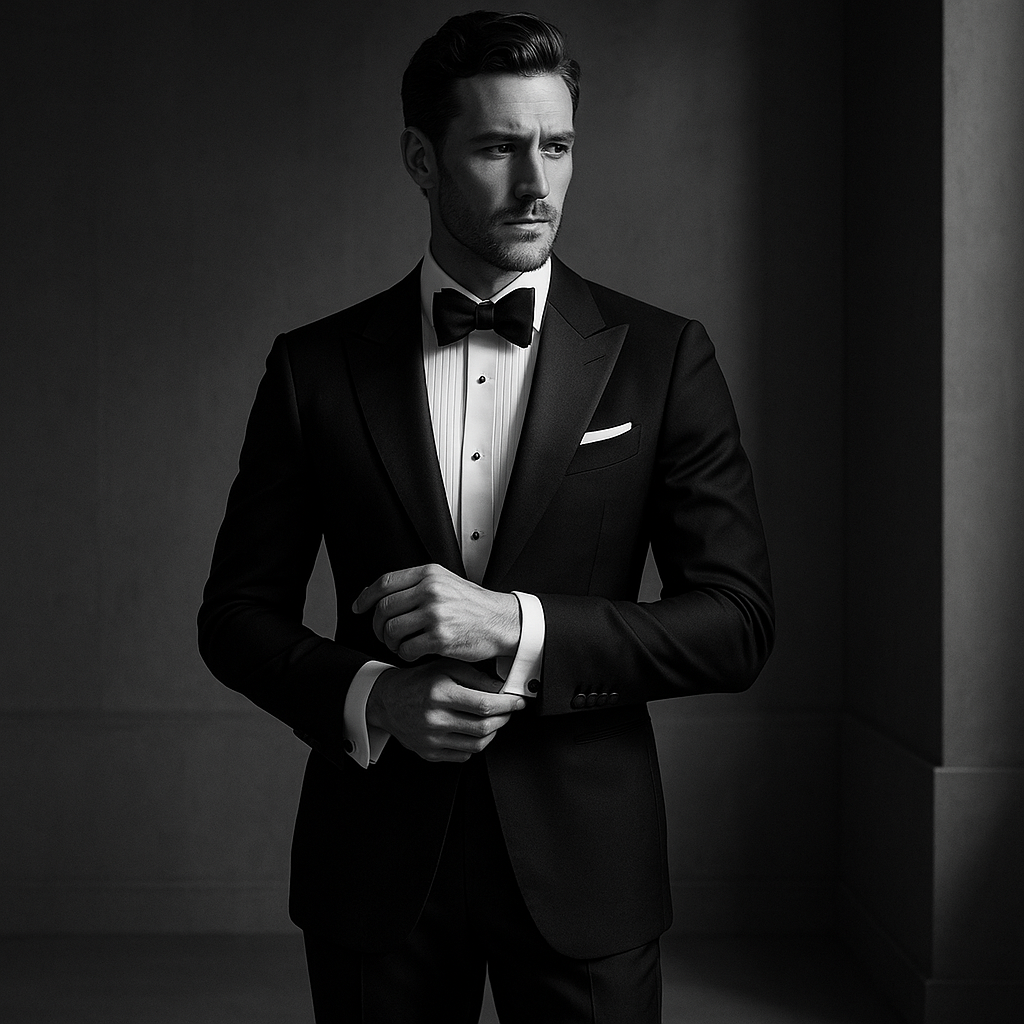
Master the art of black-tie elegance by pairing a hand-tied silk bow tie with a low-cut evening waistcoat, pleated-upward cummerbund, patent-leather shoes, and precious-metal cufflinks that together conceal, coordinate, and elevate every line of your formal ensemble.
Essential Tuxedo Shirt Styles and Collar Options
Since no source material was provided for the section about essential tuxedo shirt styles and collar options, I cannot write content with citations.
Writing specific details about tuxedo shirt styles, collar types, fabric choices, or recommendations without verified sources would risk providing inaccurate or potentially misleading information.
This section would need expert sources about formal shirt construction, collar variations, proper fit guidelines, and traditional black tie shirt requirements to be written accurately.
Neckwear, Waist Coverings, and Footwear Selection
The bow tie is a defining element of black tie attire - clip-on versions should be avoided in favor of hand-tied bows that display natural asymmetry and character. Black silk or velvet are the traditional choices, with dark burgundy as the only acceptable color alternative [14]. For waist coverings, both waistcoats and cummerbunds serve to conceal where the shirt meets the trousers, with each complementing different jacket styles.
Waistcoats pair naturally with peaked lapels while cummerbunds harmonize with shawl collars [15]. The traditional evening waistcoat features a distinctive low-cut design that showcases the formal shirt's decorated bib, available in both single and double-breasted variations with shawl-style revers [15]. Cummerbunds, which evolved from Indian kamarband sashes, should be worn with pleats facing upward and made of silk that matches the jacket's lapel facings [15].
For footwear, black patent leather shoes are the standard choice, with black oxfords serving as an acceptable alternative - despite some celebrity trends, sneakers are never appropriate for formal events [14].
Accessorizing Your Black Tux: Cufflinks, Studs, and Pocket Squares
The finishing touches of a black tie ensemble come from carefully chosen accessories. Cufflinks and shirt studs should be coordinated sets in precious or semi-precious materials like gold, platinum, onyx, or mother of pearl - avoid cheap t-bar cufflinks in favor of refined double-sided versions that stay securely fastened [16]. A crisp white linen pocket square, hand-rolled and casually stuffed or precisely folded, adds the perfect accent without competing with other elements [16].
For boutonnieres, select small, sturdy flowers like white or deep red carnations that sit flat against the lapel after proper preparation by a florist [16]. Artificial silk boutonnieres offer a practical alternative that maintains a fresh appearance throughout the evening [16]. When selecting formal watches, opt for slim, minimalist timepieces with black leather bands rather than flashy statement pieces - the metal trim should match your cufflinks [16].
For a truly classic touch, consider carrying a pocket watch to maintain the refined aesthetic [16].
Seasonal Adjustments to Your Black Tie Look
Black tie attire traditionally requires adjustments based on the season and time of day. For evening events after 6pm, classic black or midnight blue tuxedos remain the standard choice, while velvet dinner jackets in deep tones offer an elegant cold-weather alternative that maintains formality [17].
During warmer months, lighter weight wools and subtle variations in fabric texture can provide comfort without compromising sophistication. For daytime formal events, dramatic floor-length gowns should be avoided in favor of formal tea-length dresses or elegant suits that better suit the lighting and atmosphere [18].
Fabric choices play a crucial role in seasonal adaptation - plush materials like velvet and heavy silk are ideal for winter events, while lighter silks, satins, and chiffons work better for summer celebrations [18]. The key is selecting rich, formal fabrics that suit both the season and time of day while avoiding casual materials like jersey, cotton, or linen regardless of weather [18].


The Black Tux Experience: Rental vs. Purchase
After 4-5 black-tie events, buying a $500-1500 tux beats $125-250 rentals, yet The Black Tux now bridges the gap with premium fabrics, showroom tailoring, and a 48-hour fit-exchange window that makes occasional renting almost indistinguishable from ownership.
Cost Analysis: When to Rent and When to Buy
The decision between renting and buying a tuxedo depends primarily on frequency of use and budget considerations. A quality tuxedo purchase typically costs between $500-1500, while rentals average $100-150 per use [19]. For those attending multiple formal events annually, purchasing becomes cost-effective over time by eliminating recurring rental fees.
However, renting offers key advantages for occasional wear - it provides access to current styles without long-term commitment and includes accessories like shirts, ties, and cufflinks in the rental price [20]. Beyond pure cost analysis, ownership allows for precise tailoring and customization that rental garments cannot match. A purchased tuxedo can be altered to your exact measurements and modified over time as needed [20].
For weddings specifically, rental costs tend to run higher at $125-250 for grooms [21]. When calculating the long-term value proposition, factor in additional ownership costs like dry cleaning and proper storage against the cumulative expense of multiple rentals [19]. The break-even point typically occurs after 4-5 formal events, making purchase logical for those who regularly attend black tie functions [21].
Quality Considerations for Rentals and Purchases
Quality differences between rental and purchased tuxedos have narrowed significantly with modern providers. The Black Tux specifically offers rental garments that feel substantial and durable, incorporating classic design details that rival purchased options [22].
Their rental tuxedos include high-end features like quality textiles and proper construction, distinguishing them from traditional rental offerings that often felt cheap or poorly made [22]. For sizing accuracy, customers can visit showrooms for professional measurements or use the online fit survey, with a $15 alteration credit available for minor adjustments that don't require fabric removal [23].
The company mitigates common rental concerns through a 48-hour exchange window after delivery if the fit isn't perfect, and garments arrive carefully packed in garment bags within slim boxes that protect the tuxedo during transport [23]. The quality control extends to the return process as well - items like socks are not required to be returned, ensuring hygiene standards [23].
The Online Rental Process with The Black Tux
The Black Tux streamlines formal wear rental through a hybrid online-offline process. Customers can complete their entire rental through the website or combine online ordering with an in-store fitting at one of 25+ showrooms located in standalone shops and Nordstrom stores [23]. The process begins with their Fit Formula quiz, which builds a size profile based on measurements and preferences.
For precise sizing, customers can visit showrooms for professional measurements, with associates providing detailed guidance on style selection and fit adjustments [24]. Orders typically arrive 14-17 days before the event, with garments individually packaged and labeled in a protective box [23]. The base rental price starts at $95, including shipping, and customers receive a $15 alteration credit for minor adjustments that don't require fabric removal [24].
After the event, renters have three days to return items using the provided pre-labeled shipping package through FedEx, with options for dropoff or scheduled pickup [23]. The company maintains quality control by excluding certain items like socks from the return requirement and charging specific fees for unreturned pieces - ranging from $425 for jackets to $40 for accessories [24].
Wedding Party Coordination and Group Rentals
The Black Tux streamlines wedding party coordination through group rental features and discounts. Wedding parties of six or more rentals qualify for significant discounts on the groom's attire [25]. Their drop-shipping capability allows individual groomsmen to receive their tuxedos directly, eliminating logistical challenges when wedding party members live in different locations [26].
For optimal results, orders should be placed at least two months before the event to ensure proper fitting and availability [26]. The company's 48-hour try-on window enables quick replacements if sizing issues arise, with overnight shipping available for last-minute adjustments [25]. While their online measurement system tends to suggest larger sizes initially, the company's responsive customer service and replacement policy help ensure proper fits for the entire wedding party [25].
Recent wedding experiences demonstrate improved reliability compared to past supply chain challenges, with successful coordination of multiple rentals and timely delivery of replacement items when needed [25].


Wearing Your Black Tux with Confidence
Own the black-tie moment after 6 PM with a hand-tied bow tie, patent-leather pumps, and a midnight-blue tuxedo whose silk lapels catch the light as confidently as your stride.
Dressing for Specific Occasions: Weddings, Galas, and Formal Events
Black tie weddings demand the highest level of formal attire, with men required to wear tuxedos featuring black bow ties, white dress shirts, black trousers, and optional accessories like cummerbunds or waistcoats [27]. Women should opt for floor-length evening gowns in formal fabrics like silk charmeuse, chiffon, or Mikado, though modern interpretations allow for bolder colors beyond traditional black, including hot pink, yellow, and metallics [28].
For galas and formal evening events after 6:00 PM, classic black or midnight blue tuxedos remain the standard, while velvet dinner jackets offer an elegant cold-weather alternative [29]. When attending destination weddings, consider the venue's specific requirements - a mountain wedding may call for a full-skirt silk Mikado ball gown, while a beachfront celebration suits flowing chiffon designs [28].
Venue-appropriate footwear also matters significantly - outdoor ceremonies require consideration of terrain, so opt for block heels on grass or sturdy soles for beach settings [29]. For cultural weddings, research specific traditional dress requirements well in advance, as different cultures maintain distinct guidelines for appropriate formal attire [29].
Black Tie Etiquette and Rules to Know
Black tie etiquette centers on respecting the formality of the occasion through precise dress standards. The dress code requires a black or midnight blue tuxedo with silk lapels, paired with a proper white formal shirt and black bow tie that matches the jacket's lapel facings [30]. Timing matters significantly - tuxedos are strictly evening wear, meant for events ending after dark.
For daytime events that end before sunset, black tie attire is traditionally considered inappropriate [30]. The bow tie must be hand-tied rather than clip-on, as the natural asymmetry demonstrates authenticity and attention to detail [31]. Proper black tie also demands specific footwear - either formal patent leather pumps with grosgrain ribbon or highly-polished black oxford dress shoes [31].
When assembling the ensemble, remember that black tie is not a costume but rather a gesture of respect through clothing. The goal is elegant uniformity with other guests rather than standing out through flashy variations or personal style statements [30]. While some modern interpretations exist, deviating from traditional standards should be done with extreme restraint - a single thoughtful modification is more than enough to make a statement while maintaining the formality black tie demands [30].
Personal Style While Maintaining Formal Elegance
While black tie demands adherence to formal traditions, subtle personalization can enhance rather than detract from elegance. The foundation lies in achieving an impeccable fit - a properly tailored tuxedo creates the canvas for tasteful individual expression [32]. Accessories offer controlled opportunities for personality: consider a bow tie with subtle patterns like polka dots or paisley in deep tones, or a patterned pocket square that complements without clashing [32].
Cufflinks and shirt studs allow for meaningful customization through metal shapes or gemstones that reflect personal interests while maintaining sophistication [32]. For a modern interpretation that respects formality, explore tuxedos with contemporary design elements like larger lapels or refined satin trim patterns [8]. The key is making thoughtful modifications that enhance rather than overwhelm the formal aesthetic - a single carefully chosen detail makes more impact than multiple bold variations [8].
Even within traditional parameters, options like velvet dinner jackets in deep tones or tone-on-tone patterns provide room for individuality while preserving the tuxedo's inherent elegance [8].
Making a Statement with a Modern Black Tuxedo
Modern black tuxedos offer exciting ways to make a statement while respecting formal traditions. Textured fabrics add visual depth through herringbone, tapestry, and venetian patterns in accessories, creating unique style without being ostentatious [8]. For those seeking bold sophistication, double-breasted designs with six buttons provide a structured silhouette that exudes confidence while flattering various body types [33].
Color choices have expanded beyond classic black - deep burgundy, hunter green, and royal blue make striking statements at formal events while maintaining elegance [33]. Two-tone designs, like colored jackets with black pants or contrasting lapels, offer a dynamic way to personalize traditional styling [33]. For warmer seasons, lighter options like ivory or champagne create an airy, refined look perfect for daytime events and summer celebrations [33].
The key is balancing personal expression with formal refinement - whether through subtle texture, strategic color choice, or contemporary cuts that enhance rather than overwhelm the tuxedo's inherent sophistication [8].
- Tuxedos use satin lapels, covered buttons and trouser stripes; suits never do.
- Peak lapels broaden shoulders; shawl lapels elongate the torso--never wear notch.
- Single-breasted is minimalist; double-breasted stays crisp even unbuttoned.
- Jacket sleeves must show ¼-½" shirt cuff; collar should sit flush with no gaps.
- Bow ties must be hand-tied; patent leather pumps or polished oxfords only.
- Rentals average $100-150; buying pays off after 4-5 events plus tailoring.
- Velvet dinner jackets suit cold seasons; ivory or champagne work for summer formals.
- https://soho-london.co.uk/history-of-the-tuxedo-timeless-elegance/
- https://www.gentlemansgazette.com/tuxedo-black-tie-guide/
- https://www.hockerty.com/en/blog/tuxedo-vs-suit
- https://www.friartux.com/blog/blog926.html?srsltid=AfmBOorVgjWSYwGGuSk66ks6RPV6o8RDfroFsgJqN4OR2OMFvVPKsvp5
- https://xsuit.com/blogs/news/whats-the-difference-between-a-tuxedo-and-a-suit
- https://theblacktieblog.wordpress.com/2014/02/24/review-the-black-tux/
- https://www.theknot.com/content/tuxedo-online-rental-review
- https://perfecttux.com/blogs/news/the-ultimate-black-tuxedo-style-guide
- https://www.winslowstyle.com/tuxedo-lapels-guide/?srsltid=AfmBOorJpVHyZUAtAe8zmzBNEJ301eScy0Az8nDgyVzsS2-qfWxsAh6d
- https://theartefact.com/how-to-wear-a-tuxedo-lapels-fabric-accessories/?srsltid=AfmBOooCpe0AQWiU85Ws0GtQkXvVvxqkjNAuQcdledyBnH8VtVKh2KWl
- https://articlesofstyle.com/blogs/news/suit-vs-tuxedo-differences-formalwear-guide?srsltid=AfmBOoqiP9O-u2qTa3r4CKHMEB5TWP9-Z6rW5Q18CttluSG-ff8B8BWm
- https://theblacktux.com/blogs/style/tuxedo-styles
- https://articlesofstyle.com/blogs/news/ultimate-tuxedo-fit-guide?srsltid=AfmBOoqMvJfRnX2BxqSmULAoGINy8vrNWn2bRcG-5XpU3P3T7hOonzOz
- https://theartefact.com/what-to-wear-with-your-tuxedo/?srsltid=AfmBOopqiYV6DXIQ-wBT_3I7UF8HQg1CGrUjQl48SIYYz3tOeij5vI1-
- https://www.gentlemansgazette.com/tuxedo-black-tie-guide/classic/evening-waistcoat-vest-cummerbund/
- https://www.gentlemansgazette.com/tuxedo-black-tie-guide/classic/tuxedo-accessories-cufflinks-studs/
- https://www.beautiesltd.com/blogs/beau-ties-blog/black-tie-event-dress-code?srsltid=AfmBOort6iTovtHVdHK8hDKiL_0JtddrTMWQ1evwMW7WbZiY3cVbPPNU
- https://www.elle.com/uk/fashion/articles/a30589/what-is-black-tie-dress-code/
- https://creativebridalwear.com/tuxedo-rental-vs-purchase/
- https://medium.com/@jaxlee159/tuxedo-suit-rental-vs-purchase-pros-and-cons-to-help-you-make-the-right-choice-97bcf9a14efc
- https://flexsuits.com/blogs/blog/how-much-does-a-tuxedo-cost?srsltid=AfmBOop892279LZcqW3XXckU9Mj8ymcjNDxpoJeY4VFdJbKpthhYYeQA
- https://www.reviewed.com/style/content/black-tux-review-best-suit-tuxedo-rental
- https://www.businessinsider.com/guides/style/the-black-tux-review
- https://urbaneaperture.com/a-starter-guide-to-renting-with-the-black-tux/
- https://www.reddit.com/r/wedding/comments/14fcevw/renting_from_the_black_tux_do_or_dont/
- https://aurorabridal.com/renting-vs-buying-a-grooms-wedding-tuxedo-guide/
- https://www.friartux.com/blog/blog2290.html?srsltid=AfmBOoqeY2RSNZDetZbU7KwHb9T57ZneP16w9klOy8BhgKCjMieSJuHg
- https://www.marthastewart.com/7912329/what-it-really-means-to-plan-black-tie-wedding
- https://www.theknot.com/content/wedding-guest-attire-cheat-sheet
- https://www.artofmanliness.com/style/clothing/black-tie-how-to-wear-tuxedo/
- https://www.gq.com/story/black-tie-attire-explained
- https://karlstuxedos.com/how-to-add-personal-flair-to-a-traditional-tuxedo/
- https://nationaltuxedorentals.com/top-10-tuxedo-trends-for-2024/


