



Classic Tuxedo or Midnight Blue? Under Ballroom Lights, the Difference Fades
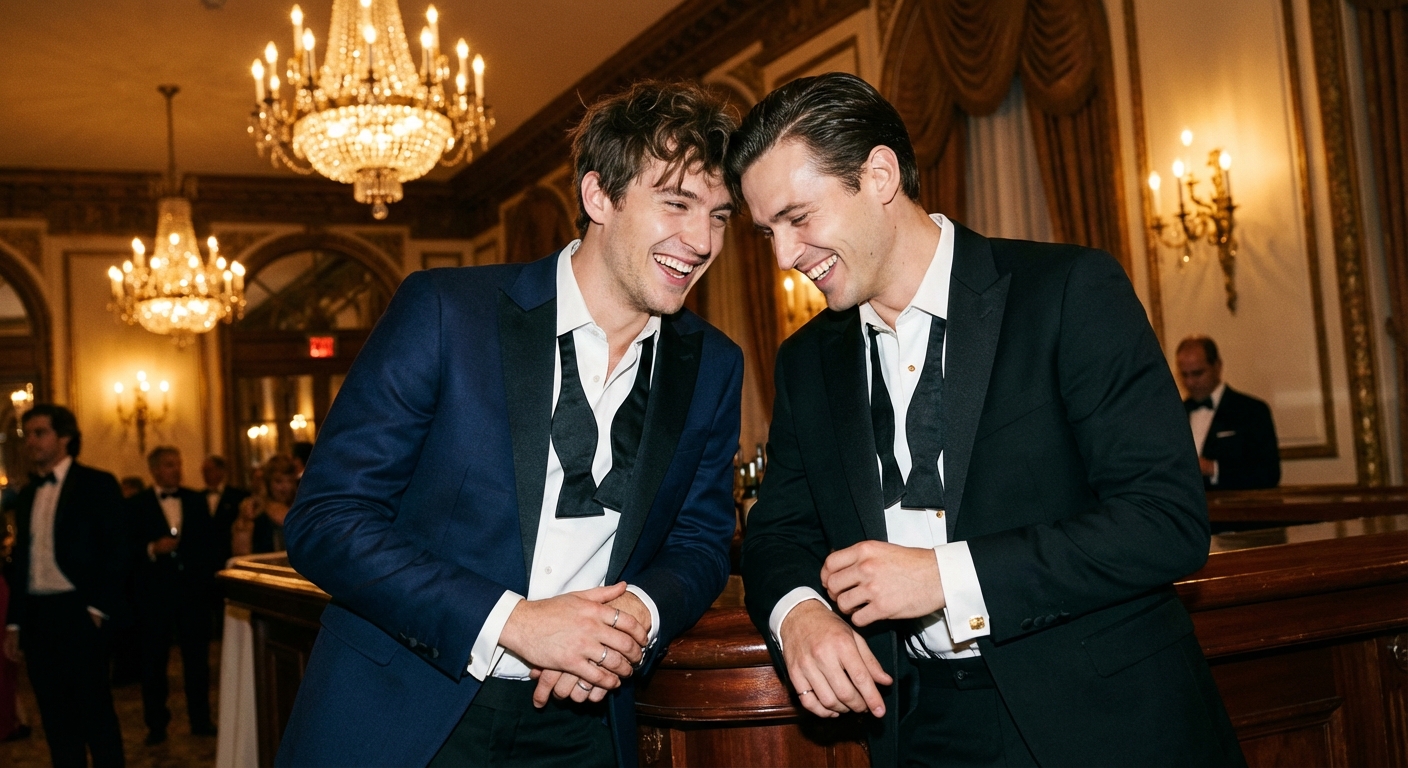
Under ballroom lights, the subtle choice between a classic black tuxedo and midnight blue becomes a masterclass in optical illusion--midnight blue often appears richer and darker than true black, photographs better, and carries the covert pedigree of James Bond, so the article arms readers with the science, history, and fabric knowledge to pick confidently; it then walks through precision tailoring rules--shoulder seams that track the natural shoulder line, sleeve cuffs that reveal ¼-½ inch of shirt, waist suppression set just below the natural waist, and the formal ventless silhouette--so the suit flatters rather than merely fits; styling nuances follow, explaining why pleated or pique shirt bibs photograph better, why silver cufflinks and white pocket squares pop under flash, how grosgrain lapels outclass shiny satin, and when to deploy waistcoats or cummerbunds to hide trouser waistbands while keeping proportions elegant; finally, it demystifies logistics, recommending tuxedo reservations 3-6 months ahead (8 for destination weddings), online measurement platforms that corral scattered groomsmen, and a cost-analysis formula--purchase price divided by typical rental cost--to decide whether ownership beats renting, ensuring every reader can stride into his event looking sharper than the dress code demands without last-minute panic or budget regret.
Choosing Between Classic Tuxedo and Midnight Blue
Under warm evening lights, a midnight-blue tuxedo reads deeper and richer than true black, so hold the swatch up in dim showroom corners--if you can't tell it's blue, you've found the shade that photographs like Bond-level elegance.
Understanding color impact under ballroom lighting
When choosing between a classic black tuxedo and midnight blue, you're making a decision rooted in fascinating optical science. In the early 20th century, formal events took place under incandescent lighting and candlelight--conditions where true black fabric often appeared slightly brown or faded. Midnight blue, however, appeared richer and deeper than actual black under these warm lights [1]. This optical advantage made midnight blue the insider's choice for discerning gentlemen, and it remains a sophisticated option today.Here's how to recognize true midnight blue: it should appear nearly black, not obviously blue.
Under ballroom lighting, this creates a stunning effect where the midnight blue jacket body can actually look darker and richer than its black lapels [2][3]. For your wedding photos, this choice pays dividends--midnight blue maintains beautiful dimension and detail under flash photography, while black can sometimes appear flat or create harsh contrasts [1].Modern ballroom lighting uses LED and fluorescent fixtures, which have somewhat changed the equation, but midnight blue still offers superior depth and richness. The color catches light differently than flat black, creating subtle variations that add sophistication without sacrificing formality [1]. This lighting advantage explains why James Bond has worn midnight blue for half of his formal appearances, starting with Dr. No [3].When you're trying on tuxedos in bright showroom lighting, keep this in mind: midnight blue will appear more obviously blue than it will at your evening event.
The color transforms dramatically under dim ballroom conditions, appearing as a luxurious, rich black rather than noticeably blue [2]. If a dinner suit looks obviously blue in the showroom, it's too light--true midnight blue should make you question whether it's blue at all. Lighter shades like navy, marine blue, or royal blue might be fashionable, but they lack the sophisticated subtlety of proper evening wear [3].
Fabric and finish considerations for a classic tuxedo
Your tuxedo's fabric choice matters just as much as its color. The right cloth elevates your look beyond ordinary suiting through three key qualities: rich darkness, elegant drape, and a sophisticated interaction with light [4]. Since formal wear avoids bold colors and patterns, your fabric's texture becomes the star--creating visual interest through its subtle play with light rather than obvious designs.Barathea stands as perhaps the most classic choice for a formal dinner jacket. This weave creates a dense, matte-finished cloth that drapes exceptionally well and appears "blacker than black" by reflecting less ambient light [4]. Barathea's body allows it to hold shape throughout an evening, maintaining a crisp silhouette that flatters the wearer. For weight, traditional dinner jackets were substantially heavier (often above 400g) for venues without central heating, but modern events might call for something lighter--though never below 300g if you want proper drape [4].Mohair blends offer a compelling alternative, providing natural sharpness, lightness, and a distinctive sheen.
James Bond famously wears mohair tuxedos across various film iterations [5]. These blends come in different ratios, with 35% mohair/65% wool striking an ideal balance--retaining lustre and wrinkle resistance while remaining comfortable [5]. Heavier blends approaching 60% mohair deliver magnificent crease resistance but feel noticeably crisp against the skin [5]. The main advantage of mohair lies in its almost supernatural ability to resist wrinkling while maintaining a sharp appearance throughout an evening of wear.Velvet offers a distinctive alternative that pulls light into its depth rather than reflecting it. This creates a rich, luxurious appearance that's particularly versatile outside strictly formal settings. Traditional velvet dinner jackets come in black, burgundy or bottle green, though black remains the most versatile [4].
When selecting velvet, cotton options are most common today, as silk velvet has become increasingly rare due to economic production challenges [4]. A properly chosen black velvet dinner jacket pairs wonderfully with black trousers and maintains enough formality for black tie while offering subtle individuality.Your lapel facings deserve careful consideration too. While both options are correct, grosgrain generally delivers a more sophisticated appearance than satin--its textured finish offers subtle depth where satin's high shine can sometimes look overly glossy [4]. For midnight blue jackets, matching midnight blue facings are available but rare. If you choose them, ensure the cloth is so dark it appears black until directly compared with true black fabric [4]. For more on lapel styling choices, see our detailed coverage in the Styling Details section below.
How to match accessories to both shades
The good news? Accessory coordination follows similar principles for both black and midnight blue tuxedos.
Start with your foundation: a crisp white shirt, either pleated or smooth-fronted [6]. For a

Fit and Tailoring Essentials for a Flawless Classic Tuxedo
Perfect tuxedo style hinges on three precise fits: shoulders that mirror your natural line, sleeves revealing ¼-½ inch of cuff, and a waist suppression placed just below your natural waist to elongate your silhouette.
Measuring for the perfect shoulder and sleeve length
Getting the shoulder fit right is where your perfect tuxedo begins. When you're being measured, your shoulders should follow your body's natural line, with the seam sitting precisely where your shoulder ends and arm begins [7]. Here's how to know you've got it right: the fabric shouldn't extend beyond your natural shoulder (which creates bulk), there's no pulling or wrinkling (a sign it's too tight), and you'll see a smooth drape that moves naturally with you [7]. Try this simple test: raise your arms forward and to the sides--a well-fitted shoulder lets you move without excessive fabric bunching.
For your sleeve length, formal wear has its own set of rules that set it apart from your everyday suits. You'll want to show approximately 1/4 to 1/2 inch of shirt cuff peeking out from your tuxedo sleeves [7]. This small but crucial detail adds elegance and shows you understand the nuances of formal dressing. To get your measurements spot-on, place the measuring tape where your shoulder and arm meet, then measure straight down with your arms naturally relaxed [9].
For an even more accurate reading, bend your arm slightly with your hand on your hip, then measure from the base of your neck, over your shoulder, and down to your wrist bone [8]. This technique accounts for how you naturally stand and ensures your sleeves will hang perfectly throughout your event.
Adjustments that preserve the tuxedo's silhouette
Creating that perfect tuxedo silhouette starts with understanding how small adjustments can transform your look. The waist placement--where your jacket narrows--makes a dramatic difference in how tall and proportioned you appear. By positioning this point about half an inch below your natural waist, you'll maximize both your torso and leg length through proper waist suppression [10].
Think of it this way: too little suppression leaves you with a shapeless coat that shortens your leg line, while going too tight can look out of balance. When choosing between ventless jackets and side vents, consider both formality and comfort. Ventless jackets offer the most formal and slimming silhouette--especially flattering if you're looking to elongate your frame--while side vents provide a touch more comfort when you're seated or reaching for your wallet [10].
For your trousers, here's a game-changer: wear them at your natural waist, not your hips. This simple adjustment visually slims your midsection and lengthens your legs, creating the elegant proportions
Using The Black Tux's Home Try‑On and showroom services
The Black Tux makes getting your perfect fit easier with both digital convenience and in-person expertise.
If you're comfortable with online shopping, start with the sizing questionnaire that recommends your measurements--you'll get the most accurate results when you can provide specific details like your neck size [11].
But if you're feeling uncertain or want that personal touch,
Styling Details That Elevate the Classic Tuxedo
Choose pleated or pique bibs, silver-tone dimensional cufflinks, a crisply TV-folded white pocket square, and a waist covering that mirrors your lapel shape to ensure every tuxedo detail photographs flawlessly under ballroom lights.
Shirt bibs, cufflinks, and pocket squares that photograph well
Your shirt details can make or break formal photos under ballroom lighting. When selecting your tuxedo shirt, consider how different bib styles photograph. Pleated bibs create dimensional light play that prevents the white expanse of your chest from appearing flat in photos [13]. Pique bibs offer similar visual texture benefits. For a more unique approach, an inserted bib with fine patterned weave adds subtle interest without overwhelming your classic look [12].
Cufflinks deserve special attention for photography. Metallic finishes--particularly silver or platinum tones--reflect light beautifully without creating harsh glares in photos [12]. Consider designs with dimension, like monkey's fist knots, which add visual interest while maintaining appropriate formality [12]. For pocket squares, white remains your best choice for photos. A simple TV fold provides clean lines that frame your face without distraction [12].
If you're drawn to color, choose deep, rich tones that maintain vibrancy under artificial lighting. Burgundy, bottle green, or midnight blue offer sophistication without disappearing into shadows--perfect complements to The Black Tux's classic tuxedo options [13]. Remember that flash photography tends to flatten patterns and texture, so items with subtle three-dimensionality like onyx shirt studs with metallic edges create visual interest that registers beautifully in formal portraits [13].
Lapels, cummerbunds, and waist coverings: when to choose each
Moving from shirt details to your waist, it's important to understand that waist coverings serve a practical function in black tie attire. They hide your trouser waistband and shirt bottom--not match your date's dress color, despite common misconceptions. Both waistcoats and cummerbunds are correct for black tie. Your choice should complement your jacket's lapel style: peaked lapels harmonize with the angular lines of a waistcoat, while shawl collars pair beautifully with a cummerbund's curved outline [14].
Skip waist coverings entirely with double-breasted jackets--they remain buttoned and conceal the waist already [14].Evening waistcoats differ from standard suit vests in key ways. Look for low-cut designs that showcase your shirt's decorated bib, with the bottom edge just visible beneath your closed jacket [14]. Quality options feature shawl-style revers matching your jacket lapels, plus practical trouser attachment tabs to prevent riding up throughout the evening [14]. For warm venues, backless or semi-backless designs offer formal appearance with better comfort [14].Cummerbunds offer a slightly less formal alternative that originated with British officers in India [14].
These pleated sashes wrap horizontally around the waist with pleats facing upward--not to catch crumbs as folklore suggests, but following tradition from when the pleats functioned as ticket pockets [14]. While black remains the gold standard for both waist coverings [15], cummerbunds allow slightly more flexibility for introducing dark colors like burgundy or forest green at less formal events like weddings [15]. Superior models curve gently along the top line and include a loop to secure them to trousers, preventing awkward shifting during wear [14]. Whichever option you choose, ensure it completely conceals your trouser waistband throughout the evening for a polished appearance [15].
Shoe selections: patent leather vs. high‑shine calf
Completing your formal look from head to toe, black tie footwear follows three essential rules: shoes must be black, highly polished, and free from any broguing [16]. Patent leather has long been the traditional choice for tuxedo shoes, with its permanent glossy finish that never needs polishing [17]. Yet many modern grooms prefer well-polished calfskin--especially wholecut oxfords with mirror shine--which offer comparable elegance plus versatility beyond formal events [18].
This practical advantage makes high-shine calfskin increasingly popular for those who attend black tie occasions occasionally rather than regularly. Oxfords remain your most formal option, though opera pumps (formal slippers with bows) represent the ultimate in traditional elegance--if you have the confidence to wear them [16]. Whatever you choose, prioritize simplicity.
The plainest designs create the most refined silhouette, so avoid decorative elements like cap toes when possible [16]. For subtle distinction, consider adding formal satin laces to standard dress shoes--an instant elevation for black tie occasions [16]. Remember, while dress codes have relaxed over time, your footwear choice still signals the attention to detail that separates thoughtful formal dressing from simply following rules.


Practical Rental and Purchase Tips for Grooms Nationwide
Book your tux 3-6 months early--8 for destinations--and harness online tools like The Black Tux's Groomsmen Tracker to lock in sizes, dodge rush fees, and guarantee every out-of-state groomsman's suit arrives perfectly fitted.
Smart rental timelines to avoid last‑minute stress
Booking your tuxedo at the optimal time prevents last-minute inventory shortages and ensures proper fit. For weddings, reserve tuxedos 3-6 months before your date--six months for peak season events (April-June) when popular styles and common sizes disappear quickly [19]. Three months works for off-peak weddings, though you'll have fewer style options [19]. Destination weddings require even earlier booking--up to 8 months ahead--to coordinate remote fittings and international logistics [19].
Once reserved, schedule your fitting 4-6 weeks before your event, allowing time for alterations [19]. Most rental companies deliver tuxedos 10-14 days before your wedding with standard shipping [20], giving you time to request replacements for any fit issues. The absolute latest to order is 10 days before your wedding, which incurs rush fees [20]. Waiting too long forces compromises on style and fit while adding unnecessary stress.
When coordinating groomsmen, use online rental platforms that simplify measurement collection and provide unified tracking, particularly valuable for wedding parties spread across different locations. Schedule a final group try-on 2-3 weeks before your wedding to confirm everyone's complete outfit fits properly [21]. This timing accommodates any last-minute adjustments while avoiding day-before panic.
Leveraging The Black Tux's Groomsmen Tracker for coordination
The Black Tux's Groomsmen Tracker simplifies coordinating formal wear for wedding parties spread across different locations. After creating your wedding party in their system, you can add each groomsman's contact information and decide whether you'll cover rental costs or if they'll pay individually [22]. The platform then automatically emails your groomsmen requesting their measurements, eliminating the need for in-person fittings [22].
This digital coordination proves particularly valuable for modern wedding parties where groomsmen often live in different states [22]. While you'll likely need to send occasional reminders to procrastinators, users report the overall experience is straightforward [22]. The system excels at tracking each groomsman's progress through the ordering process, providing visibility that helps prevent last-minute issues [23].
The Black Tux also handles special circumstances well--even accommodating groomswomen without feminine-cut inventory options [22]. For timeline management, the company typically ships items earlier than scheduled, and their exchange process moves quickly if size adjustments become necessary [22]. This streamlined approach removes the traditional logistical headaches of coordinating formalwear across distances, allowing you to maintain a consistent look without requiring groomsmen to travel for fittings [23].
Cost‑effective buying options for future events
The cost-effectiveness of purchasing a tuxedo depends primarily on your event frequency. If you attend multiple formal occasions annually, buying typically becomes more economical than repeated rentals [24]. Calculate your break-even point by dividing the purchase price by your typical rental cost--this reveals how many wears justify ownership. Beyond pure economics, purchased tuxedos offer significant advantages through precise tailoring.
Unlike standard-sized rentals, owned formalwear can be fitted exactly to your proportions, creating a noticeably more flattering silhouette [25]. This personalized fit often makes the investment worthwhile even before reaching the strict financial break-even point. The style calculation also matters--if you prefer timeless elegance over following trends, a classic black or midnight blue tuxedo represents a sound long-term investment [25]. However, ownership comes with maintenance responsibilities including professional cleaning, proper storage, and occasional alterations as your body changes [26].
When evaluating purchase options, consider versatile models that work across various formal settings rather than highly distinctive styles that might limit your wearing opportunities. For grooms uncertain about rental versus purchase, exploring both options through services that offer rental and retail can help you make an informed decision based on your specific needs. For those in between frequent and rare formal events, some retailers offer hybrid solutions like membership programs or package deals that reduce costs for those who need formalwear several times yearly without committing to full ownership [26].
- Midnight blue appears richer than black under warm ballroom lighting, creating a more elegant formal look.
- Reserve tuxedos 3-6 months before weddings; peak season (April-June) requires six-month advance booking.
- Show 1/4 to 1/2 inch of shirt cuff for proper formal sleeve length and elegant proportions.
- Wear trousers at your natural waist, not hips, to visually slim your midsection and lengthen your legs.
- Grosgrain lapels offer more sophisticated depth than high-gloss satin for formal occasions.
- Waist coverings must conceal trouser waistband and shirt bottom, not match your date's dress color.
- Purchase becomes economical if you attend multiple formal events annually; calculate break-even by dividing purchase price by rental cost.
- https://www.wessi.com/blogs/male-fashion-advices/midnight-blue-vs-black-tuxedos-which-one-should-you-choose?srsltid=ARcRdnqB4PzyMD79oAqunBirj6Yo4Ua0LboT2StsJtKulgFMMbkyiMD5
- https://theblacktieblog.wordpress.com/2011/12/20/midnight-blue/
- https://www.bondsuits.com/james-bonds-preference-for-midnight-blue-dinner-suits/
- https://www.permanentstyle.com/2020/09/the-guide-to-cloth-for-black-tie-or-tuxedo.html
- https://www.gentlemansgazette.com/mohair-fabric-guide/
- https://www.thedappermencompany.com/post/how-to-wear-a-black-tuxedo-to-a-gala-or-ball-a-designer-s-insight
- https://articlesofstyle.com/blogs/news/ultimate-tuxedo-fit-guide?srsltid=AfmBOooRWsJCQYo5pYZDUx8rk-toD32HiVKWRz-DJFcPDJGDTYNrTYp1
- https://lakesidebridal.com/how-to-measure-for-a-perfectly-fitted-tuxedo-a-step-by-step-guide/
- https://dimondtuxedoak.com/how-to-measure/
- https://www.gentlemansgazette.com/tuxedo-black-tie-guide/basics-101/tux-style-features-basics/
- https://www.businessinsider.com/the-black-tux-review
- https://www.gentlemansgazette.com/black-tie-tuxedo-experts-tips/
- https://www.reddit.com/r/malefashionadvice/comments/hsbxh/black_tie_a_comprehensive_guide/
- https://www.gentlemansgazette.com/tuxedo-black-tie-guide/classic/evening-waistcoat-vest-cummerbund/
- https://www.artofmanliness.com/style/clothing/black-tie-how-to-wear-tuxedo/
- https://kirbyallison.com/blogs/formal-wear/shoes-for-a-black-tie-event?srsltid=AfmBOop6a8DX2YBn1HsfojFWLE9jiHeDSrCbEQ7fEURxrFwVlJxplfVh
- https://www.cheaney.co.uk/blog/which-shoes-to-wear-with-tuxedos/?srsltid=AfmBOoov4aRLRrIuHPDxKgeNYRXSCEL5V8Sc-9Bb2xRgf9bbPaO5frnR
- https://theshoesnobblog.com/are-patent-shoes-necessary/
- https://www.bridalformalboutique.com/post/tuxedo-rental-timeline-how-far-in-advance-should-you-book
- https://nationaltuxedorentals.com/when-should-the-groom-get-his-tux-a-grooms-timeline-for-tuxedo-perfection/
- https://ashleygracebridal.com/tuxedo-rental-timeline-when-to-reserve-fit-and-pick-up/
- https://www.reddit.com/r/weddingplanning/comments/140qlxk/where_to_and_how_to_coordinate_tuxes_for_me_the/
- https://lakesidebridal.com/groomsmen-coordination-how-to-ensure-a-cohesive-look-with-tuxedo-rentals/
- https://www.hiveandcolony.com/news/tuxedo-rentals-vs-purchases-what-is-best-for-your-needs?srsltid=AfmBOopn84WM44A7x7IYFr9Bjy5e4fR3eMMFREvSzow-yfjW5bPhiPGC
- https://pctuxguys.com/renting-vs-purchasing-tuxedos-suits/
- https://creativebridalwear.com/blog/tuxedo-rental-vs-purchase/


