



Tuxedo Styles Timeline: From 1860s Tailcoat to Tonight's Velvet Shawl
- Summary
- The Birth of the Tailcoat: 1860s‑1900s Foundations of tuxedo styles
- Classic Black & Midnight Blue: Early 20th‑Mid Century tuxedo styles
- Lapel Evolution and Double‑Breasted Silhouettes in tuxedo styles
- Modern Innovations: Velvet, Pastels, and Sustainable tuxedo styles
- Key Takeaways
- References
From its scandalous 1886 debut in Tuxedo Park to today's velvet-shawl runways, the tuxedo's 160-year evolution reveals how royal rebellion, fabric technology, and cultural shifts turned a tailless smoking jacket into the ultimate symbol of refined masculinity. This timeline unpacks every pivotal twist--the Prince of Wales' tailcoat-free midnight blue coat, the 1920s "blacker-than-black" midnight boom, lapel language that signals power versus playfulness, and the modern eco-revival--so you can instantly decode why a peak lapel commands authority, when velvet flatters winter light, and how sustainable rentals now rival bespoke Savile Row quality. Readers learn actionable rules for nailing period authenticity (high-waisted ribbon-stripe trousers, mother-of-pearl studs) or modern creative black-tie (jewel-tone velvets, pastel jackets balanced with black silk facings) while understanding the physics of color under chandeliers versus daylight and the environmental math that makes one rented garment worn 30 times smarter than fast-fashion ownership. Whether you're dressing for a beach wedding, a boardroom gala, or a zero-waste awards night, the article equips you to choose lapel, fabric, color, and fit with historical confidence and future-facing conscience, ensuring your formalwear whispers tradition or shouts individuality--never ignorance.
The Birth of the Tailcoat: 1860s‑1900s Foundations of tuxedo styles
From a prince's tailless smoking jacket in 1865 to a rebellious New Yorker's 1886 ball entrance, the tuxedo was born as an informal British tweak that American high society first mocked--then made the new standard of evening elegance.
Origins of the American tuxedo from British tailcoats
The American tuxedo evolved directly from British evening wear traditions, beginning with a simple tailcoat modification in 1865. That year, the Prince of Wales (later King Edward VII) ordered a midnight blue smoking jacket without tails from Savile Row tailors Henry Poole & Co., designed for informal evenings at Sandringham, the royal family's country estate [1]. This tailless coat represented a significant departure from the formal dress coat (tailcoat) that gentlemen were expected to wear for evening occasions. While the Prince's innovation began in Britain, the American name "tuxedo" emerged from Tuxedo Park, an exclusive enclave for wealthy New Yorkers [2].
In 1886, Griswold Lorillard, son of one of Tuxedo Park's founders, caused a sensation by appearing at the community's Autumn Ball wearing a tailless dinner jacket [1]. Though initially considered scandalous--Lorillard was reportedly asked to leave the event--his rebellion against strict formal dress codes eventually took root [3]. By 1888, the term "tuxedo" had entered American parlance, named after the exclusive community where it first gained attention [1].
What began as an informal alternative to the tailcoat gradually gained acceptance, with the dinner jacket initially reserved for private stag events and less formal occasions before eventually becoming standard evening wear [3].
Fabric and fit standards that still matter
Victorian-era tailcoats established the foundation for today's formal menswear, prioritizing precise fit and luxurious fabrics. The signature snug silhouette--achieved through advanced tailoring techniques--remains the hallmark of quality formal wear, distinguishing expertly crafted pieces from standard rentals [4]. During this transformative period, black emerged as the formal standard for practical reasons: its slimming effect and ability to maintain elegance despite industrial-era soot [4].
Early tuxedos used fine diagonal wool twill or corkscrew weave until the 1890s when smoother vicuna became preferred, while today's best jackets still prioritize these natural fabrics [5]. The iconic silk lapel facings introduced in the 1860s remain essential, initially covering only part of the lapel rather than the entire facing as seen in modern designs [4]. Trousers featured military-inspired ribbon braiding on outseams--a detail preserved in contemporary formal pants [4].
Victorian formal shirts included practical elements like shirt tabs that buttoned to trousers, preventing the garment from riding up when seated--a feature still found in quality tuxedo shirts [4]. These historical standards of fit precision, fabric selection, and functional details separate authentic formal wear from mass-produced alternatives.
How to rent or buy a period‑inspired tuxedo today
For period-inspired formalwear, you'll find both rental and purchase options that honor historical elegance. When seeking Victorian-inspired tailcoats, prioritize fit above all--authentic pieces should hug the body closely rather than hanging loosely [5]. Planning ahead is essential: allow at least a month for gathering pieces and alterations to achieve the perfect historical silhouette [6].
Today's formal wear specialists offer modern conveniences while maintaining traditional standards-- For more authentic Victorian styling, consider buying separate accessories--particularly U-shaped white vests with shawl collars, proper ribbon-braided trousers, and period-appropriate shirts--rather than accepting pre-selected rental combinations [5]. When purchasing modern pants for Victorian-inspired outfits, choose flat-fronted tuxedo pants with ribbon stripes and buy one size up to achieve the historically accurate high waist, holding them with button-on suspenders [5]. For shirts, choose plain-front or wing collar styles without pleats to maintain period authenticity [5].
Complete your ensemble with patent leather shoes or formal pumps--the low-heeled slippers with satin bows that epitomized Victorian refinement [5].

Classic Black & Midnight Blue: Early 20th‑Mid Century tuxedo styles
From the 1900s' waistcoat-and-bow-tie uniformity to the 1930s boom of midnight blue--hailed as "blacker than black" under ballroom lights--the tuxedo distilled itself into a study in refined minimalism where every silk facing matches to mask the waistband and keep the silhouette razor-clean.
Why black satin remains the default for formal events
By the early 1900s, the combination of black waistcoat and black bow tie had solidified as the norm for tuxedos, establishing the basics of today's Black Tie dress code [8]. This standardization reflected a deliberate aesthetic logic--the refined minimalism where silk-faced lapels, bow tie, and trouser stripes all match in material and color, creating a cohesive formal silhouette [1].
As discussed in the Victorian foundations section, the tradition of satin facings evolved from partial to full lapel coverage, distinguishing formal dinner jackets from ordinary business attire [1]. The consistent use of matching materials serves an essential purpose beyond aesthetics--the waist covering helps conceal the functional elements of the outfit by discreetly covering the trousers' waistband and shirt bottom edge, maintaining the clean lines that characterize formal elegance [1].
Today's black tuxedo rentals continue this tradition with peak or shawl lapels in matching satin or grosgrain, offering the same refined minimalism that became the standard over a century ago.
Midnight blue as a subtle alternative under artificial light
Midnight blue tuxedos emerged in the 1920s when the Prince of Wales (later Duke of Windsor) championed this stylish alternative to traditional black [9]. The color gained massive popularity through the 1930s, with tailors eventually selling as many midnight blue dinner jackets as black ones [10]. Unlike standard navy, midnight blue appears nearly black--so dark that it's often only recognizable when compared directly to black fabric [10].
Its practical advantage comes from how differently these colors behave under artificial light: while black fabric tends to reflect a greenish or grayish cast, midnight blue maintains a richer, deeper appearance [11]. This phenomenon led to midnight blue being described as "blacker than black," though "richer than black" would be more accurate [11]. The color also performs better in daylight when traveling to evening functions, whereas black can appear dull and lifeless, resembling funeral attire [10].
When selecting a midnight blue tuxedo, pair it with black silk facings (either satin or grosgrain) and matching black accessories including bow tie and cummerbund [11]. Though photography often exaggerates the blue tint, properly exposed images reveal midnight blue's subtle richness that enhances rather than compromises formal elegance [10]. The color remained fashionable throughout the 1940s and 1950s before temporarily fading from popularity with the rise of colored dinner jackets in the following decades [10].
Choosing the right shirt and accessories for these timeless looks
For both black and midnight blue tuxedos, your shirt and accessories follow the same timeless rules. White remains the only acceptable shirt color for traditional black tie events [12]. Choose between a pleated or piqué front bib--piqué offers subtle texture while pleated provides classic formality. For the collar, turndown styles are more common today, while wing collars add extra formality (though traditionally reserved for white tie) [12].
French cuffs requiring cufflinks are non-negotiable for proper formal attire [12]. Your waist covering options include a formal waistcoat or cummerbund--both conceal the trouser waistband and should match your jacket's silk facings [12]. Pro tip: waistcoats should be cut low and wide to display the shirt front, while cummerbunds should have pleats facing upward (they originally functioned as small pockets) [12]. Match your bow tie to your lapel facings, selecting width based on your face shape--wider ties complement larger faces [12].
For footwear, choose between formal pumps with grosgrain ribbon (most traditional) or highly-polished black oxford shoes [12]. Complete your look with these essential finishing touches: simple studs for shirt plackets (mother-of-pearl or onyx work beautifully), matching cufflinks, and a white linen pocket square folded neatly to complement--not match--your bow tie [13]. Optional black or white suspenders add both function and style [12]. These precise elements elevate your formal look from adequate to exceptional, ensuring you're dressed appropriately for any black-tie occasion.
Lapel Evolution and Double‑Breasted Silhouettes in tuxedo styles
Choose your lapel like you choose your statement: notch whispers professionalism, peak shouts authority, and shawl sings ultimate formality--then let a double-breasted cut amplify the message.
Shawl vs. peak vs. notch: when to wear each lapel
Lapel choice dramatically impacts a tuxedo's formality and the impression it creates. These folded fabric panels along the front edge of a jacket frame your face and chest while influencing how broad your shoulders appear [14]. The notch lapel, featuring a visible indentation where collar meets jacket front, represents the most versatile option. Though considered the least formal for tuxedos, notch lapels communicate professionalism and restraint while providing a clean, understated look suitable for less formal black-tie events [15].
Peak lapels, with their upward-pointing edges extending beyond the collar, create a stronger V-shape that draws attention outward toward the shoulders [15]. This style signals confidence and authority, making it perfect for weddings, galas, and occasions where you want to project power [16]. Originally rising to rival shawl collars in popularity around 1900, peak lapels remain a classic tuxedo choice that balances tradition with assertiveness [14]. The shawl lapel, a continuous curved edge with no breaks or notches, represents the pinnacle of evening formality [15].
Most commonly seen on dinner jackets and smoking jackets, this elegant, minimalist design has been traditionally reserved for the most formal black-tie occasions [14]. Its smooth, rounded profile creates a fluid silhouette particularly well-suited to velvet dinner jackets and winter formal events [16]. When selecting a lapel style, consider both the event formality and your personal proportions--shawl lapels tend to complement leaner builds while peak lapels can enhance broader shoulders or add structure to narrower frames [15]. The formality hierarchy generally places shawl and peak at the top for true black-tie events, while notch lapels offer more versatility for creative black-tie or less traditional formal affairs [16].
The double‑breasted jacket's comeback and fit tips
Double-breasted suits have reentered the mainstream after decades of fluctuating popularity, embraced by everyone from Jacob Elordi to King Charles [17]. After serving as a status symbol during World Wars when fabric scarcity made them a luxury, they've evolved through multiple eras before landing in today's more relaxed form [17]. Their current resurgence stems from influential designers like Saint Laurent's Anthony Vaccarello, whose autumn-winter 2024 collection featured relaxed, power-shouldered silhouettes that GQ dubbed "the most important suits of the year" [17]. Button configurations dramatically alter the jacket's character and fit.
The traditional 6x2 layout (six visible buttons, two functional) creates a balanced V-shape that flatters most body types [19]. The 6x1 configuration positions the fastening button lower, creating a more elongated, fashion-forward silhouette that particularly suits taller men [19]. The cleaner 4x2 layout works well for smaller frames by reducing visual bulk, while the rare 4x1 makes a bold contemporary statement [19]. Proper fit remains crucial--the jacket should provide a slight cinch at the waist to create that distinctive V-shaped silhouette [18].
This wrapped construction enhances shoulders and chest proportions, functioning almost like architectural body sculpting [18]. Modern styling options have expanded beyond formal settings--wear it buttoned with a crisp shirt and tie for traditional settings, pair it with turtlenecks for winter sophistication, or try the "relaxed open double-breasted jacket look" for casual confidence [17][19]. For office wear, chalk stripes, Prince of Wales checks, and Glen checks particularly complement the double-breasted structure, while dark grays and navy provide formal versatility [17].
Coordinating lapel choices with venue and season
Your lapel choice should align with both your event's formality and the season. For black-tie galas and formal weddings in grand venues, peak lapels create a commanding presence with their upward-pointing edges that enhance shoulder width and project authority [20]. Shawl lapels offer versatile elegance that works particularly well for winter formal events when crafted in rich velvet [20].
For venue-specific considerations, lighter fabrics like linen or cotton with shawl lapels work beautifully for summer celebrations, especially beach weddings, while creating a fresh aesthetic with ivory dinner jackets paired with black trousers [22]. Winter galas and formal evening events call for richer textures--wool for classic elegance or velvet for dramatic impact, particularly in jewel tones like emerald, navy, or burgundy with contrasting black lapels [22]. The lapel finish itself significantly impacts formality: traditional satin provides luxurious shine perfect for black-tie events, while grosgrain offers subtle ribbed texture ideal for modern formal aesthetics [22].
Body type should also inform your choice--shawl lapels balance broad shoulders with their smooth curves while adding visual depth to slimmer builds [22]. For outdoor daytime events, black remains the classic option as midnight blue can appear slightly greenish in natural light, while midnight blue performs exceptionally well under artificial evening lighting by maintaining deeper richness than black [21]. The venue's overall ambiance matters--beach weddings call for lightweight materials while grand ballrooms demand textures that make a statement appropriate to the setting's grandeur [22].


Modern Innovations: Velvet, Pastels, and Sustainable tuxedo styles
Velvet tuxedos with shawl collars--once royal smoking jackets--now give winter formals rich texture and insulation, while creative black-tie optional events welcome pastel and jewel-toned alternatives that keep elegance intact.
Velvet shawls and jackets for winter weddings
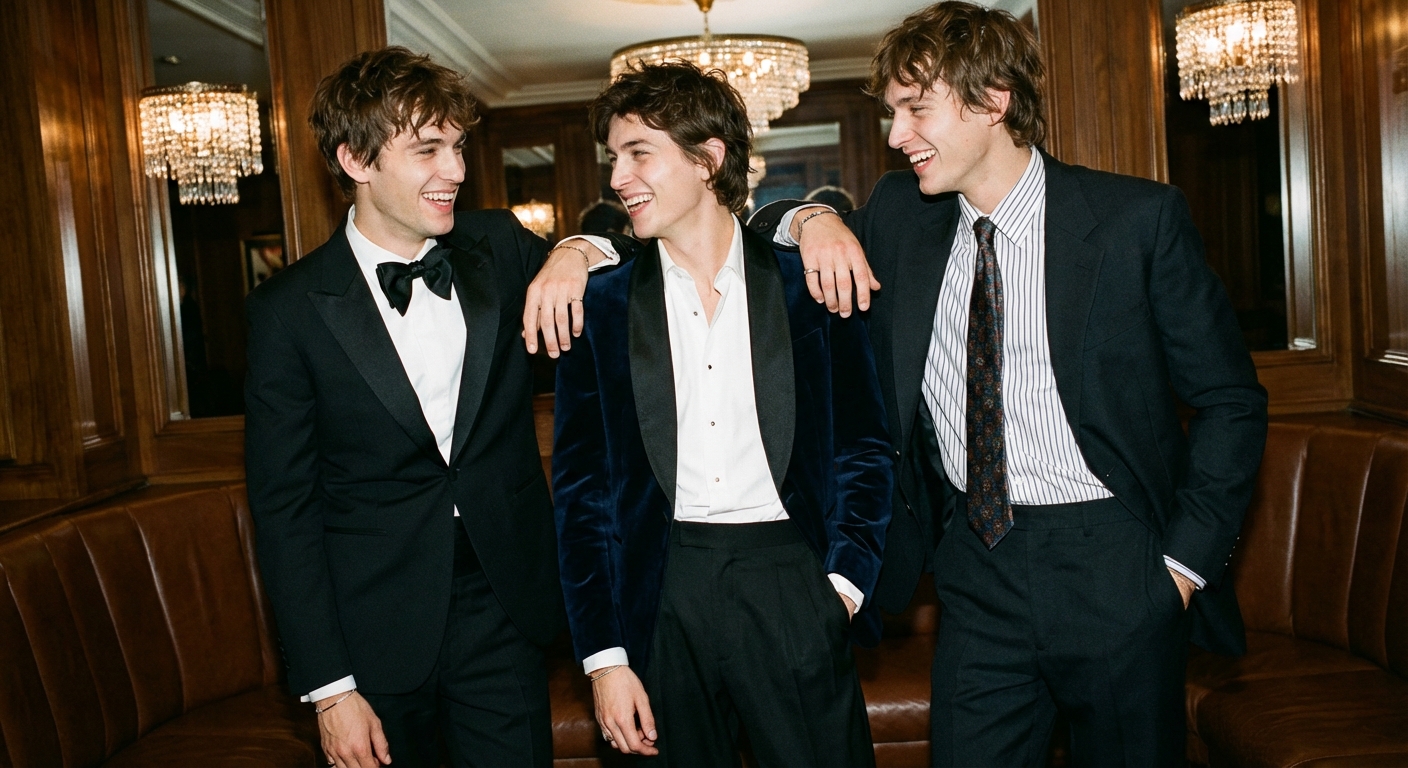
Velvet formal wear traces directly back to the smoking jacket's original purpose--soft, plush fabric designed to absorb cigar smoke when gentlemen retreated for after-dinner tobacco [23]. This luxurious textile gained formal legitimacy through royal adoption; in 1865, the Prince of Wales commissioned a "blue silk smoking jacket" from Savile Row's Henry Poole & Co. for informal dinner parties at his Sandringham estate [23]. Velvet's rich texture provides practical benefits for winter formal events--superior insulation against cold while creating visual depth under low lighting. The fabric works particularly well with shawl collars, which run in one continuous curve from the button to the back of the collar [14].
This combination delivers a sophisticated silhouette distinct from business attire while maintaining formality equivalent to peak lapels [14]. Color selection becomes crucial with velvet--while traditional black remains timeless, midnight blue emerged in the 1920s as an elegant alternative that appears richer under artificial lighting [24]. For winter weddings, deep jewel tones including burgundy, emerald, and navy create dramatic impact when balanced with black trousers and accessories [14]. The standard configuration features black silk facings on lapels, maintaining the formal black-tie aesthetic while introducing texture variation.
Complete the look with proper formal shirt, bow tie, and footwear--patent leather being ideal for winter formality [23]. This velvet-shawl combination particularly flatters leaner builds while adding visual warmth to formal occasions [14].
Pastel and patterned fabrics for creative black‑tie optional events
Creative black-tie optional events open the door to expressive formal attire beyond traditional black and white. While classic tuxedos remain appropriate, these occasions invite colorful innovations with pastels, patterns, and bolder fabrics [25]. Lighter blue tuxedos with black detailing offer a contemporary approach to formality, as do darker greens and burgundies that maintain elegance while breaking convention [25].
Velvet dinner jackets in rich colors like burgundy, bottle green, or burnt orange provide seasonal texture variations perfect for cooler months, while off-white dinner jackets offer a classic warm-weather alternative that remains formally appropriate [25]. When incorporating colored fabrics, balance is crucial--pair statement pieces with traditional black tie elements to avoid appearing costumey [25]. For subtle pattern integration, consider accessories like tartan cummerbunds or medallion-printed silk pocket squares that add personality without overwhelming your ensemble [25].
These creative expressions work particularly well at artistic and cultural events, festive weddings, celebratory office parties, and private formal gatherings where rigid tradition takes a backseat to personal style [25]. The key to success with pastel and patterned fabrics lies in maintaining cohesion--if your jacket makes a statement, keep shirts, trousers, and footwear classically aligned with formal standards [25].
Eco‑friendly materials and how The Black Tux supports sustainable rentals
The formal wear industry is shifting toward sustainability as consumers recognize environmental impacts--the fashion industry alone generates 92 million tons of waste annually, equivalent to a garbage truck of textiles dumped every second [26]. Eco-conscious materials now offer elegant alternatives without compromising quality. Organic cotton provides breathability while using 91% less water than conventional cotton; recycled wool maintains luxury feel while cutting environmental impact by 60%; hemp requires minimal water while offering excellent durability; and recycled polyester diverts plastic waste while providing wrinkle resistance [26].
Rental models fundamentally support sustainability by eliminating overproduction--each garment serves multiple customers rather than hanging unused in closets [26]. This approach prevents excess inventory from ending up in landfills while maximizing each piece's lifecycle. For special occasions like black-tie events attended once, renting represents both economical and ecological wisdom [26].
Vegan tuxedos crafted from plant-based fabrics further reduce environmental footprint through water-resistant finishes and enhanced breathability [27]. When selecting formal wear, look for companies that emphasize proper garment care to extend product lifespan, offer local production to reduce shipping emissions, and provide transparent information about their manufacturing practices [26]. These sustainable approaches to formal wear demonstrate that elegance and environmental responsibility can seamlessly coexist.
- Tuxedo originated 1865 when Prince of Wales ordered tailless smoking jacket from Henry Poole & Co.
- Midnight blue tuxedo appears 'blacker than black' under artificial light, adopted 1920s by Duke of Windsor.
- Lapel hierarchy: shawl and peak for formal black-tie; notch reserved for creative or relaxed dress codes.
- Double-breasted 6x2 button layout flatters most builds; 6x1 elongates torso for taller men.
- Velvet dinner jackets pair shawl lapels with jewel tones for winter events while maintaining black-tie formality.
- Creative black-tie allows pastels/colors; balance statement jacket with classic black trousers and accessories.
- Renting tuxedos cuts waste--each rented garment serves multiple users, slashing fashion's 92M-ton annual textile waste.
- https://en.wikipedia.org/wiki/Black_tie
- https://emilypost.com/advice/the-origin-of-the-tuxedo
- https://www.city-journal.org/article/tailcoats-an-elegy
- https://www.gentlemansgazette.com/tuxedo-black-tie-guide/black-tie-tuxedo-history/early-victorian-black-dominates/
- https://vintagedancer.com/victorian/victorian-mens-formal-wear-with-modern-clothes/
- https://vintagedancer.com/1900s/edwardian-titanic-mens-formal/
- https://www.gentlemansgazette.com/tuxedo-black-tie-guide/black-tie-tuxedo-history/
- https://www.gentlemansgazette.com/tuxedo-black-tie-guide/black-tie-tuxedo-history/edwardian-tuxedo-black-tie/
- https://www.gentlemansgazette.com/tuxedo-black-tie-guide/black-tie-tuxedo-history/jazz-age-tuxedo-1920s/
- https://theblacktieblog.wordpress.com/2011/12/20/midnight-blue/
- https://www.gentlemansgazette.com/tuxedo-black-tie-guide/classic/tuxedo-dinner-suit/
- https://www.artofmanliness.com/style/clothing/black-tie-how-to-wear-tuxedo/
- https://www.emanueletuxedo.com/blog/5-classic-tuxedo-accessories-you-need-for-an-extra-look/
- https://henrydavidsen.com/the-tuxedo-compendium/
- https://www.samuelbaronclothiers.com/blog-posts/lapels-explained-the-difference-between-notch-peak-shawl-and-what-they-signal
- https://hangrr.com/resources/peak-lapel-vs-shawl-lapel?srsltid=AfmBOorvbFc5I4VtkJcg6c-5H-IE6NVt-wfd0TvosYNv_LteSLDE6MGw
- https://www.gq.com/story/how-to-wear-a-double-breasted-jacket
- https://hangrr.com/resources/double-breasted-suit-guide?srsltid=AfmBOoou5LI5g6yoy7EQlmY9wspGkL6H3l9IIwqfMhM_l1JYVycr96TS
- https://suitablee.com/en/perspective/post/how-to-wear-a-double-breasted-suit?srsltid=AfmBOor6km3FmgNhu7bRMMU59nQJ139mFFnYxt7FRMVR1LPyFpxZHCCl
- https://www.tuxedobysarno.com/tuxedo-lapels-guide/
- https://theartefact.com/how-to-wear-a-tuxedo-lapels-fabric-accessories/?srsltid=AfmBOooknrLI47tFMgimRa4Qc4hRNlRP1JSZ6G_tfbSriw7dXDGH6HKO
- https://hangrr.com/resources/shawl-lapel-tuxedo-guide?srsltid=AfmBOoo81vbN9tjSTXWmtgnIgY71Obr9QlH3RuW8y1cX_oNrDy-TIs-P
- https://www.gentlemansgazette.com/tuxedo-black-tie-guide/black-tie-tuxedo-history/dinner-jacket-debut/
- https://mytuxedocatalog.com/blog/125th-anniversary-of-the-american-tuxedo-part-ii-tuxedo-evolution/
- https://www.gentlemansgazette.com/5-contemporary-black-tie-optional-looks/
- https://edwardbaumann.com/the-sustainable-suit-eco-friendly-options-in-custom-tailoring/
- https://prodigyuniforms.com/collections/eco-friendly-tuxedo-package-attire?srsltid=AfmBOorZXLEtTLu0pfzqdQTgVkCwR43YEiUVC2yCOG9YWMUc2V6Gp7Oz


