



What Is a Blue Tux? Exploring This Modern Formalwear Staple
- Summary
- Defining the Blue Tux: More Than Just Color
- The Spectrum of Blue: Exploring Tux Shades and Styles
- Anatomy of a Blue Tux: Components and Construction
- Styling Your Blue Tux: Creating the Complete Look
- Occasion-Appropriate Blue Tux Styling
- Investment Considerations: Purchasing vs. Renting
- Key Takeaways
- References
A blue tuxedo is no longer a novelty but a legitimate, sophisticated alternative to classic black, and this article equips readers with everything needed to wear one confidently. It explains how midnight, navy, royal and even powder blue each occupy distinct formality niches--midnight blue can read richer than black under ballroom lights, navy flatters every complexion and photographs beautifully, royal blue makes a memorable statement at creative black-tie events, and modern powder blue offers retro charm without the 1970s polyester stigma--while always preserving the satin lapels, covered buttons and waist-covering rules that separate a tuxedo from a suit. Readers learn to decode construction details--peak versus shawl lapels, single- versus double-breasted cuts, wool grades and canvassing--so they can judge quality and choose fits (modern, slim or classic) that flatter their body and the occasion, whether wedding, prom, gala or seasonal soirée. Styling guidance covers shirt fronts, mandatory self-tied black bow tie, cummerbund or waistcoat protocol, shoe finishes and subtle groom-groomsman differentiation, ensuring the ensemble remains formally coherent. Finally, the article weighs cost-per-wear: rentals make sense for one-offs, but purchasing becomes economical after two events and rewards with perfect tailoring, unlimited use and heirloom potential if cared for properly. Mastering these elements lets any man step into a blue tuxedo knowing he is honoring black-tie tradition while projecting contemporary, personal style.
Defining the Blue Tux: More Than Just Color
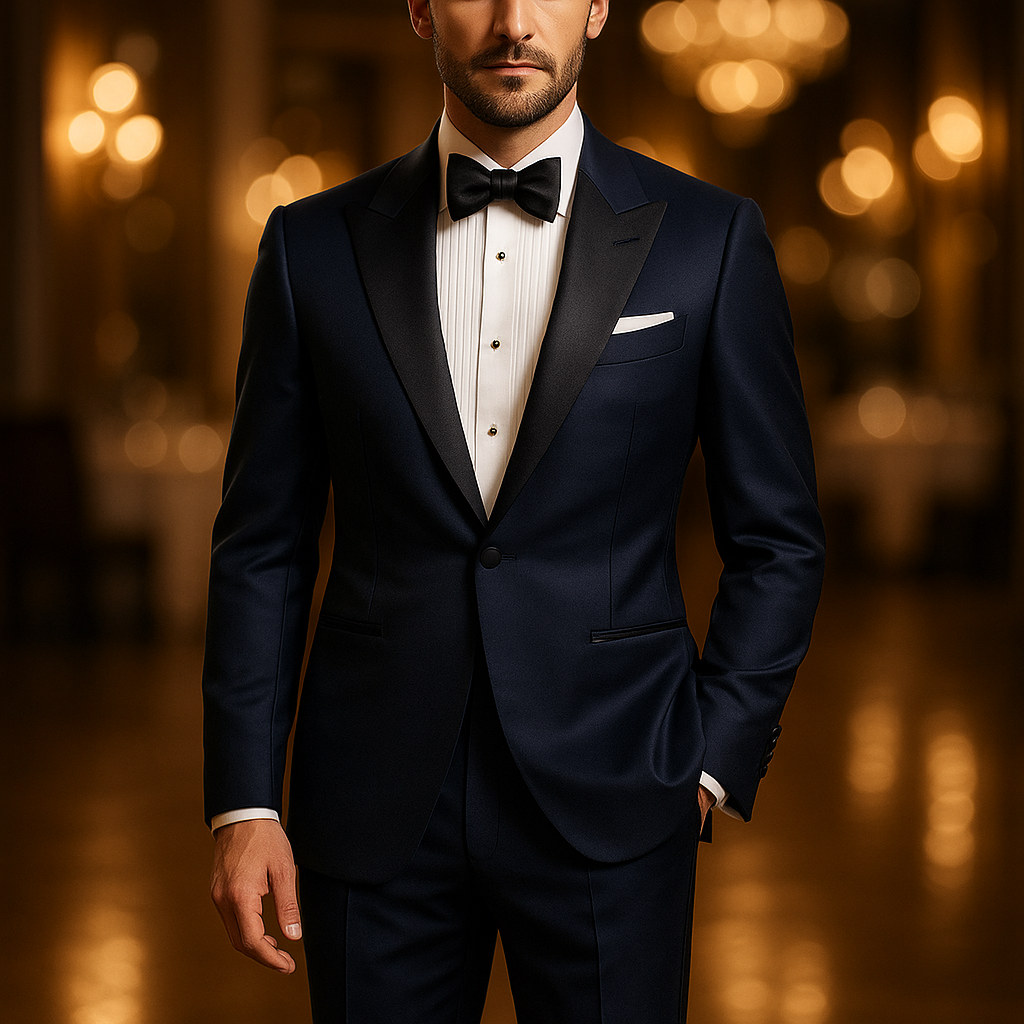
A blue tuxedo preserves every defining detail--satin lapels, covered buttons, stripe-seamed trousers, no belt loops--so you signal peak formality while the color alone modernizes the tradition.
Tuxedo vs. Suit: Understanding the Fundamental Differences
While tuxedos and suits may look similar at first glance, their key distinction lies in the use of satin fabric. Tuxedos feature satin lapels on the jacket and satin stripes down the pants' outseam, while suits maintain the same fabric throughout [1].
Beyond fabric, tuxedos never include belt loops, instead using side adjusters or precise tailoring for the waist. Their buttons are typically covered in silk, unlike suits' standard horn or acrylic buttons [2].
Tuxedos represent the height of formal attire, traditionally reserved for weddings, galas, and black-tie events, while suits offer more versatility across business and social occasions [3]. This formality difference extends to their accessories - tuxedos traditionally pair with pleated shirts, bow ties, and patent leather shoes, though modern interpretations have relaxed some of these strict guidelines [1].
The Distinctive Features of a Proper Tuxedo
A proper tuxedo is defined by several key distinguishing features that set it apart from standard suiting. The most prominent element is the satin fabric used strategically throughout - most notably on the lapels and as a stripe down the pants' outseam. The jacket's buttons are typically covered in silk rather than standard horn or plastic.
Proper tuxedo trousers never include belt loops, instead relying on side adjusters or precise tailoring for waist fit. The formal shirt should feature either a pleated front or pique bib front, with options for wing or turndown collars. French cuffs are essential, allowing for formal cufflinks.
A proper waist covering - either a cummerbund or formal waistcoat - is traditionally required to conceal the transition between shirt and trousers. The entire ensemble should maintain clean lines and strong contrasts between the formal fabrics [4].
How Blue Variations Maintain Tuxedo Traditions While Breaking New Ground
Blue tuxedos maintain the core formal elements that define black tie attire while introducing subtle innovations. The key traditional features remain intact - satin lapels, covered buttons, and formal trousers with side stripes - but the blue fabric creates new possibilities for sophistication [5].
Midnight blue in particular enhances these classic elements, appearing even darker and richer than black under artificial lighting while maintaining an air of mystery [6]. The color shifts subtly depending on the environment - in natural daylight it displays its deep blue character, while in dimmer settings it can appear almost black, lending an enigmatic quality to the formal silhouette [6].
This adaptability allows blue variations to honor black tie traditions while offering a contemporary twist that sets the wearer apart [6]. The evolution maintains the tuxedo's refined structure and ceremonial elegance while allowing for thoughtful personalization through shade selection and styling choices [5].
The Evolution from Black-Only to Blue Options in Formal Attire
The tuxedo's journey from exclusively black to embracing blue tones reflects broader shifts in formal fashion. In the 1930s, midnight blue emerged as a sophisticated alternative, becoming so popular it temporarily surpassed black in mill production volumes [7].
This evolution continued through distinct phases - while the 1950s and 1960s saw experimental colors and patterns emerge, the 1970s marked a clear divide in the formal wear market [8]. High-end retailers maintained conservative styles for sophisticated buyers, while rental markets embraced bolder colors targeting younger customers, particularly for proms and weddings [8].
The modern blue tuxedo has transcended its humble beginnings, evolving from the gaudy powder blue polyester versions of the past into a refined fashion staple [9]. Today's blue tuxedos range from classic midnight blue to contemporary electric blue variations, offering sophistication comparable to traditional black while allowing for personal expression [9].

The Spectrum of Blue: Exploring Tux Shades and Styles
Choose a true midnight-blue tuxedo--so dark it rivals black under chandeliers yet photographs richer--and you'll own the only jacket that looks more luxurious than black tie under artificial light while slipping seamlessly from ballroom to wedding aisle.
Midnight Blue: The Classic Alternative That Outshines Black Under Artificial Light
Midnight blue emerged in the 1920s as a sophisticated alternative to black for formal wear, becoming so popular by the 1930s that tailors were selling equal numbers of midnight blue and black dinner jackets [10]. The key distinction is that midnight blue appears even darker and richer than black under artificial lighting - while black fabric tends to reflect a greenish or greyish cast, especially as it ages, midnight blue maintains a deep, luxurious tone [11].
The color shifts subtly depending on the environment - in natural daylight it displays its deep blue character, while in dimmer settings it can appear almost black, lending an enigmatic quality to the formal silhouette [10]. When selecting midnight blue, it's crucial to choose a true midnight shade that's so dark it's nearly indistinguishable from black until the two are placed side to side [11].
Unfortunately, the trend for midnight blue has spurred many manufacturers to offer brighter navys and blues that lack the sophisticated depth of authentic midnight blue, resulting in dinner jackets that can look more like prom wear than proper black tie [11].
Navy Blue Tux: Versatile Elegance for Various Formal Settings
The navy tuxedo offers unmatched versatility across formal settings while maintaining sophisticated elegance. For traditional black tie events, pairing it with a white tuxedo shirt creates a timeless look - opt for a pique-front shirt with wingtip collar for maximum formality, or choose a plain-front shirt with semi-spread collar for a more contemporary style [12].
The navy tux particularly shines at weddings, where its deep blue tones photograph exceptionally well compared to traditional black [13]. For creative black-tie events, you can take a more relaxed approach by wearing a simple white dress shirt, though proper fit and styling remain crucial - the collar should be semi-spread rather than button-down, and shirt buttons should remain understated [12].
The navy tuxedo's adaptability extends across ballroom galas, proms, formal dinners, charity events, operas and red carpet affairs [12]. Its rich blue hue creates subtle depth under artificial lighting while maintaining formality comparable to classic black [13].
Royal and Brighter Blues: Making a Bold Statement
Royal blue tuxedos make a bold yet sophisticated statement for formal occasions, offering a vibrant alternative to traditional black or midnight blue. This brighter shade creates instant visual impact while maintaining the elegant structure and formality of black tie attire.
For proms and creative black tie events, royal blue tuxedos provide an opportunity to stand out confidently, especially when coordinating with dates wearing blue dresses [15]. However, the appropriateness of royal blue depends heavily on the specific event and dress code - while it works well for less formal black tie occasions like house parties or creative black tie events, it may not be suitable for strictly traditional formal affairs where classic black or midnight blue are expected [16].
When styled properly with black lapels and traditional formal elements, a royal blue tuxedo maintains the core ceremonial elements that define black tie while introducing thoughtful personalization through its bold color choice [14].
The Powder Blue Tuxedo: From 1970s Trend to Modern Interpretations
The powder blue tuxedo emerged during the flamboyant 1970s era when formal wear embraced bold experimentation. As part of the 'peacock' fashion movement, tuxedos appeared in vibrant pastels and bright colors, with powder blue becoming an iconic choice for proms and weddings [17].
These early versions were typically made from polyester double knit fabric, which allowed for vivid colors but lacked breathability [17]. While traditional black-tie circles rejected these flashy innovations, rental markets eagerly adopted them to appeal to younger customers seeking distinctive formal wear [18].
By the mid-1970s, formal wear had split into two distinct markets - high-end retailers maintained conservative styles for sophisticated buyers, while rental shops continued offering bold colors like powder blue for proms and weddings [18]. The modern interpretation of the powder blue tuxedo has evolved significantly from its polyester origins, now appearing in refined wool blends and sophisticated cuts that pay homage to the style's heritage while incorporating contemporary tailoring [18].
Anatomy of a Blue Tux: Components and Construction
Choose a peak-lapel single-breasted tuxedo for versatile authority at business-formal events, or a shawl-lapel double-breasted one for uninterrupted elegance at black-tie affairs--no cummerbund required.
Lapel Styles: Peak, Shawl, and Notch Options for Blue Tuxedos
A tuxedo's lapel style dramatically impacts its overall aesthetic and formality. Peak lapels feature sharp edges that extend upward toward the shoulders, creating a bold look that emphasizes shoulder width while producing a slimming effect at the waist [19]. These lapels excel in formal settings and are particularly flattering on shorter men or those with larger builds [19].
Shawl lapels offer a continuous rounded edge that flows smoothly from the collar, evolving from Victorian smoking jackets [19]. Their elegant design makes them ideal for black-tie events and evening occasions, with varying widths available - broader for classic looks and narrower for contemporary styling [19]. The lapel fabric typically differs from the jacket material, often featuring satin or grosgrain for added sophistication [20].
While both styles work well for formal events, peak lapels project authority and confidence, making them popular for business formal occasions, while shawl lapels convey refined elegance better suited to black-tie affairs [20].
Single vs. Double-Breasted: Choosing the Right Configuration
The choice between single and double-breasted tuxedo configurations impacts both style and formality. Single-breasted tuxedos feature one button that creates an iconic V-shape, allowing the lapels to form a lower V than multi-button designs [21].
While equally formal as double-breasted versions, single-breasted jackets offer more flexibility since they can be worn unbuttoned later in the evening, though this creates a slightly more casual look and requires wearing a waistcoat or cummerbund to maintain elegance [21]. Double-breasted tuxedos provide additional structure and waist support through their two sets of buttons, creating a more formal appearance with a higher buttoning point that shows less shirt [21].
Since double-breasted jackets should remain buttoned, they eliminate the need for a cummerbund or waistcoat underneath [21]. For first-time tuxedo wearers, particularly for events like weddings, the single-breasted option offers a safer choice that ensures both comfort and confidence [22].
Material Matters: Wool, Blends, and Seasonal Fabrics
The choice of fabric dramatically impacts a tuxedo's performance, comfort, and longevity. Pure wool remains the gold standard for formal wear, with Super numbers between 100's to 180's indicating fiber fineness from 18.75 to 14.75 microns - higher numbers produce softer, more luxurious fabrics but require more delicate care [23].
For year-round versatility, mid-weight wools between 200-300 grams per square meter offer an ideal balance of structure and comfort [23]. Seasonal considerations also influence fabric selection - lighter 7-8 oz tropical weave wools excel in warmer months, while heavier 11+ oz wools provide warmth for winter formal events [24].
Modern wool blends can enhance performance while maintaining formality - adding mohair increases crease resistance and breathability, while small percentages of synthetic fibers can improve durability [23]. The fabric's weave also affects its formal character - plain weaves create crisp, structured looks ideal for black tie, while twill patterns offer subtle visual interest through diagonal ribs [23].
Fit Profiles: Slim, Modern, and Classic Cuts for Different Body Types
A tuxedo's fit dramatically impacts both comfort and style. Modern fit strikes an ideal balance between classic comfort and contemporary shape, with slight tapering at the waist while maintaining room in the chest and shoulders for natural movement [25]. This versatile cut flatters most body types and creates a slimming effect without feeling restrictive [26].
Slim fit tuxedos conform more closely to the body's contours, eliminating excess fabric for a razor-sharp silhouette. While sleek and contemporary, slim fits demand precise sizing and work best for lean frames or those seeking a more fashion-forward look [25]. Classic cuts offer the most traditional and relaxed silhouette, with fuller chest and waist dimensions that particularly suit broader builds or those prioritizing ease of movement [27].
When selecting a fit profile, consider both body type and occasion - modern fits excel at business formal events and traditional weddings, while slim cuts make bold statements at creative black-tie affairs [26]. The key is choosing a cut that allows comfortable movement while maintaining clean lines appropriate for the formality level [25].
Styling Your Blue Tux: Creating the Complete Look
Anchor your blue tuxedo in timeless elegance by pairing it with a crisp white pleated-front shirt, French cuffs, and a black bow tie that seamlessly bridges the lapels for an unassailably sharp black-tie finish.
Shirt Selection: Traditional White vs. Alternative Options
The traditional white tuxedo shirt remains the most formal and classic choice for black tie attire, providing timeless elegance through its crisp appearance and strong contrast [30]. For maximum formality, select a shirt with either a pleated front or pique bib front, which adds sophisticated texture while maintaining the formal aesthetic [28]. Hidden-front plackets that conceal buttons create a smooth, unbroken appearance that enhances the refined look [30].
While white is standard, cream shirts can offer a subtle alternative that appears less harsh under artificial lighting and may better complement warm skin tones [29]. Light blue shirts, while less traditional, can work for more creative black tie interpretations but should be reserved for less formal occasions like intimate dinners [29]. When selecting a formal shirt, ensure it includes proper formal details like French cuffs for cufflinks and either a wing or turndown collar - button-down collars are too casual for black tie [28].
The fabric choice also impacts the shirt's formality - fine twill and broadcloth offer an appropriately refined appearance while maintaining comfort [30].
Neckwear Decisions: Bow Ties, Neckties, and Color Coordination
The bow tie remains the quintessential neckwear choice for black tie events, with the color black being non-negotiable for maintaining proper formality [31]. While some may be tempted to experiment with burgundy or patterned bow ties, the black bow tie's significance extends beyond mere aesthetics - it serves as a benchmark for the entire outfit's formality level, distinguishing it from both more casual attire and ultra-formal white tie occasions [31].
For those wearing a blue tuxedo, coordinating the bow tie with black lapels creates a harmonious visual flow that maintains the formal integrity of the ensemble [31]. When selecting neckwear for creative black tie events, there may be some flexibility to incorporate a traditional necktie, though this slightly reduces the formality compared to a classic bow tie [31].
The key is ensuring any neckwear choice complements rather than competes with the tuxedo's inherent elegance - the bow tie should nestle comfortably around the collar while allowing natural head movement [31].
Essential Accessories: Cummerbunds, Waistcoats, Pocket Squares, and Cufflinks
A proper waist covering is essential for completing a formal tuxedo ensemble. The cummerbund, a wide pleated satin band that fastens at the lower back, serves to conceal where the dress shirt meets the trousers [32]. Originally invented in Italy as a lightweight alternative to waistcoats, cummerbunds should be black to maintain formality - colored versions can appear dated and are only acceptable at less formal events [32].
For those preferring a waistcoat, it must be made of the same color and fabric as the tuxedo jacket and trousers, with options for lapel styles and single or double-breasted cuts [32]. When wearing a single-breasted waistcoat, tradition dictates leaving the bottom button undone, a practice dating back to King Edward VII in the early 1900s [32]. Cufflinks and studs should be coordinated in metal finish to create a cohesive look - options include mother-of-pearl, silver, gold, or onyx inlays, but plastic versions should be avoided [32].
A crisp white pocket square provides an elegant finishing touch, folded simply when wearing a classic tuxedo [32]. For trouser support, suspenders in black or white are appropriate, while belts should never be worn with formal wear [33].
Footwear Fundamentals: Patent Leather, Oxfords, and Contemporary Alternatives
Patent leather oxfords remain the gold standard for tuxedo footwear, featuring a high-gloss finish, closed lacing system, and minimal design that complements rather than competes with the tuxedo [34]. For those seeking a more contemporary option, formal loafers have gained acceptance, particularly in patent leather or velvet variations designed specifically for black tie events [34].
Velvet slippers offer a sophisticated alternative, with their heritage dating back to Victorian smoking jackets, making them especially appropriate for creative black tie occasions and fall/winter events [34]. When wearing a midnight blue tuxedo, black patent leather shoes provide the most versatile and formal choice, though midnight blue patent or velvet shoes can create an elegant coordinated look for less traditional events [34].
For maximum versatility, opt for black patent leather oxfords or high-quality calfskin oxfords that can achieve a high polish - these will serve well for most formal occasions while maintaining the refined elegance expected of black tie footwear [35]. The key to selecting appropriate formal footwear lies in choosing pairs specifically designed for formal wear, featuring sleek profiles, minimal embellishments, and high-shine finishes that elevate them above everyday shoes [34].


Occasion-Appropriate Blue Tux Styling
Coordinate your wedding party's blue tuxedos by giving the groom a waistcoat or wing-collar shirt while keeping everyone's bow ties black, schedule all fittings the same week, and let prom-goers pick navy-to-royal slim-cut jackets that pop under ballroom lights with silver ties and metallic accents.
Wedding Wear: Groom and Groomsmen Considerations
The groom's attire should stand out distinctly from the groomsmen while maintaining a cohesive look. For weddings featuring blue tuxedos, the groom can differentiate himself through subtle variations like wearing a waistcoat while groomsmen wear cummerbunds, or choosing a wing collar shirt while groomsmen wear turn-down collars [36].
Another approach is having the groom wear a full matching blue tuxedo while groomsmen wear black tuxedo trousers paired with blue dinner jackets [36]. When coordinating accessories, all members should wear black bow ties to maintain formality, regardless of other style variations [36].
The timing of fittings is crucial - schedule them within the same week to ensure consistency across the wedding party, with final adjustments completed 2-3 weeks before the event [37]. For outdoor ceremonies transitioning to indoor receptions, consider how the blue tuxedo's rich tones will photograph in different lighting conditions, as midnight blue in particular creates exceptional depth under artificial ballroom lighting [36].
Prom and Formal Dance Attire: Youthful Yet Sophisticated Approaches
Prom attire offers unique opportunities to embrace bolder interpretations of formal wear while maintaining sophistication. Modern blue prom tuxedos range from classic navy to vibrant royal blue variations, with options including velvet jackets, sequined details, and floral patterns that create visual impact while honoring formal structure [38]. For maximum versatility, a navy blue tuxedo pairs effectively with various accessories while photographing exceptionally well under artificial lighting [39].
The fit remains crucial - slim-cut styles work best for lean frames, while modern cuts offer balanced proportions that flatter most body types. When selecting accessories, silver or black bow ties complement navy effectively, while metallic cufflinks and pocket squares add refined personality without overwhelming the ensemble [39]. For those seeking statement pieces, contemporary collections include bold variations like cobalt blue tuxedos crafted from Super 130's wool that combine breathability with striking visual presence [40].
These modern interpretations maintain formal elements while incorporating thoughtful details like stitched lapel borders and covered buttons that elevate the overall aesthetic [40].
Black-Tie Events and Galas: Meeting Traditional Expectations with Modern Flair
Black tie events demand meticulous attention to traditional expectations while allowing thoughtful modern interpretation. The dress code centers on a black or midnight blue tuxedo with satin or grosgrain lapels, paired with a crisp white dress shirt featuring a Marcella bib and French cuffs [41]. For traditional galas, opt for peak lapels to convey maximum formality, while shawl collars offer an equally sophisticated yet softer profile.
The bow tie must be black silk and self-tied - pre-tied versions compromise the authenticity of formal attire [42]. When introducing contemporary elements, maintain core formal components while making calculated adjustments. A velvet dinner jacket in deep jewel tones or a subtly patterned bow tie can work for creative black tie affairs, provided they complement rather than overshadow traditional elements [41].
For maximum sophistication, pair patent leather Oxford shoes with black silk dress socks long enough to prevent leg exposure when seated [42]. Complete the ensemble with understated cufflinks in silver, gold, or mother-of-pearl, and a white linen pocket square in a precise presidential fold [41].
Seasonal Styling: Adapting Your Blue Tux for Winter, Spring, Summer, and Fall
A blue tuxedo's versatility shines through each season with thoughtful fabric and styling choices. For spring events, opt for lightweight wool or linen blends that maintain elegance while providing comfort in variable temperatures. Light blue shades work particularly well for garden parties and outdoor ceremonies, paired with floral accessories for seasonal flair [43].
Summer calls for breathable fabrics like cotton or seersucker to stay cool during warm-weather formal occasions, with navy being an especially popular choice for beach weddings and rooftop gatherings [43]. As autumn arrives, embrace richer fabrics like velvet and wool in deeper blue tones that complement the season's sophisticated atmosphere [43]. Winter formal events allow for heavier wool and cashmere in midnight blue - a shade that photographs exceptionally well under artificial lighting and maintains its rich depth during evening affairs [44].
For maximum seasonal adaptability, choose a mid-weight wool between 200-300 grams per square meter, which provides year-round versatility while maintaining the tuxedo's formal structure [44].

Investment Considerations: Purchasing vs. Renting
Buy a high-quality merino-wool, half-canvassed tuxedo if you'll wear it twice or more, but rent--at roughly $100-150 with accessories included--if you only need it for a single night.
Quality Indicators: What to Look for When Buying a Blue Tux
When evaluating a blue tuxedo for purchase, focus first on fabric quality since it determines both appearance and longevity. Look for 100% merino wool with Super numbers between 120s and 130s, which offer an ideal balance of softness and durability - extremely high Super numbers (160s+) can actually be too delicate for regular wear [45]. Construction method significantly impacts quality - at minimum, seek half-canvassed construction, though full-canvas offers superior draping and longevity.
Quality indicators include hand-rolled lapels that create a gentle curve, hand-padded chests that enhance the wearer's physique, and buttonholes finished with precise stitching [45]. The fabric should have a natural drape without bubbling or rippling, particularly around the lapels and chest. Watch for signs of poor construction like machine-pressed lapels, fused interlinings that can separate over time, or puckering along the seams [45].
For maximum value, prioritize construction and fabric quality over designer labels, as brand names often command significant premiums without corresponding quality improvements [45].
Rental Pros and Cons for Occasional Formal Events
Tuxedo rental offers distinct advantages for occasional formal events. The typical rental cost ranges from $100-150, making it significantly more affordable than purchasing for one-time use. Rentals include essential accessories like shirts, shoes, cufflinks and ties, eliminating additional expenses [46]. The process mirrors booking a hotel - select your style, get measured, and return after the event [46].
However, rentals come with limitations. Standard sizes may not provide an ideal fit, and previous wear can result in minor damage [47]. During peak seasons like prom and wedding season, preferred styles may be unavailable [47]. For multi-event value, purchasing becomes more cost-effective after approximately two uses [46].
While rentals offer access to high-end designer options at a fraction of retail cost, the trade-off is accepting that others have worn the garment before, though reputable shops thoroughly clean between uses [46]. The rental timeline requires careful planning - schedule fittings within the same week for consistent measurements across wedding parties, with final adjustments completed 2-3 weeks pre-event [46].
Cost Analysis: Long-Term Value of Owning vs. Short-Term Rental Solutions The financial calculus between owning and renting a tuxedo shifts dramatically based on usage frequency. While renting costs $100-150 per event, purchasing a quality tuxedo requires an upfront investment of $500-1500 [48]. For occasional wear, rentals provide access to high-end options without maintenance responsibilities.
However, the math favors purchasing after approximately two uses, as rental fees compound quickly for multiple events [48]. A purchased tuxedo delivers superior value through perfect tailoring and unlimited use - particularly valuable for professionals attending multiple formal occasions annually [49]. The long-term economics extend beyond direct costs - owned tuxedos eliminate rushed rental deadlines, provide consistent fit across events, and retain potential heirloom value [48].
Modern rental costs have risen to $125-250 for wedding-specific tuxedos, making ownership increasingly attractive for grooms and wedding parties [48]. When factoring maintenance expenses, owned tuxedos still prove more economical over time since rental fees include premiums for cleaning and regular replacement of worn garments [49].
Care and Maintenance: Preserving Your Blue Tuxedo Investment
Proper tuxedo maintenance starts with understanding fabric care requirements. Most tuxedos should be dry cleaned sparingly since cleaning chemicals can reduce fabric lifespan by drying out natural fibers [50]. After wearing, keep the tuxedo fresh by having it professionally cleaned only when necessary, and always clean both jacket and trousers together to maintain consistent coloring [50]. For storage, use shaped wooden hangers that match jacket contours and cloth garment bags that allow natural fibers to breathe - avoid plastic covers that trap harmful moisture [50].
Heat poses a major threat to tuxedo longevity, so store garments in cool, dry closets away from attics, garages, or basements where temperature and moisture fluctuations can damage fabrics [51]. For traveling, carry the tuxedo in a proper garment bag and, when flying, keep it with you rather than checking it [50]. Minor wrinkles can be addressed by hanging the tuxedo in a steamy bathroom for 15-30 minutes [50]. Regular inspection helps catch potential issues early - examine for loose buttons, snags, or stains after each wear and have repairs done promptly by professionals who specialize in formalwear [52].
When cleaning is required, always use reputable cleaners experienced with formal attire, as improper cleaning can damage delicate details like silk trim [50]. With proper care focused on minimal cleaning, appropriate storage, and prompt maintenance, a quality tuxedo can maintain its refined appearance for years of formal occasions.
- Tuxedos use satin lapels/striped trousers, no belt loops, silk-covered buttons.
- Midnight blue tuxedos read darker/richer than black under artificial light.
- Peak lapels add authority; shawl lapels give soft elegance for black tie.
- Own after ~2 events: rental $100-150/use vs. purchase $500-1,500.
- Dry-clean sparingly, store on shaped hangers in cloth bags away from heat.
- https://www.friartux.com/blog/blog926.html?srsltid=AfmBOorqXkyE84zTZDfAWV3iUw1UXdIXqBfkB2gOry-3gw4eW4E0SVMl
- https://theblacktux.com/blogs/style/tuxedo-vs-suit-details-make-the-difference
- https://www.dictionary.com/e/tuxedo-vs-suit/
- https://blacklapel.com/thecompass/blue-tuxedo-black-tie-mens-tuxedos/?srsltid=AfmBOoo3EX1WMOBoo-IPatN2B7dAF2o4Zq_rSygaOwBnzCUZpQh0OC13
- https://www.concertattire.com/blogs/blog/a-guide-to-tuxedos-and-ensembles-classic-vs-contemporary-styles
- https://vanchier.com/midnight-blue-tuxedo/
- https://www.michaelandrews.com/brief-history-tuxedo/?srsltid=AfmBOopOsGdmdZ1O6XQD98cxf3-3BdMBRFNIO7AF8M12EmWAbrWL7138
- https://www.gentlemansgazette.com/powder-blue-tuxedo/
- https://clubuomo.com/blogs/style-blog/the-evolution-of-the-blue-tuxedo?srsltid=AfmBOoooyltLq8xP6kPMa40A8D5opPkF7CbOw5ZnhRR1B-ENWw6B8bKV
- https://theblacktieblog.wordpress.com/2011/12/20/midnight-blue/
- https://www.permanentstyle.com/2020/09/the-guide-to-cloth-for-black-tie-or-tuxedo.html
- https://nyctuxedos.com/journal/navy-tuxedo-outfits/
- https://blacklapel.com/thecompass/blue-tuxedo-black-tie-mens-tuxedos/?srsltid=AfmBOoocolP_Lkf-GICqW-afm3KfYCB-1Dgjp9gejA3ytO9GTYE3F3Ah
- https://blacklapel.com/thecompass/blue-tuxedo-black-tie-mens-tuxedos/?srsltid=AfmBOoqTXFa5K-k8itWORRnm7Dd0Bow725PlHS3t6ei_IYFqZwh5sURR
- https://perfecttux.com/blogs/news/the-best-blue-prom-suits-and-tuxedos
- https://www.reddit.com/r/malefashionadvice/comments/1i09z34/does_royal_blue_work_for_a_tux/
- https://vintagedancer.com/1970s/1970s-mens-suits-history-sport-coats-tuxedos/
- https://www.gentlemansgazette.com/tuxedo-black-tie-guide/black-tie-tuxedo-history/tuxedo-rebirth-the-yuppie/
- https://www.hockerty.com/en-us/blog/the-tuxedo-lapels-guide-shawl-vs-peak-lapel
- https://hangrr.com/resources/peak-lapel-vs-shawl-lapel?srsltid=AfmBOori9PrTWBK34Pw4z6qHeGmpOOGf8QAGCF5VXUPbb5aI-3S_5xvU
- https://theartefact.com/how-to-wear-a-tuxedo-lapels-fabric-accessories/?srsltid=AfmBOorGjLIyURSeRqmx3xUDnUATABt9tpJ1v66XdihsaZUvCSfSUB9e
- https://hespokestyle.com/tuxedo-styles/?srsltid=AfmBOoqxjPAsapRySxyl56HzLs6KHIpfEHIwAYiOw4UZ0cpm4wG9BJev
- https://officinepaladino.com/wool-fabrics/how-to-choose-the-right-wool-fabric-for-suiting/
- https://www.hockerty.com/en/men/tuxedos/111450-light-blue-tuxedo
- https://theblacktux.com/blogs/style/modern-vs-slim-fit-suit
- https://www.oliverwicks.com/article/modern-fit-vs-slim-fit?srsltid=AfmBOoqzd5W9JCLnFYQXawo7sO9TjyqnH5gaC5xYn4tyyv_IQ7Lz3avV
- https://xsuit.com/blogs/news/understanding-suit-fits-a-complete-guide-to-classic-fit-slim-fit-modern-fit-and-tailored-fit
- https://blacklapel.com/thecompass/blue-tuxedo-black-tie-mens-tuxedos/?srsltid=AfmBOop2Jyt667NoZSssk6YRpm6N7JtCu-r1JgpJetNnSyF0LcJ_OIsA
- https://www.bondsuits.com/non-white-shirts-black-tie/
- https://chesterbernard.com/blogs/news/how-to-wear-a-tuxedo-shirt-and-tie-like-a-pro-the-ultimate-guide?srsltid=AfmBOopopZoe9mm878Tu64t2-EBPS5e9IbFO32J0hmO228h2WRqdahgm
- https://www.highcottonties.com/blogs/high-cotton-times/bow-tie-elegance-tuxedos-best-friend?srsltid=AfmBOopIyL2Dl100TFC7TmyitxePmefa8yQWb49u-LmzS5RrgU7oh3lT
- https://theartefact.com/what-to-wear-with-your-tuxedo/?srsltid=AfmBOor1h_C_HlmQqgTedYwAD5oVmSIN7f2C9D9tazNzQq0GpMKvu0OH
- https://blacklapel.com/thecompass/blue-tuxedo-black-tie-mens-tuxedos/?srsltid=AfmBOopc4p8f_uWx0-vnlTSIBtiP7cZYfye7add6lUgteQMtreZjm0OA
- https://theblacktux.com/blogs/guides/complete-guide-tuxedo-shoes-loafers
- https://www.brides.com/best-tuxedo-shoes-4801241
- https://blacklapel.com/thecompass/blue-tuxedo-black-tie-mens-tuxedos/
- https://paulandrewsuits.com/blogs/fashion/how-to-coordinate-groomsmen-with-the-groom-s-wedding-suit
- https://www.gentlemansguru.com/product-category/prom-tuxedos/blue-prom/?srsltid=AfmBOor4NUkfxEsy8S3Sy2rT0m0ULIImc_vrOimkMrpPA__5rUi31sD3
- https://menstuxedousa.com/collections/navy-blue-prom-tuxedo?srsltid=AfmBOorp2sgpjOHyfEPIIkYVRU7nBOFqz-_sUECZj4ly0JvSuqms7N0K
- https://www.dariannabridal.com/blog/cobalt-blue-tuxedo/
- https://hangrr.com/resources/ultimate-black-tie-guide?srsltid=AfmBOopTk9M3Yu_lEvA4ne5MoXixSo8Ts1qa5o-l8qnxAGThl_drLBkq
- https://thevou.com/blog/black-tie-dress-code-styling-guide-men/
- https://lakesidebridal.com/seasonal-style-tuxedo-trends-for-spring-summer-fall-and-winter-events/
- https://blacklapel.com/thecompass/blue-tuxedo-black-tie-mens-tuxedos/?srsltid=AfmBOopb8wnyejljubjsz-acFFQ9m0wy1vgJFRxCgzSy-vn9-GyjTrWR
- https://theblacktux.com/blogs/guides/how-much-does-a-suit-cost
- https://www.weddingwire.com/wedding-ideas/renting-vs-buying-your-wedding-tuxedo
- https://creativebridalwear.com/tuxedo-rental-vs-purchase/
- https://flexsuits.com/blogs/blog/how-much-does-a-tuxedo-cost?srsltid=AfmBOorS0VZsYNePw8kB437Uai6B1U9tO8zrTdYcXaEN8WCqbi2zd_Jx
- https://damianistores.com/blogs/blog/renting-vs-buying-tuxedo
- https://www.gentlemansgazette.com/tuxedo-black-tie-guide/basics-101/tux-maintenance-care/
- https://www.groomsclub.com/blogs/news/maintaining-preserving-your-tuxedo-5-things-to-remember?srsltid=AfmBOoqlnan4q8C2zBwKlNVc_vMPMRyYm1uE1JunrBQHNGDlvkjhglWB
- https://damianistores.com/blogs/blog/caring-for-your-tuxedo-maintenance-and-storage-tips


