



What Is Cocktail Attire? An Essential Men’s Dress Code Guide
Cocktail attire strikes the perfect balance between formal and approachable, sitting just below black tie but above business casual, and this guide demystifies how to master it for any occasion. Readers will learn the essential building blocks--starting with a well-tailored suit or blazer in navy, charcoal, or burgundy, then layering in a crisp white or light-blue shirt, a tie that complements without matching the pocket square, and season-appropriate fabrics that respect both the weather and the venue's formality. The article explains how to read the event: darker wool suits for evening weddings or corporate functions, lighter colors and breathable linens for daytime garden parties, and textured sport coats with knit polos or turtlenecks for "casual-cocktail" invites. It emphasizes the subtle art of accessorizing--using pocket squares to echo tie colors, swapping ties for texture when the dress code relaxes, and ensuring every omission looks intentional rather than forgetful. By following these rules, any man can appear effortlessly polished, avoid the embarrassment of being either over- or under-dressed, and confidently express personal style within the refined framework cocktail attire demands.
Understanding Cocktail Attire
Cocktail attire strikes a sophisticated yet approachable balance that lets you look polished without the rigidity of black tie, adapting to time, venue, and event while explicitly banning tuxedos, bow ties, and patent leather.
Where cocktail attire sits on the formality spectrum
Cocktail attire occupies a specific position in the formality hierarchy, ranking fourth after white tie, black tie, and business-formal, while sitting above business casual, smart casual and casual attire [1]. This sweet spot between formal wear and business casual creates a dress code that's both sophisticated and approachable--perfect for when you want to look polished without the rigidity of black tie.
The beauty of cocktail attire lies in its adaptability. Your look can shift based on three key factors: time of day, venue, and event type.
While specific outfit elements are covered in detail later in this guide, it's important to understand that cocktail attire explicitly prohibits tuxedos, black bow ties, and patent leather shoes--wearing these would make you appear overdressed and out of sync with the event [1]. This middle-ground positioning gives you room for personal expression through accessories while maintaining the refined look your host expects.
Typical events that call for cocktail attire for men
You'll encounter cocktail attire at a variety of social and professional events where looking polished matters.
Weddings lead the way, especially those at upscale venues like historic hotels, where the dress code strikes the perfect balance between approachable and elegant [2].
For these special occasions, having the right

Building the Perfect Cocktail Outfit
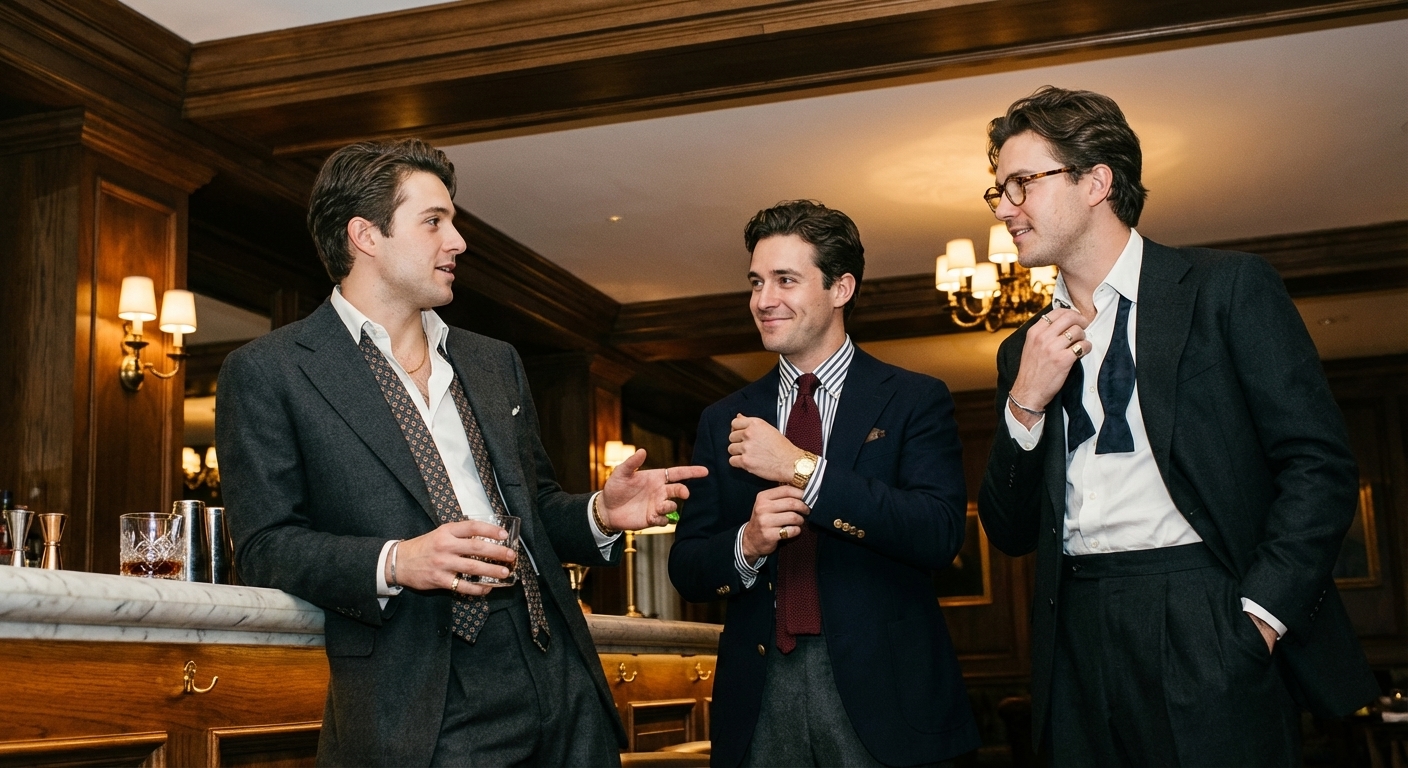
Anchor your cocktail look in a sharply tailored suit, then elevate it with a crisp shirt, a tie whose texture echoes the outfit's formality, and a pocket square that picks up the tie's color without ever matching it exactly.
Suit and blazer choices: colors, fabrics, and modern fits
Your cocktail outfit starts with the right suit or blazer--this choice sets the tone for your entire ensemble. When selecting your outerwear, think of it as the foundation that everything else builds upon.
The most versatile choice? A well-tailored suit in
Shirt, tie, and pocket‑square coordination for a polished look
Mastering shirt, tie, and pocket square coordination transforms a good cocktail outfit into a great one. Start with your shirt--crisp white or light blue provides the most versatility and works beautifully with any suit color. These classic choices give you maximum flexibility when selecting ties and accessories. Here's a crucial tip: never match your tie and pocket square exactly. This common mistake creates an overly coordinated, artificial look that actually detracts from your sophistication [6]. Instead, think about these pieces as complementary elements that should harmonize without mirroring each other.
For tie selection, let your outfit's formality level guide you. Pairing a formal suit with a dark grenadine tie creates refined elegance, while textured ties work beautifully with more casual blazer combinations [6]. The key is matching the weight and texture of your tie to your overall ensemble. Your pocket square serves as the finishing touch--subtle yet essential. The foolproof approach? Choose a pocket square with secondary colors that echo your tie's base color.
This creates visual harmony without appearing contrived [6]. When you're unsure, you can't go wrong with a simply folded white linen pocket square--it's the little black dress of men's accessories [6]. If you're mixing patterns, follow this simple rule: when wearing both a patterned suit and tie, opt for a simple pocket square with a complementary border that references your tie color [6]. This maintains balance and prevents your outfit from becoming visually overwhelming. Remember, these accessories should enhance your overall look, not steal the show. Think of them as supporting actors that make the leading man--you--look his absolute best [6].


Adapting to Event Types and Seasons
Let the clock, calendar, and venue script your cocktail look: after-dark navy or charcoal, sunlit blues and browns, summer linens in muted tones, winter velvets and tweeds, beachside relaxed tailoring, ballroom formality, business events strictly sober, weddings joyfully expressive.
Daytime vs. evening: seasonal fabric swaps and color tones
The time of day and season dictate your cocktail attire choices more than you might expect. Evening events after 5 PM call for darker, more formal options--stick to the navy, charcoal, and black discussed earlier [4]. Daytime gatherings give you more freedom with medium blues, dark greens, and sophisticated browns that complement natural light [7]. Your fabric choices should work with, not against, the weather.
For summer events, breathable materials like linen and seersucker maintain structure while keeping you comfortable--just ensure they're in darker, cocktail-appropriate colors [4]. Winter invites you to experiment with luxe textures: velvet blazers, tweed sport coats, or herringbone patterns that add visual interest while providing warmth [7]. Consider the venue alongside the season. Garden weddings and outdoor terraces welcome lighter fabrics and subtle patterns, while ballrooms and upscale indoor venues require traditional formality regardless of weather [7].
The goal? Look polished without suffering--wearing heavy wool in July or lightweight linen in December signals poor judgment rather than style.
Business cocktail events versus wedding cocktail attire
Professional events and weddings both specify cocktail attire, but they're playing by different rules. Business cocktail events--think retirement parties, networking functions, and corporate gatherings--demand conservative choices that stay formal from start to finish [8]. Your safest bet? A well-fitted dark suit with minimal accessories that won't distract from professional conversations.
Weddings offer more creative freedom within the cocktail framework. While evening receptions at upscale venues require the same dark suits as business events, daytime celebrations open the door to lighter grays and blues [8]. The venue sets additional parameters: a beach wedding with cocktail dress code allows more relaxed styling than a country club reception, though your jacket and tie remain essential regardless [8]. Here's where weddings differ most from business events: personalization is encouraged.
Feel free to express yourself through patterned ties, colorful pocket squares, or seasonal fabric choices--especially for spring and summer celebrations [9]. For evening weddings, our
Casual cocktail twists: when a tie is optional and sport‑coat styling
Some events call for "casual cocktail"--a relaxed take that still requires thoughtful execution. This approach works best at trendy restaurants, engagement parties, or social gatherings where full formality feels overdressed [10]. The secret to nailing casual cocktail? Build your outfit intentionally from the ground up rather than simply removing pieces from formal attire [10]. Your sport coat or blazer becomes the anchor--choose textured fabrics like unstructured cotton, soft tweeds, or linen blends that naturally read as more relaxed [10].
Without a tie, your shirt selection becomes critical. Consider these options: - Knit polos with structured collars that hold their shape - Quality dress shirts with proper collar stays to avoid the dreaded droop - Textured options like chambray or oxford cloth that add visual interest [11] To compensate for a tie's missing color and pattern, introduce texture elsewhere. Try glen check trousers, a subtly patterned sport coat, or interesting fabric combinations [11]. The classic sweater-under-blazer combination--think black turtleneck with gray blazer--offers another sophisticated tieless option [10]. For warm-weather events, going tieless provides practical cooling benefits beyond style considerations [12].
A navy blazer paired with olive wool trousers creates an elegant foundation, while properly chosen separates can look every bit as intentional as a full suit [10]. The golden rule of casual cocktail: every element should appear deliberately chosen. A missing tie shouldn't look forgotten--it should look like a confident style decision that enhances your overall presentation [12].
- Cocktail attire sits between business-formal and business-casual, explicitly banning tuxedos and patent leather.
- Never match tie and pocket square exactly; harmonize colors and vary textures for sophistication.
- Evening events require dark suits; daytime allows medium blues, greens, or browns.
- Summer calls for breathable linen in dark tones; winter welcomes velvet, tweed, and herringbone.
- Business cocktail demands conservative dark suits; weddings permit lighter colors and patterned accessories.
- Casual cocktail trades ties for textured separates--think knit polos or turtlenecks under unstructured blazers.
- Always align fabric weight with season to avoid looking impractical or poorly judged.
- https://www.thetiebar.com/blogs/news/cocktail-party-attire-for-men-what-to-wear?srsltid=AfmBOoqazyITTd7HK-1i4My1xqHPIsJKt5J5gNZhDLzUJbKK-jBWQzH1
- https://www.gentlemansgazette.com/cocktail-attire-for-men/
- https://www.paulsimonco.com/blog/understanding-mens-dress-codes-for-events
- https://www.gq.com/story/cocktail-attire-for-men
- https://taelor.style/blogs/mens-style/cocktail-attire-for-men-how-to-get-it-right-without-overthinking
- https://www.parisiangentleman.com/blog/how-to-pair-your-tie-and-pocket-square-with-your-outfit
- https://withjoy.com/blog/how-to-master-cocktail-attire-for-men/?srsltid=AfmBOorprpgnPDBqSRYPdcbfZ7TtvQivkdG3hD4qkIc833f9Bv3kZtGp
- https://www.brides.com/cocktail-attire-wedding-4844364
- https://www.weddingwire.com/wedding-ideas/cocktail-and-semi-formal-attire-for-grooms
- https://www.jackarcher.com/blogs/outfits/cocktail-attire-for-men?srsltid=AfmBOop_UJGamw9wqk8hvkPksyhWIiftG5xtUNwnreCerNv8szJL_6Xu
- https://www.primermagazine.com/2023/learn/blazer-no-tie
- https://www.permanentstyle.com/2021/06/the-rules-and-how-to-break-them-suits-without-ties.html


