




How to Choose the Perfect Suit Jacket
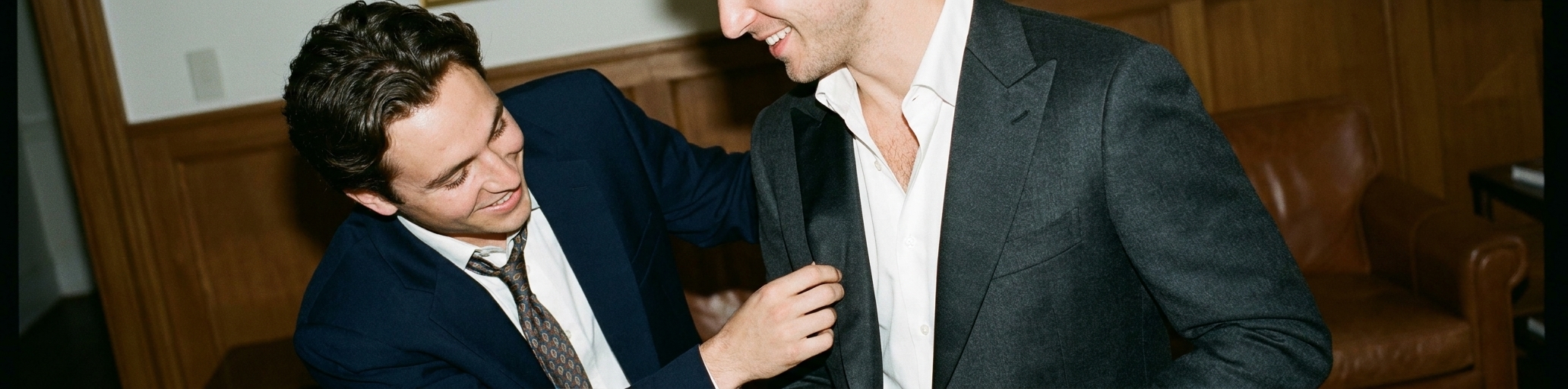
Master the key decisions that transform a suit jacket from overwhelming to manageable, from fabric weight and fit profiles to lapel styles and tailoring needs. Understanding shoulders, chest, waist, sleeve, and length zones ensures you choose a jacket that flatters your body and lasts for years.
Understanding Suit Jacket Basics
Master suit jacket selection by understanding how lapel style, fit profile, and button configuration work together to match your body type and occasion.
What Defines a Suit Jacket
A suit jacket is defined by one thing: it's made as part of a matched set, manufactured with trousers in the same fabric, color, and weight. [1] The word 'suit' traces back to the French suivre, meaning 'to follow' -- the trousers follow the jacket. [2] That relationship explains why the jacket commands most of your attention when buying a suit: nearly all the design decisions live here, from lapels and pockets to shoulder construction and internal canvas. [2] Knowing what those components are -- and how they affect fit and formality -- is what makes choosing a suit jacket feel manageable rather than overwhelming.
Single‑Breasted vs Double‑Breasted Styles
The main structural difference between single-breasted and double-breasted suit jackets is the front closure.
A single-breasted jacket has one button column with fabric meeting at the center of your chest -- clean, no overlap. [4] A double-breasted jacket adds a second overlapping panel and two button rows, most commonly a 6x2 or 4x2 configuration, with peak lapels that reinforce the formal silhouette. [4] Single-breasted adapts to more occasions and body types, from office meetings to weddings; double-breasted carries more visual weight and requires slightly more deliberate styling. [4] If you're building your first suit wardrobe, single-breasted is the practical start -- double-breasted works well once you want to bring something with more structure to a formal event, including black-tie settings. [4]
Classic, Slim, and Modern Fit Profiles
The three main suit jacket fit profiles -- classic, slim, and modern -- differ in how much space sits between the jacket and your body.
Classic fit is the roomiest, with relaxed armholes and a straight cut through the chest and waist, built for comfort over shape. [5] Slim fit goes the opposite direction: trimmed close through the chest, shoulders, and waist with high armholes, best suited for lean or athletic builds. [5] Modern fit, sometimes called tailored fit, sits between the two -- closer through the waist with slightly higher armholes than classic, without the tight taper of slim. [6] It's the most versatile starting point for most body types, which makes it a practical first reference when comparing slim and classic fits side by side.
Current 2024/2025 Style Trends
Two directions are defining suit jacket silhouettes right now: relaxed, oversized cuts with roomier shoulders and longer lengths, and slim-fit styles that remain a practical baseline for most professional wardrobes. [7] Bold colors -- electric blue, deep forest green, and rich burgundy -- have moved into genuinely wearable territory, particularly for weddings and evening events where you want the jacket to anchor the outfit. [7] Textured fabrics like herringbone and tweed are back in rotation too, adding visual depth without requiring you to rethink anything else about how you dress. [7] If you're heading into wedding season, colored suits offer a strong alternative to the standard navy or charcoal starting point.

Choosing the Right Fabric and Weight
Mid-weight wools between 250-300 gsm offer the most versatility, draping cleanly while remaining light enough to wear throughout most of the year.
Wool Types and Their Seasonal Performance
Wool fabric weight -- measured in grams per square meter (gsm) -- is the clearest indicator of how a suit jacket will perform across seasons.
Lightweight tropical wools (200-250 gsm) use an open weave for airflow, making them a practical choice for summer weddings and warm-weather events, though they wrinkle more easily than heavier cloths. [8] Mid-weight wools (250-300 gsm) are the most versatile option: substantial enough to drape cleanly, light enough for most of the year, which is why tailors often call them three- or four-season fabrics. [8] For fall and winter, flannel exceeds 300 gsm and uses a brushed finish that traps warmth; across all weights, a Super 100s-130s fiber grade delivers the best balance of softness and daily durability, while anything above Super 150s wears better as a special-occasion choice than a workweek staple. [8] [9]
Linen, Cotton, and Lightweight Options for Warm Weather
For warm-weather events, linen and cotton are the two most practical suit jacket fabrics beyond wool.
Linen, made from flax fibers, releases heat and wicks moisture faster than denser cloths -- aim for 200-250 gsm, which keeps the jacket cool while still hanging properly.[10] Cotton has more structure than linen and wrinkles less, making it a cleaner choice for city daywear or events where you'll be on your feet for hours.[10] If linen's tendency to crease is a concern, a linen-wool or linen-cotton blend reduces that issue while keeping the summer-appropriate feel; both pure options suit outdoor summer weddings and garden events well, but neither belongs at black tie or strictly formal occasions.[10]
Sustainable and Performance Fabrics
Two fabric categories have become more practical considerations for modern suit buyers: sustainably sourced naturals and stretch-performance blends.
Wool from traceable, organic farming operations requires the least water per yard of any common suiting yarn, biodegrades naturally at end of life, and carries lanolin that repels water and resists staining without added chemical treatments. [11] A small percentage of elastane -- typically 2-5% -- added to a wool base gives the jacket stretch and recovery without changing how it drapes, which is useful for long event days or frequent travel. [12] Experts note that higher concentrations of synthetic fibers trap heat and sit less comfortably against skin than natural blends, so confirm wool is the dominant fiber before committing to a stretch suit jacket -- why wool outperforms polyester at events covers that trade-off in detail. [11]
Fabric Care and Longevity Tips
How you care for a suit jacket matters as much as how you choose it -- proper maintenance can meaningfully extend its lifespan without much effort.
Brush the jacket after each wear with a soft-bristled fabric brush, working downward from the shoulders to remove dust and particles before they embed in the fibers. [13] Steam rather than iron when removing wrinkles; a dry iron burns wool fibers and adds an unnatural sheen, while a handheld steamer lifts creases safely. [13] For storage, use wide-shouldered hangers and a breathable garment bag -- cedar blocks deter moths and absorb moisture without chemicals, making them a practical addition to any wardrobe. [13] [14] Limit dry cleaning to once or twice a year, and rotate between suit jackets if you have more than one, since rest time allows fibers to recover and reduces cumulative wear. [13]
Perfecting the Fit for Your Body Type
The shoulder seam, chest fit, and sleeve length are your three most critical measurements, as they reveal whether you need a different size or just tailoring adjustments.
Key Fit Zones: Shoulders, Chest, Waist, Sleeve, Length
There are five fit zones on a suit jacket: shoulders, chest, waist, sleeve, and length -- in roughly that order of difficulty to fix.
The shoulder seam should sit exactly at the edge of your natural shoulder; if it overhangs your arm or pulls inward, that's a sizing problem, not a tailor fix. [15] At the chest, one flat hand should slide behind the buttoned front panel without strain, and the waist should taper slightly inward rather than hanging straight from chest to hip. [15] Sleeves should show about a half inch of shirt cuff at the wrist -- one of the easiest alterations available -- and the jacket hem should cover your seat and reach roughly your knuckle line when your arms hang naturally. [15]
Body‑Shape Guides: Athletic, Tall, Broad, Short, Plus‑Size
Each body shape relates differently to suit jacket proportions, and knowing yours simplifies both sizing and what to ask a tailor.
Athletic builds -- wider shoulders, narrower waist -- should buy for the shoulders and have a tailor bring the waist in; a single or ventless vent keeps the back from flaring. [16] Tall frames do well with two-vent jackets and faint horizontal patterns that break the vertical line, while shorter men benefit from vertical patterns or solids with a slightly cropped jacket length. [16] Broader and plus-size builds do best with dark, vertically aligned patterns, structured shoulders, and single-breasted styles that move the eye up and down rather than across -- our suit alterations guide covers which adjustments make the most difference for each shape. [16]
Red Flags: Common Fit Mistakes to Avoid
Four fit mistakes appear on suit jackets more than any others -- and knowing which require a different size versus a tailor visit saves real money.
A shoulder seam that misses the edge of your natural shoulder is a structural issue; no alteration fixes it. [17] Diagonal "X"-shaped stress lines across the buttoned front mean the chest is too tight, while a collar that lifts away from your shirt at the back indicates the jacket's cut doesn't match your posture. [18] Flaring back vents can usually be fixed by releasing the back seam, but low armholes that cause the whole jacket to ride up when you reach forward are rarely correctable without rebuilding the garment. [17]
How to Measure at Home and When to Use a Tailor
For measuring at home, you need a flexible cloth tape and a thin shirt -- thick layers add false inches to your readings. [19] Wrap the tape under your armpits across the widest point of your chest for the jacket's primary measurement, then measure your natural waist just above the hips and your sleeve from shoulder bone to wrist. [20] Keep the tape flat and snug, not compressing, and never measure over a sweater or jacket. [20] A tailor is worth it when your proportions fall outside standard sizing drops -- suits are typically cut with a 6-inch difference between chest and waist, so if your body differs significantly from that, off-the-rack will always need structural work -- or when multiple zones need correcting at once; use our suit jacket size chart to convert your chest measurement into the right starting size. [21]
Design Details That Make a Difference
Choose notch, peak, or shawl lapels based on your face shape and formality level, then match lapel width to your tie for a polished fit.
Lapel Styles and Face‑Shape Pairing
Suit jacket lapels come in three styles -- notch, peak, and shawl -- each with different formality levels and face-shape fits.
Notch lapels, the default on most single-breasted suits, have a 90-degree cut where collar meets lapel and work best with oval, square, and oblong faces. [22] [23] Peak lapels point upward from the collar, add visual width near the face and height to the torso, and suit round, oval, or heart-shaped faces and shorter builds -- they're also the standard lapel on double-breasted jackets; our peak lapel guide covers their formal application. [22] Shawl collars belong to black tie only and favor angular faces -- diamond, triangle, or square -- where their curved silhouette balances sharp features; across all three styles, match lapel width to your tie width. [24]
Button Configurations and Proper Buttoning Rules
The number of buttons on a suit jacket determines how you fasten it, and the rules are quick to internalize.
On a two-button single-breasted jacket -- the most common configuration -- only the top button fastens when standing; the bottom button stays open always, a convention traced to King Edward VII, whose expanding waistline made fastening it impractical. [25] Three-button jackets give you two options: button the middle only, or the top two -- never all three, which restricts movement and creates a silhouette modern suit cuts can't cleanly accommodate. [26] Double-breasted jackets are the exception: stay buttoned both standing and sitting, since the overlapping front panel looks sloppy when unfastened -- our double-breasted style guide covers the 6x2 and 4x2 configurations in more detail. [25]
Pocket Styles, Vents, and Sleeve Buttons
Three details -- pocket style, back vents, and sleeve buttons -- each signal formality and construction quality on a suit jacket.
Flap pockets are the default on most suits and can be tucked in for a cleaner look; jetted pockets (no flap) are standard on tuxedos; patch pockets read as casual and suit linen or summer jackets. [27] Double side vents are the better choice over a single vent for most suits -- they allow easier movement, prevent back bunching when seated, and keep coverage when hands go into trouser pockets; a ventless back is reserved for tuxedos where a clean silhouette takes priority. [27] On the sleeve, four buttons read slightly more formal than three, and kissing buttons -- where buttons touch rather than sit evenly spaced -- indicate bespoke or higher-quality construction. [28]
Construction Quality: Canvas vs Fully Lined vs Half‑Lined
The canvas -- a layer of wool and horsehair sandwiched between the outer fabric and inner lining -- gives a suit jacket its three-dimensional structure and is the clearest dividing line between quality tiers. [29] Fused jackets replace canvas with heat-glued interlining: faster and cheaper to produce, but less breathable and prone to delaminating into visible bubbles over time, particularly after dry cleaning. [29] Full canvas stitches that layer loosely to the fabric so it moves with your body, molds to your shape with wear, and creates the natural lapel roll that marks well-made construction. [29] Half canvas is the practical middle ground -- canvas from shoulder through chest, fusing below -- which explains why construction type often drives the quality gap between rental and budget-purchase suit jackets at similar price points. [29]


The Tailoring Advantage
Taking in the side seams through the waist is the highest-impact alteration you can make, transforming a boxy silhouette into one that follows your frame.
What Can Be Altered and What Can't
The general rule with suit jacket alterations is that taking fabric away is almost always possible; adding it back rarely is, since most off-the-rack manufacturers leave minimal seam allowance to keep costs down. [30] Sleeves are the most forgiving area -- shortening, narrowing, and minor lengthening are all standard adjustments, though working buttonholes limit how much length you can remove without rebuilding the sleeve from the shoulder. [31] Shoulders sit at the opposite extreme: altering width requires reshaping the armhole, sleeve head, and chest together, making it complex enough that a better-fitting jacket often costs less than the alteration itself. [32] The midsection -- sides, waist, and chest -- falls in the middle: taking in is routine, while letting out depends entirely on how much fabric the manufacturer left inside the seams. [30]
Essential Off‑the‑Rack Adjustments
Most off-the-rack suit jackets benefit from two or three targeted alterations: sleeve length, waist suppression, and collar correction if needed. [33] Sleeves are the natural starting point -- aim for a half inch of shirt cuff visible at the wrist, with length adjustments typically running $45-$65 depending on whether the buttonholes are functional. [34] Taking in the side seams through the waist creates a taper from chest to hip, and is the highest-impact alteration you can make for the money, since it shifts a boxy silhouette into one that actually follows your frame. [33] If the collar lifts off your shirt at the back, a tailor can adjust the back neck seam, though that fix depends on available seam allowance -- our tailored vs. off-the-rack guide covers when these cumulative alteration costs make a different approach worth considering instead. [33]
Communicating with Your Tailor: Terminology and Expectations
When working with a tailor, describe the outcome you want rather than directing the technical steps -- show reference photos and explain how you want the suit jacket to fit and move, then let them decide how to get there. [35] Bring the dress shoes and shirt you'll actually wear with the jacket, since both directly affect sleeve length and trouser break measurements, and skipping them often requires a return appointment. [36] Write your full alteration list before you arrive so nothing gets overlooked, and once the jacket is pinned, test it properly: button it, sit in a chair, and confirm you can pull about an inch from the midsection without stress lines forming across the chest. [36]
Cost, Timeline, and DIY Quick Fixes
Most suit jacket alterations fall between $20 and $150 -- taking in the sides runs $20-$100, sleeve adjustments cost $20-$40, and shoulder restructuring, when a tailor will attempt it at all, can reach $75-$150. [37] Simple fixes like sleeve shortening turn around in 48 hours to a week; structured work like waist suppression takes one to two weeks, and complex multi-zone jobs can run up to four weeks, especially during peak wedding season when shops run at capacity. [37] [38] DIY isn't a realistic option on a structured suit jacket: the layered canvas, lining, and internal construction make even small seam adjustments easy to damage and difficult to reverse, so when alteration costs start to rival the jacket's price, it's worth asking whether renting outright makes more financial sense. [37]
Building a Versatile Suit Jacket Wardrobe
Navy, charcoal gray, and black form the foundation of a versatile suit jacket wardrobe, each suited to different formality levels and occasions.
Core Colors and Their Uses
Navy, charcoal gray, and black are the three core suit jacket colors, each covering a different slice of the formality range.
Navy is the most versatile -- it reads professional at work, appropriate at weddings, and relaxed enough for weekend wear with a rollneck and suede shoes. [39] Charcoal gray runs close behind: it pairs with a wider range of shirt and tie colors than navy and adds a degree of visual authority that works particularly well for younger faces. [40] Black is the most limited of the three, best reserved for strictly formal occasions since it doesn't adapt well to daytime settings and can wash out lighter complexions. [40] Light and medium gray are worth adding once you have the core three in place -- our grey suit styles breakdown covers how each shade shifts the formality and occasion fit. [39]
Mixing and Matching with Trousers, Shirts, and Accessories
When wearing a suit jacket with non-matching trousers, two principles determine whether it works: fabric compatibility and enough visual contrast.
Pair pieces of roughly similar weight -- a wool jacket with wool or cotton trousers reads intentional, while mixing worsted with linen often doesn't. [41] [42] Create obvious contrast rather than trying to closely match -- a charcoal jacket over navy trousers works because the tonal difference is clear, while two near-identical grays will just look like a failed suit; our light grey suit jacket styling guide shows how this plays out in practice. [42] Accessories close the gap: a pocket square, tie, or belt that pulls color from both pieces gives the whole outfit a clear visual thread. [43]
Occasion‑Specific Choices: Business, Wedding, Casual, Evening
For business, wedding, casual, and evening settings, suit jacket choices split into four practical tracks.
Business calls for charcoal gray or navy with a light-colored dress shirt -- dark colors carry authority without tipping into black-tie territory. [44] Wedding dress codes depend on time of day: afternoon ceremonies suit mid-gray or navy, while evening weddings often require cocktail attire or black tie. [45] Casual settings let you pair a suit jacket with chinos and drop the tie; evening social events without a formal code call for darker colors and a sharper silhouette -- our formal attire guide for men maps each dress code level if you need a full reference. [46]
Investment Strategy: Quality Over Quantity
The most practical way to evaluate a suit jacket purchase is cost-per-wear: divide the price by how many times you'll actually wear it. [47] A $400 jacket worn 50 times costs $8 per wear; a $120 jacket worn five times before the lining fails costs $24 per wear -- the cheaper option ends up costing more. [48] Research shows the average fast fashion garment gets worn only seven times before being discarded, while quality garments typically reach 30-50 wears at minimum -- our suit pricing breakdown covers where that construction threshold starts. [47] One well-built jacket, properly tailored, reliably outperforms a rotation of cheaper ones in both long-term cost and how long it holds its shape. [47]


Caring for Your Suit Jacket and Next Steps
Rotate between jackets and wear each no more than twice weekly to extend your jacket's lifespan to a decade or more with proper care.
Cleaning, Storage, and Maintenance Best Practices
Dry cleaning should be treated as a last resort -- most suit jackets need it no more than two to three times per year, only when a stain or odor doesn't clear after airing out. [49] Wool handles light moisture and odor naturally, so hanging the jacket in open air for 12 to 24 hours after each wear does most of the freshening work without any products. [49] For spills, blot immediately with a clean cloth to absorb the liquid, then dab gently with a soft sponge and lukewarm water -- scrubbing damages the fibers and sets the stain deeper. [50] If wrinkles persist after travel, hang the jacket in a closed bathroom during a hot shower; ambient steam relaxes the fabric without the direct heat that can distort the canvas structure underneath. [50]
When to Refresh or Replace a Jacket
A suit jacket signals it needs professional attention when you notice shine forming on the lapels, fabric stiffness, or loose seams beginning to fray -- at that stage, cleaning and pressing can still correct the damage before it sets. [53] If your proportions have shifted enough that multiple fit zones need correcting at once, replacement is usually more practical than repairs, since structural alterations on a worn jacket often approach the cost of a new one. [51] Rotating between jackets and wearing each no more than twice a week extends this timeline considerably -- with consistent care, a quality wool jacket holds its shape for a decade or more, and when replacement does make sense, browsing current jacket options with your updated measurements beats chasing an aging fit. [52]
How The Black Tux Supports Your Journey
Whether you've nailed down your fabric, fit, and design details or still want expert input, The Black Tux offers two paths: a home try-on that ships your look 10 days before your event, or an in-person appointment at one of 42 showroom locations where stylists can walk through fit, fabric, and coordination with your wedding party. [54] If your rental arrives and the fit isn't right, a replacement ships immediately at no cost, which removes the timing pressure that makes formalwear stressful. [54] Both routes include prestyled looks -- shirt, accessories, and shoes -- so you're not assembling pieces separately after the suit jacket decision is made. [54] If you're weighing which approach fits your situation, our home try-on vs. showroom comparison covers the tradeoffs in full.
Quick Essentials Before Buying Your Next Suit Jacket
Before shopping, narrow down four things: your occasion, your budget, your chest measurement, and the season you'll be wearing the jacket. [57] Knowing the occasion determines how formal the fabric and construction need to be; knowing your budget tells you how much room remains for tailoring, which most off-the-rack jackets will need. [55] Measure your chest under the armpits across the fullest point -- that number anchors every sizing decision -- and use a suit size chart to confirm your starting size before committing. [56] Add a clear sense of the fit profile you want -- slim, modern, or classic -- and those four inputs will carry you through most suit jacket decisions without second-guessing. [55]
- Single-breasted jackets adapt to more occasions and body types than double-breasted, making them the practical choice for building your first suit wardrobe.
- Mid-weight wools (250-300 gsm) are the most versatile year-round option, while lightweight tropical wools suit summer events and flannel handles fall and winter.
- Shoulder seams must sit exactly at your natural shoulder edge--this cannot be altered, so proper sizing is non-negotiable before tailoring.
- The five fit zones (shoulders, chest, waist, sleeve, length) require different alteration difficulty levels; taking fabric away is almost always possible, adding it back rarely is.
- Navy, charcoal gray, and black form the core versatile wardrobe foundation, with navy being the most adaptable across professional, casual, and formal settings.
- Full canvas construction creates natural lapel roll and molds to your body with wear, while fused jackets are cheaper but prone to delaminating over time.
- Cost-per-wear matters more than price tag--a $400 jacket worn 50 times costs $8 per wear, while a $120 jacket worn five times costs $24 per wear.
- https://henrydavidsen.com/the-difference-between-suits-sport-coats-blazers/
- https://www.gentlemansgazette.com/the-anatomy-suit-jacket/
- https://hangrr.com/resources/single-breasted-vs-double-breasted-suits?srsltid=AfmBOopr9fMdCB6KhmAUvI2rh5P58A74kN-i7-zTmUNQEIXWO4dMbDiN
- https://www.andrew-brookes.com/blog/double-breasted-vs-single-breasted-suits/
- https://www.macys.com/s/how-to-buy-a-suit/
- https://www.oliverwicks.com/article/modern-fit-vs-slim-fit?srsltid=AfmBOopB5MW8_TGxKewdc5KGBw6FeHDwyRgVRVpIBtPgBgtMrWXUoP5C
- https://mrguild.com/blogs/mens-fashion/latest-mens-suit-trends?srsltid=AfmBOoo7P3G4l7hmVTYCRIucr04W_6ttyvgIUbwNuJqWqubZBgRQx--7
- https://www.selvane.co/fr/blogs/knowledge/the-complete-guide-to-wool-suits-fabric-weight-construction-and-fit?srsltid=AfmBOooGHz1leR_WNM5FOBXG4XuOwHj5MbaOhN9yIJ0jDZOntM69tL5U
- https://sartorialistamsterdam.com/blogs/sartorial-school/the-truth-behind-the-super-fabric-a-guide-to-super-wool-and-its-meaning?srsltid=AfmBOorEeYsMHyCFrGRnzoVqjsMObVn-CYy6nVWj7tIaq4hLicY-HX5V
- https://www.alandavid.com/blog/are-linen-suits-good-when-to-wear-one/
- https://officinepaladino.com/wool-fabrics/how-to-choose-the-right-wool-fabric-for-suiting/
- https://www.gq.com/story/tailoring-101-suit-fabrics-guide
- https://senszio.com/wool-aftercare-prolonging-the-life-of-your-suit/
- https://viossi.com/blogs/news/suit-care-guide?srsltid=AfmBOop-f_PIsWKfCVWAh6zYFVIUlbgeLmIK4FUMDBA3Mdk409XJgRhv
- https://www.josbank.com/blog/suit-fit-guide/?srsltid=AfmBOoo7mBlGxBj0NH5q6eQD7F75fQTd-RTUyJhox-qUNU4Px6kLOYsD
- https://www.realmenrealstyle.com/visual-suit-fit-guide/
- https://tailyit.com/signs-that-youre-in-a-poor-fitting-suit/
- https://www.hockerty.uk/en-uk/blog/how-should-a-suit-fit
- https://www.leonardsilver.com/pages/measure-yourself-guide
- https://suitcentury.com/how-to-measure-yourself?srsltid=AfmBOorKGIqHUv1odovNDPJY4wBpCk33RwWdyQ--hhoTOtpWI7hSHpLp
- https://sizebay.com/en/blog/suit-size-charts/
- https://www.oliverwicks.com/article/peak-lapel-vs-notch-lapel?srsltid=AfmBOoqcatH8vsSmCz-1MuvV3pijmts2bwrerPzIV6aCrFVmDWbivNYg
- https://bespokeunit.com/suits/lapel/styles/notch/
- https://bespokeunit.com/suits/lapel/styles/shawl/
- https://www.gentlemansgazette.com/how-to-button-your-suits/
- https://www.artofmanliness.com/style/accessories/art-of-manliness-suit-school-part-iii-a-primer-on-suit-buttons/
- https://michaeltailors.com/suit-anatomy/
- https://www.deoost.com/blog/jacket-sleeve-buttons-number-buttonholes
- https://www.gentlemansgazette.com/fused-half-full-canvas-suit-construction/
- https://www.gentlemansgazette.com/suit-alterations-what-a-tailor-can-do/
- https://articlesofstyle.com/blogs/news/a-guide-to-suit-alterations?srsltid=AfmBOoo6GtDmuUyIVwojv3hurDwM1njxuY_vT6I40jQovH2BH2dScpF0
- https://www.oliverwicks.com/article/suit-alterations?srsltid=AfmBOoqWVBvNfRnvXD15z-D_IqETK1IiBS1ON9nYvF5QYfdBE_Boddqc
- https://nimbleneedle.ca/blog/most-common-suit-alterations
- https://www.nytimes.com/wirecutter/reviews/getting-a-suit-tailored/
- https://www.mrporter.com/en-ca/journal/fashion/menswear-guy-guide-to-tailors-alterations-24837924
- https://www.gentlemansgazette.com/top-tailoring-tips-for-menswear/
- https://www.oliverwicks.com/article/suit-alterations?srsltid=AfmBOopZN8ChA2ZQHxrWfCatYxD_pUo7E4ur3ZkxpoiZRiqrK6dCBdWt
- https://admiralcleaners.com/how-long-do-clothing-alterations-take-a-realistic-timeline/
- https://www.permanentstyle.com/2019/04/if-you-only-had-five-suits-a-capsule-collection.html
- https://www.realmenrealstyle.com/nine-suit-colors/
- https://westwoodhart.com/blogs/westwood-hart/suit-jacket-etiquette-mixing-matching-menswear-guide?srsltid=AfmBOoob4Wig8fLDfAdatiujanpiLfNVqZRhsQHeVujPf248DesMRtId
- https://www.gentlemansgazette.com/spezzato-how-divide-suit/
- https://kingandallen.co.uk/journal/tips-advice/style-tips-wear-your-suits-as-separates-how-to-do-it-right/
- https://suitharbor.com/blogs/suitharbor-press/the-ultimate-guide-to-choosing-the-perfect-suit-for-every-special-occasion?srsltid=AfmBOoreP1-IZkl74XHerNmLKBAQ-7lt1krUIhkpzetZ4g55Z01XZBvt
- https://emilypost.com/advice/attire-guide-dress-codes-from-casual-to-white-tie
- https://www.paulsimonco.com/blog/understanding-mens-dress-codes-for-events
- https://www.gentlemansgazette.com/cost-per-wear-equation/
- https://thewelldressedlife.com/understanding-cost-per-wear/
- https://westwoodhart.com/blogs/westwood-hart/how-to-take-care-suit?srsltid=AfmBOop0TZ0IQZkUkDW4Q7Z5ayHfmarf_qiSARmUr5OSs4is9IAGzlpB
- https://www.oliverwicks.com/article/how-to-wash-suit?srsltid=AfmBOoq_2PdIc9Sx2LPezGIlK8CZB1T1IiYl3wqzK9F5H-Y74lFh5Nq0
- https://www.studiosuits.com/blogs/articles/10-mistakes-that-can-shorten-the-lifespan-of-your-suit?srsltid=AfmBOoo7z2NA632pojKbY7h-ZRSCmiDcfz6prp6JsVVknx8AdQlosSfD
- https://www.paulsmith.com/discover/guides/suit-care
- https://jimmyscleaners.net/a-mans-guide-to-suit-care-cleaning-storage-longevity/
- https://www.theknot.com/content/tuxedo-online-rental-review
- https://www.realmenrealstyle.com/buying-suit/
- https://www.josbank.com/blog/suit-fit-guide/?srsltid=AfmBOopEpJ41hpIlgS4gQxeGbIzZFhXD6fMKE9cTFOh7dN4sTj_iSDi8
- https://www.editsuits.com/blogs/news/20-things-to-consider-when-buying-a-suit?srsltid=AfmBOorLD96-iAAedia72LPFaSWNlM14oHBS0s3KbzwjyTY2s8HBlt3R


