

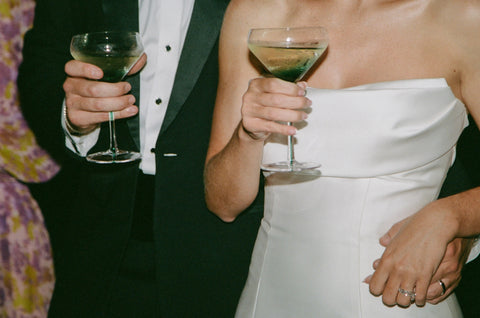


Men's Formal Wedding Attire: Must-Have Suits & Accessories
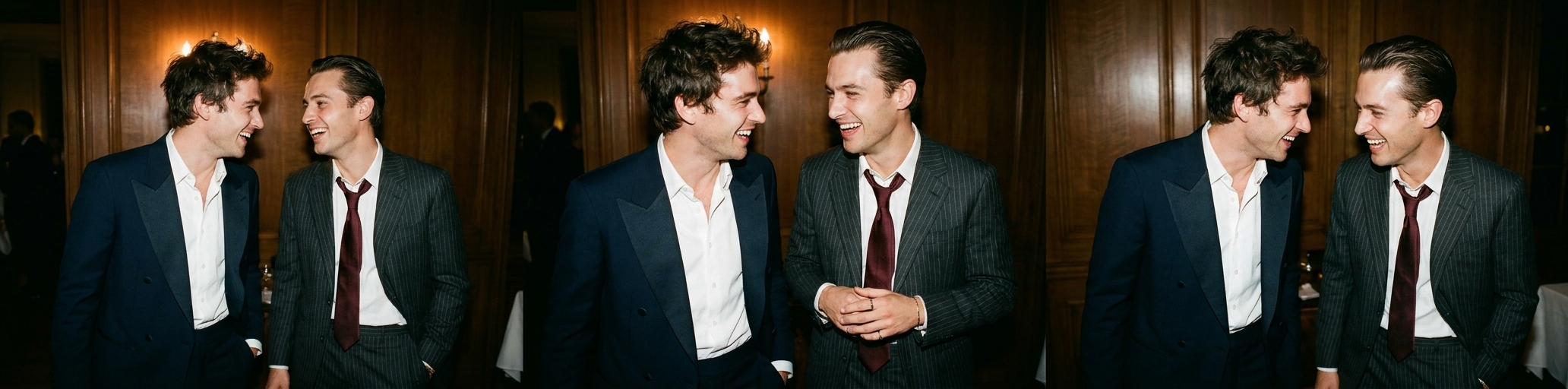
Navigate the distinction between black tie and formal dress codes to select the right suit, accessories, and styling for any wedding tier. Master fabric choices, fit fundamentals, and seasonal adjustments so you look polished without overshadowing the couple.
Understanding the Dress Code Landscape
Black tie requires a tuxedo with specific pieces, while formal attire offers flexibility with a dark tailored suit and tie.
Decoding "Formal" vs "Black Tie" for mens formal wedding attire
"Formal" and "black tie" appear on wedding invitations regularly, but they're not interchangeable.
Black tie means a tuxedo -- specifically a black dinner jacket, matching trousers, a white dress shirt, a black bow tie, and patent leather shoes, with no real substitutions accepted.[1] Formal attire sits one step below, functioning more like black tie optional in practice -- a dark tailored suit with a tie is fully appropriate for mens formal wedding attire at this level, and a tuxedo is welcomed but not required.[1] The key distinction is that black tie locks you into specific eveningwear conventions, while formal gives you genuine flexibility in how dressed up you go.[2]
Reading invitation wording and venue cues
When an invitation skips explicit dress code language, three cues help you calibrate: the venue, the ceremony start time, and the overall tone of the stationery itself.[2] A hotel ballroom or country club setting implies a higher formality threshold than a rooftop, vineyard, or garden space, even without a label attached.[2] Evening weddings -- anything starting at or after 6 p.m. -- shift expectations toward darker, more formal suits, while daytime affairs open the door to lighter fabrics and color palettes.[2] The wedding guest suit guide breaks down these venue signals with specific outfit recommendations if you want a deeper reference.
Seasonal and time‑of‑day considerations
Time of day and season work together to shape both fabric weight and color palette for mens formal wedding attire.
Evening ceremonies -- especially black tie or formal affairs -- call for darker, richer tones like charcoal, midnight navy, or deep jewel shades, paired with a heavier wool that holds structure under dim lighting.[4] Daytime and warm-weather weddings shift the equation: lightweight wool blends, linen, or cotton in medium grey, tan, or soft sage read polished without overheating you by the cocktail hour.[6] For fall and winter weddings, heavier wools in charcoal or navy carry you through a long evening, and velvet accessories add a seasonal texture that works well at formal-tier events.[5]
Modern twists on traditional formal wear
Traditional formal wear is evolving around texture, color, and lapel shape rather than overall structure.
Velvet tuxedo jackets in black, burgundy, or deep green serve as a richer alternative to standard wool dinner jackets -- especially for fall and winter weddings.[7] Oversized peak lapels add visual weight to a tuxedo without breaking formality, and a peak lapel tuxedo in midnight blue has largely replaced standard black as the default tux color for guests who want more depth under event lighting.[8] Tone-on-tone shirt and tie combinations -- navy on navy, khaki on khaki -- deliver a modern, minimal finish that holds up at formal-tier events without veering casual.[8]

Core Suit Foundations for the Guest Male
Black, navy, and charcoal suits form the foundation for most formal and semi-formal weddings, with fabric weight and color choice determining how polished you'll read under different lighting.
The classic black suit as a versatile base
A black suit is appropriate for formal, black-tie optional, and cocktail-tier weddings -- especially evening events where the dark color reads polished under dim reception lighting.[9] For fabric, medium-weight wool around 10-12 oz holds structure over a long night, drapes well, and breathes better than polyester blends that tend to shine under indoor lighting.[10] The clear exception is casual or outdoor daytime weddings, where a black suit feels too heavy and absorbs heat in warm weather.[9] Styling does the tonal work -- a crisp white shirt and silk tie push toward formal, while a patterned pocket square or colored tie adds character without losing the clean base.[10]
Navy, charcoal, and deep‑green alternatives
Navy and charcoal are the two strongest alternatives to black for mens formal wedding attire -- both complement most skin tones and hold up across formal and semi-formal dress codes without feeling like a compromise.[11] Navy transitions easily from evening ballrooms to daytime outdoor ceremonies; a navy suit styling guide can walk you through shirt and tie combinations that get the most out of the color at different venues.[1] Charcoal sits close to black in formality but carries more visible texture in the weave, which reads better under reception lighting than flat black can.[11] Deep forest green has moved firmly into formal-tier territory -- particularly strong for fall weddings when paired with a white shirt and a solid tie, it adds real distinction without reading casual.[12]
When to choose a tuxedo over a suit
The clearest signal is the invitation itself: a 'black tie' dress code means a tuxedo is expected, and a suit will look out of place at that level regardless of fit or color.[14] 'Black-tie optional' is where the decision is genuinely yours -- a tuxedo is appropriate, but a well-tailored dark suit holds up equally well at that tier.[14] Two secondary factors often tip the decision even without explicit dress code language: venue tier and ceremony start time -- evening events at hotel ballrooms or country clubs lean toward the tuxedo even when the invitation reads 'formal' rather than 'black tie.'[13] Our tux vs. suit decision guide maps out specific dress code scenarios if you want a clearer framework before committing.
Fit fundamentals: tailoring, lapels, and jacket length
Fit at a formal wedding comes down to three checkpoints: shoulders, jacket length, and lapel style.
The shoulder seam should end exactly where your arm begins to slope -- any overhang means the jacket is too large, while dimpling at the top of the sleeve signals a fit mismatch for your frame.[15] Jacket length passes when you can curl your fingers around the hem with your arm at your side, and the back panel should cover your seat; a suit jacket size chart can help you nail the right base size before a tailor fine-tunes the rest.[16] For lapel choice, peak lapels work well at formal-tier weddings -- their upward-pointing edges add structure and visual presence -- while notch lapels hold up across most dress codes below black tie.[17]
Essential Accessories to Elevate Formal Looks
The right neckwear, pocket square, cufflinks, and shoes transform a formal suit into a polished, event-appropriate ensemble.
Tie and bow‑tie selection for mens formal wedding attire
Neckwear selection starts with the dress code.
Black tie requires a black silk bow tie; no other color or fabric fits that tier.[18] At formal and black-tie optional events, both a necktie and a bow tie are appropriate -- the necktie gives you more color flexibility, while the bow tie reads slightly more elevated.[19] Silk is the most formal fabric choice in either case, and colors like navy or burgundy work across most formal wedding contexts; subtle patterns like small dots or fine stripes add visual interest without breaking formality.[18] Season shapes your palette: soft tones like pale blue or blush for spring and summer, jewel tones like burgundy or hunter green for fall and winter.[19]
Pocket squares, cufflinks, and tie bars
work best when they complement rather than compete.
For pocket squares, pull one color from your tie's palette rather than matching it directly -- a white silk square in a flat fold is the safest choice at any formal tier and pairs with every jacket color.[20] Cufflinks only work with French cuff shirts, so confirm your shirt style before committing; keep the design simple and match the metal finish to your tie bar and watch hardware for a consistent look throughout.[21] Clip your tie bar between the third and fourth shirt buttons, and keep it narrower than the tie -- a bar wider than the tie reads off regardless of how sharp everything else is.[20]
Footwear choices: patent leather, leather oxfords, and loafers
Shoe choice follows the same logic as suit choice: match the formality of the event.
Patent leather oxfords are the right call for black tie -- their high-gloss finish complements a tuxedo's satin lapels in a way that polished calf leather simply doesn't reach.[22] For formal and black-tie optional weddings, well-polished leather oxfords in black or dark brown work across most dress codes and are far easier to re-wear at future events.[23] Loafers fit semi-formal or relaxed settings; tassel styles read slightly more elevated than penny loafers and pair cleanly with a suit when the dress code gives you room to move.[23] Regardless of which you choose, keep your shoes darker than your suit and match your belt leather to your shoe leather.
Subtle details: watches, belts, and suspenders
Watches, belts, and suspenders connect the larger pieces of your look -- shoes, trousers, jacket -- into a single visual line, which is why small mismatches here are more noticeable than they seem.
For watches, choose a slim dress watch with a leather strap and match the strap color to your shoes: black leather for black shoes, brown for brown.[25] That same strap-to-shoe logic applies to your belt, which should be narrow leather with a plain buckle at formal-tier events.[26] Suspenders replace the belt rather than join it -- never wear both -- and black suspenders are standard with tuxedo trousers, which have waistband buttons specifically designed for them.[24]
Seasonal & Venue‑Specific Styling Tips
Natural fabrics like linen and wool regulate temperature far better than synthetics, while color and texture choices shift dramatically between summer heat and winter formality.
Summer fabrics and light colors for outdoor ceremonies
For outdoor summer ceremonies, fabric choice matters more than most guys expect -- natural fibres like linen, cotton, and lightweight wool regulate body temperature through breathability and moisture-wicking in a way synthetic blends don't.[28] Linen's open weave lets heat escape and pulls in cooler air; a linen-blend suit wrinkles less than pure linen while keeping the same airflow advantage.[28] For color, shades like light gray, stone, tan, and soft blue reflect heat better than dark tones and read sharp at garden, vineyard, or coastal settings without overreaching the dress code.[27] If the event skews more formal, a linen tuxedo carries that warm-weather breathability into elevated territory.
Winter textures, layering, and richer hues
Winter weddings reward fabric choices that summer events don't -- flannel, Donegal tweed, herringbone wool, and corduroy carry real texture that holds structure through a long indoor evening and photographs well at close range.[29] For layering, a lightweight merino or cashmere V-neck underneath your jacket adds warmth without visible bulk -- it disappears under the suit while keeping you comfortable from ceremony through reception.[29] Color choices expand in winter: midnight navy, charcoal, bottle-green, burgundy, chocolate brown, and deep plum all perform under warm indoor lighting, and subtle patterns like windowpane or chalk stripe in these base tones add visual depth without stepping outside formal-tier expectations.[29]
Beach, garden, and ballroom venue guides
Beach, garden, and ballroom venues each impose different constraints on fabric and footwear that outfit choice alone can't fix.
Beach ceremonies call for an unlined linen or tropical wool suit in a light neutral -- and loafers, which handle sand far better than oxfords that sink or scuff underfoot.[30] Garden weddings fall in the middle: a lightweight wool suit in navy or stone transitions smoothly from outdoor ceremony to tented reception, and the semi-outdoor setting supports lighter color palettes that a ballroom event wouldn't.[1] Ballroom weddings pull everything darker -- charcoal or midnight navy in a structured wool suit or tuxedo reads cleanest under low event lighting, and polished oxfords are the standard footwear at that venue tier; our venue-by-venue wedding outfit guide maps out the full spectrum from sand to black tie.[30]
Weather‑proofing without compromising formality
Rain at a wedding doesn't require abandoning formality -- the right outerwear and footwear handle wet conditions without changing what you're wearing underneath.
A cotton gabardine trench coat pairs naturally over a suit or tuxedo: the stand collar, throat latch, and storm pockets are functional rain features built into a silhouette that holds up at formal events.[31] Dress oxfords fitted with Dainite or equivalent rubber soles handle wet pavement without changing the profile of formal footwear, and a sole-guard treatment applied to standard leather soles prevents water from wicking upward through the base of the shoe.[31] A full-length umbrella with a curved wooden handle is the most appropriate rain accessory for a formal event -- practical, easy to carry, and consistent with the overall formality of the look in a way a compact folding version simply isn't.[31]
Personalization Within Formal Boundaries
Restrain your color and pattern choices to a neutral base, then let texture do the personality work through one standout fabric element.
Color coordination and pattern accents that stay appropriate
Color coordination at a formal wedding works best when you pull one accent color from your tie and echo it in just one other piece -- a pocket square or sock -- rather than distributing competing shades throughout the outfit.[5] For patterns, one per outfit is the reliable starting point; if you do layer two, vary the scale so a wider stripe on your shirt doesn't visually compete with a similarly-sized pattern on your tie.[32] Bold choices like deep aubergine or a jewel-toned tie read appropriately formal when your suit stays in a neutral -- navy, charcoal, or grey -- and your shirt stays white or pale blue.[5] The broader rule: the more colors and patterns you add beyond a neutral base, the lower the overall formality reads.[32]
Adding personality through accessories and fabric choices
Fabric texture is one of the more underused ways to add personality within formal constraints -- a silk knit tie against a smooth wool suit, a velvet pocket square in a jewel tone, or a flannel jacket with a windowpane check each introduce tactile variety without adding another color to manage.[33] The principle mirrors color coordination: give one element the personality work to do, then keep everything else minimal.[34] If the texture lives in your tie, keep the jacket plain; if it's in the jacket fabric itself, pull accessories back toward simple silk and clean hardware -- the restraint is what makes the textured piece read as a deliberate choice rather than noise.[33]
Grooming standards: haircut, facial hair, and skincare
Grooming for a formal wedding is about timing as much as technique.
Get your haircut one to two weeks before the event -- a fresh cut needs a few days to settle before it photographs well.[35] For facial hair, shave the morning of the wedding using a quality blade with shaving cream, then finish with an alcohol-free aftershave balm to prevent redness in photos; if you're keeping a beard, trim and shape it a few days ahead so any skin irritation clears before the ceremony.[36] Skincare requires the longest lead time -- start a daily routine of cleanser, exfoliant, and moisturizer at least a month out, and book any professional facial two to three weeks before the wedding.[37]
Common pitfalls and how to avoid them
The most common pitfalls at a formal wedding involve dress code mismatches and competing for attention that belongs to the couple.
Arriving underdressed -- a day suit at a black-tie event -- signals you treated the invite as optional; overdressing above the stated code reads as competitive and shifts focus away from the people getting married.[38] Avoid pieces closely associated with the wedding party: ivory dinner jackets and oversized statement boutonnieres both read as groomsman, not guest.[38] White clothing -- beyond dress shirts and pocket squares -- should stay home unless the invitation explicitly requests it.[39] Once you're dressed, keep it that way: removing your jacket or tie mid-reception is one of the most common ways a polished formal look deteriorates before the night is over.[38]
Building a Long‑Term Formal Wardrobe
Invest in classic neutral suits that cost less per wear over time and adapt as your body and style evolve across multiple formal events.
Investing in timeless pieces versus trend pieces
The distinction between timeless and trend-driven formalwear comes down to cost-per-wear.
Classic colors -- navy, charcoal, and black -- in clean cuts hold up across multiple events and years; trend pieces like oversized lapels or fashion-forward jacket colors cycle out faster than most men expect.[40] A well-made suit in one of these neutral tones can be adjusted as your body changes and re-worn across weddings and formal events, which is why building a formal wardrobe starts to make more financial sense once you attend more than a few formal events annually.[41] Trend pieces work best in small doses -- a seasonal tie or pocket square refreshes a classic base without committing to a full look that dates quickly.[42]
Rental versus purchase considerations for mens formal wedding attire
The rental-versus-purchase decision for mens formal wedding attire has a practical threshold: one or two formal events per year typically favors renting, while three or more makes ownership more cost-effective once price-per-wear is factored in.[45] Rental has real logistical advantages beyond cost -- no storage between events, no dry cleaning to coordinate, and no commitment to a style that may not serve you past a single occasion.[43] What renting can't give you is full style and fit control; rental inventory is limited by what's available in your size, and alterations on rented suits are usually minor at best.[45] A detailed rent vs. buy cost breakdown can make the numbers concrete if you're on the fence between the two.[44]
Care, storage, and maintenance of suits and accessories
After each wear, brush your suit with downward strokes -- a clothes brush removes dust and lint trapped in the weave more effectively than a tape roller and takes under a minute. [46] Steam out wrinkles rather than ironing directly; a handheld steamer is gentler on wool fibers and deodorizes the fabric between wears. [46] Limit dry cleaning to a few times per year at most, since the chemical process degrades natural fibers over time -- spot clean stains with a damp cloth first. [46] Store your suit on a wide wooden shoulder hanger inside a breathable garment bag with the zipper left slightly open, and keep cedar shoe trees in your leather footwear to prevent creasing and absorb moisture between wears. [46] [47]
Expanding the collection for future events
Once your core navy or charcoal suit is in regular rotation, expanding means adding a medium-grey suit next -- the jacket often works as a blazer with separate trousers from your first suit, effectively doubling your outfit combinations without buying a full new look.[48] A tan or brown suit fills the warm-weather and autumn event gap that darker neutrals don't cover well.[48] For footwear, three styles handle virtually every formal occasion: a black lace-up oxford for black tie and formal events, a loafer for semi-formal settings, and a leather boot for the smart-casual range in between.[48] If you're building toward buying suits online, prioritize made-to-measure options so each new piece integrates cleanly with what you already own rather than sitting as a standalone.[48]
- Black tie requires a tuxedo; formal attire allows a dark tailored suit with flexibility in how dressed up you go.
- Suit fit depends on three checkpoints: shoulders ending at arm slope, jacket length covering your seat, and appropriate lapel style.
- Medium-weight wool (10-12 oz) holds structure better than synthetic blends and breathes well under indoor event lighting.
- Navy, charcoal, and black are timeless neutral colors that work across multiple formal events and years of wear.
- Accessory coordination works best with one accent color echoed in one piece; limit patterns to one per outfit.
- Seasonal fabric choices matter: lightweight wool and linen for summer, flannel and tweed for winter formal events.
- Rent formal attire for 1-2 events annually; buying becomes cost-effective at three or more formal events per year.
- https://www.theknot.com/content/formal-wedding-attire
- https://www.vogue.com/article/wedding-dress-codes
- https://www.brides.com/story/wedding-dress-code-explained
- https://www.oliverwicks.com/article/what-to-wear-wedding-men?srsltid=AfmBOooEV2lasLoGdTywNT8T6u7s9iyfYgQGMnF8TX8T5Ea0PRaAYWVa
- https://www.theknot.com/content/wedding-dress-code-for-guys
- https://www.josbank.com/blog/what-to-wear-to-a-wedding/?srsltid=AfmBOoqVPx71nDla6fQF7_3D4_SNT0EBNYDuOJVRdtwHKvciAByr3Abf
- https://www.lilyandlime.com/blog/p/dress-to-impress-best-fashion-trends-for-grooms-and-groomsmen-in-2024
- https://onefabday.com/biggest-style-trends-for-grooms/
- https://www.trevorfurbay.com/should-you-wear-black-suit/?srsltid=AfmBOorj7hyh2wvccnaOtrlnKSERR60qMM-OrBU43rjrEfGcj4ctscve
- https://opposuits.com/blogs/opposuits/best-black-suits-for-men?srsltid=AfmBOoq9sA_qk-aOs8usbUi2LiSXOfYae1UFhiKCdYVf_fPrI6nSSZZN
- https://www.beautiesltd.com/blogs/beau-ties-blog/what-to-wear-to-a-wedding-as-a-guest-male?srsltid=AfmBOooA5CUmHzc3saSDryyU-R679E8ayagvw0H5wl4kwOd8ADr9hXIB
- https://www.aristocracy.london/gentlemans-blog/style-guide/mens-wedding-outfits-a-gentlemans-complete-guide/
- https://www.theknot.com/content/what-to-wear-black-tie
- https://www.thetiebar.com/blogs/faqs/does-black-tie-mean-tuxedo?srsltid=AfmBOorxw0048vQfELR2DI0klTmcXC8BV5SRu1JHcZKX3A2NxUpk0QEA
- https://hespokestyle.com/how-clothes-should-fit/?srsltid=AfmBOopFy2Gnu9nhnhFY53zu4XC75l_P_TxqEFpl5PHKfzXX46bLTy7_
- https://www.realmenrealstyle.com/visual-suit-fit-guide/
- https://suitablee.com/en/perspective/post/suit-lapels-everything-you-need-to-know?srsltid=AfmBOoqS3Y4WvNg-0KxLPLrzD7zvhQeIjrFjA3Kf_owg1W5qCsRw_j-y
- https://www.thetiebar.com/blogs/news/what-to-wear-to-a-formal-wedding-complete-mens-guide?srsltid=AfmBOopUAvxXy2PMtbZ_1Yz3d6MIzyMWiJbXSJ5xsee_V256-Au8fGL-
- https://www.theknot.com/content/wedding-ties
- https://www.thetiebar.com/blogs/news/what-to-wear-to-a-formal-wedding-complete-mens-guide?srsltid=AfmBOopTjBoRsMnAZ09uU0gm3aDeHd2SjcNHKK6KJ9oqwraM5AcTtGzU
- https://www.alphasuit.com/how-to-accessorize-a-mens-suit/
- https://www.aristocracy.london/gentlemans-blog/style-guide/mens-wedding-footwear-a-guide-to-choosing-the-right-wedding-shoes-for-men/
- https://www.cobbler-union.com/blogs/journal/wedding-dress-shoes-for-men?srsltid=AfmBOoq28P5KqxspcG-rotM5b6fDTnyfRES7EiNIP6co7BsRr9BPO9wA
- https://www.thetiebar.com/blogs/news/best-mens-wedding-accessories-for-groomsmen-guests?srsltid=AfmBOooQ8pyGxZ9fuFUde-9U6NEdIBQarOtWV4RFltbRvqWjaYc1nsFf
- https://www.mastersintime.com/inspiration/wearing-a-watch-at-a-wedding-the-rules-of-etiquette/?srsltid=AfmBOoqhpgT4L05_Ky-WfYmrsH79w1qrOnj19of-PEqKX73eRrv0wu9_
- https://sekonioriginal.com/blogs/watch-industry-insights/gentlemens-guide-to-matching-your-watch-with-your-suit?srsltid=AfmBOophgDzzcS0KQK1wJ3CJ3yzpkBt-R9J8UQ_3vGAcjxQuuo118uDY
- https://www.tuxedobysarno.com/suit-styles-summer-weddings-east-coast/
- https://us.mossbros.com/inside-pocket/post/a-guide-to-summer-suit-fabrics
- https://upscalemenswear.com/blog/news/what-to-wear-to-a-winter-wedding-mens-style-guide?srsltid=AfmBOop3HS0OdWZc-BAgbQkTEaVZBjHJp8CaZu5o9Nej8AngAtvOzlF9
- https://destify.com/blog/formal-wedding-attire/?srsltid=AfmBOoqdI8fFyPFFlIuU57E2I5K-HfBxi38dyvYDeAJJZEbSU5aw1yXR
- https://www.gentlemansgazette.com/rain-gear-for-men/
- https://www.gentlemansgazette.com/cocktail-attire-for-men/
- https://westwoodhart.com/blogs/westwood-hart/semi-formal-wedding-attire-men-outfit-ideas-styling?srsltid=AfmBOormgEaCCmn_R6izoH9fAPtVdLGBXh_kueOepuBmCK_rLZBNl3W5
- https://opposuits.com/blogs/opposuits/formal-attire-for-men-for-wedding?srsltid=AfmBOoqCS7zz09XCQqZqcIugvvebfdCs2OhWBLScv_6CBWq33KIMbsCC
- https://www.theknot.com/content/groom-guide-wedding-grooming
- https://originalshavecompany.com/must-know-grooming-tips-for-men-on-their-wedding-day/?srsltid=AfmBOop43gnxzswNLpiaEEXPGDgZfbz8tY_YP8C3rn26nUJOFMit1xjr
- https://attireclub.org/2021/06/28/5-grooming-tips-for-men-before-any-formal-event/
- https://www.gentlemansgazette.com/never-wear-to-wedding/
- https://castlesonsuits.com/blogs/blog/what-should-a-man-wear-to-a-wedding
- https://albertonardoni.com/blogs/news/classic-suit-styles-that-never-go-out-of-fashion?srsltid=AfmBOoqCIqFREova0Acl5jbr2mTu8qXUcITcr84QY7kg84t0WWZw110C
- https://westwoodhart.com/blogs/westwood-hart/where-to-invest-in-your-wardrobe-for-long-term-style-and-value?srsltid=AfmBOoonSY_8q3xt3N6PwWTPkc4RNsbzSMzu81rasPM6asGu-mu4xdPE
- https://stayhard.com/en/pages/inspiration/investing-in-quality-expensive-clothes-for-men
- https://www.tuxedobysarno.com/rent-or-buy-which-one/
- https://themoderngroom.com/blogs/news/true-cost-of-owning-vs-renting-a-suit
- https://www.hockerty.uk/en-uk/blog/renting-vs-buying-a-wedding-suit
- https://www.paulsmith.com/discover/guides/suit-care
- https://www.gentlemansgazette.com/wardrobe-maintenance-essentials/
- https://www.trevorfurbay.com/mens-suits-for-formal-events/?srsltid=AfmBOopZ4rDlWzjgNW4pwOeZhx9eL9-0KVGW9_zI8AxCZMkLveFFgsmJ


